

Commentary
Dmitri Trenin
{
  "authors": [
    "Dmitri Trenin"
  ],
  "type": "legacyinthemedia",
  "centerAffiliationAll": "",
  "centers": [
    "Carnegie Endowment for International Peace",
    "Carnegie Russia Eurasia Center"
  ],
  "collections": [],
  "englishNewsletterAll": "",
  "nonEnglishNewsletterAll": "",
  "primaryCenter": "Carnegie Russia Eurasia Center",
  "programAffiliation": "",
  "programs": [],
  "projects": [],
  "regions": [
    "Caucasus",
    "Russia"
  ],
  "topics": [
    "Foreign Policy"
  ]
}
Source: Getty
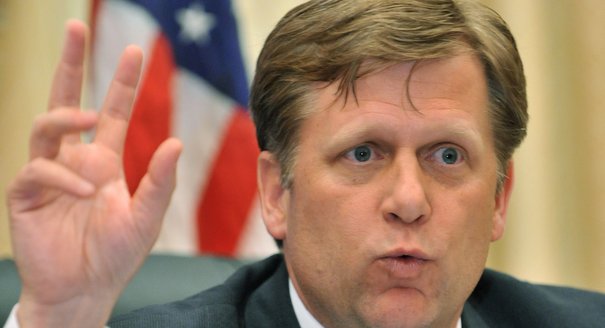
If Michael McFaul is confirmed as the next U.S. ambassador to Russia, one of his chief tasks will be changing the nature of the strategic relations between the United States and Russia from an adversarial one and toward a cooperative one where neither party regards the other as a potential adversary.
Source: The Moscow Times

The Russian media have attributed McFaul with being the architect of the U.S.-Russian reset. This is certainly true, but as an architect, he could achieve what he did because he was only working to order and was given the backing of U.S. President Barack Obama. It was the president who commissioned McFaul to redesign U.S. policy toward Russia in accordance with Obama’s own worldview and in pursuit of his larger goals.
The irony, of course, was that when Obama moved into the White House, he cared relatively little about Russia per se. Focused on Afghanistan and Iran, he saw Moscow as a potential resource to help reach Washington’s central objectives in both Muslim countries. That resource, however, could not be used because of the botched Russia policies of the previous administration of President George W. Bush. Hence, the obvious and very pragmatic need for a reset.
Two years later, this approach has led to spectacular results. The Northern Distribution Network across Russia now amounts to 50 percent of the U.S. military transit to Afghanistan and is likely to become the principal supply route as the Pakistan option becomes more hazardous. On Iran, not only has Moscow supported United Nations Security Council sanctions against Tehran, but it canceled the sale to Iran of the S-300 air defense system, foregoing $1 billion in revenue. In an equally rare development, Moscow recently abstained at the UN Security Council abstention to allow the use of force against Libya’s Moammar Gadhafi. Although Russia is still not central to Obama’s foreign policy, it is a truly one of his largest success stories.
To Washington, this pragmatism has not come at the price of keeping mum on the issues where the U.S. and Russian governments disagree. McFaul has been criticized for co-chairing a group on civil society with Kremlin deputy chief of staff Vladislav Surkov. Yet he speaks openly on matters dealing with civil society and democracy in Russia, including the safety of journalists, the conditions in prisons and the fate of former Yukos CEO Mikhail Khodorkovsky. He speaks with as much candor as anyone in the current or previous U.S. administrations.
This is the hallmark of the scholar-turned-official — to be intellectually incisive and precise and to stay focused on what is practically achievable. Before he joined the Obama administration, some took McFaul for an ideologue; after he had spent 2 1/2 years at the National Security Council, he sometimes passes for a realpolitiker. In fact, he is neither. McFaul is a person who is clearly wedded to his values, norms and principles, but who is equally mindful of the real world out there and of U.S. national interests in that world.
As the probable next Tenant No. 1 at Spaso House, McFaul will have a difficult task. In what direction will U.S.-Russian relations move now that the reset has been achieved? Changing the very nature of the strategic relationship between the nuclear superpowers by cooperating on missile defense will be an arduous endeavor. Yet this is precisely what is needed — to move away from the still dominant adversarial strategic relationship and toward a cooperative one where neither party will regard the other as a potential adversary. The United States, the obviously stronger partner in the relationship, could be more accommodating, and this would serve its own best interests.
Finalizing Russia’s entry into the World Trade Organization may now look almost imminent, after 18 years of negotiations. But even if accession is granted, it may lead to a lot of legal wrangling once Russia becomes a member.
In addition, McFaul may play an important role in helping to clear the long-surviving relic of the Cold War in the economic realm, the Jackson-Vanik amendment, and institute a permanent normal trade relationship between the United States and Russia. After this, helping Russia join the Organization for Economic Cooperation and Development would be the obvious next objective. Full and equal inclusion into the global economy works wonders to bind and strengthen relations between countries.
Meanwhile, one of McFaul’s chief tasks will be to inform the U.S. government about Russia’s domestic politics. His previous stay in Moscow, when he served as senior associate with the Carnegie Moscow Center, coincided with the 1995-96 election cycle, as the early hopes were receding and new disappointments were setting in. Russia has certainly changed a lot since the mid-1990s, but it is hardly impervious to more change. When it comes, of course, it will be driven by domestic factors rooted in the country’s increasingly mature society and the demands of its economy.
To many Muscovites, Ambassador McFaul would be simply “Mike.” He has lots of friends here — many of whom are not friends among themselves — and he enjoys easy access to virtually all the movers and shakers on the Russian political, economic and diplomatic scene. His Russian interlocutors would inevitably see their “friend Mike” as someone who has the ear of the U.S. president. Indeed, this would be a rare case of an ambassador who is actually what ambassadors are formally supposed to be: a personal representative of the head of state. Thus, he would hear an earful and would have to use all his expertise and good judgment to say and do the right thing.
In recent years, Moscow has been blessed with exceptionally good envoys coming from the United States. John Beyrle and his predecessor, William Burns, who is now awaiting confirmation as deputy secretary of state, are excellent examples. Each of these men sought to promote understanding, especially as the relationship fell on hard times.
But McFaul’s term will be somewhat different. He will have to convert understanding into productive and lasting cooperation. He will sometimes have to balance the need for continued cooperation against his commitment to principle. He will have to uphold the principle and yet be free of dogmatism. Welcome back, Mike!
Former Director, Carnegie Moscow Center
Trenin was director of the Carnegie Moscow Center from 2008 to early 2022.
Recent Work
Dmitri Trenin
Dmitri Trenin
Carnegie does not take institutional positions on public policy issues; the views represented herein are those of the author(s) and do not necessarily reflect the views of Carnegie, its staff, or its trustees.

Russia’s AI-driven propaganda campaigns operate in a fragmented, chaotic, and often illogical manner. That’s not necessarily a problem for the Kremlin, though: It’s much easier to mimic genuine public debate that way.

Ilya Klishin

Ahead of a tough winter for Ukraine, Donald Trump’s swing back toward Russia bodes ill. But instead of panicking, Kyiv’s European allies are focusing on action.

Rym Momtaz

Without a ceasefire with Ukraine on attacking each other’s energy infrastructure—to which the Kremlin is unlikely to agree—the diesel agreement between Putin and Trump is largely for show, rather than representing a genuine increase in the volumes of Russian diesel on the global market.

Sergey Vakulenko
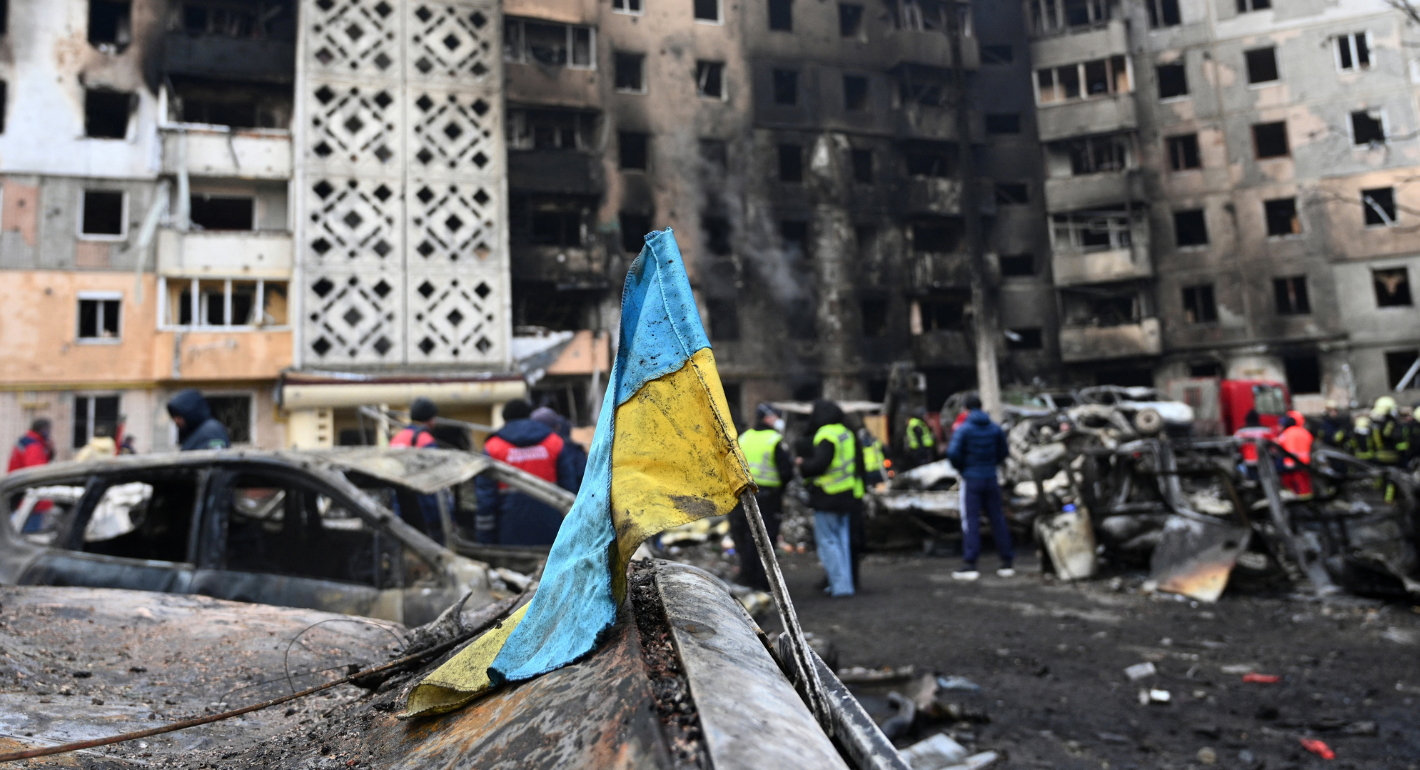
Funding Ukraine remains a priority for European leaders. As Russia’s war of aggression heads into another winter, two feasible options to mobilize support for Kyiv should be fast-tracked.
Vladyslav Rashkovan, Gregory P. Wilson

Russian strikes are weakening the economy sustaining Ukraine’s war effort. Closing the growing funding gap will require more European support and politically contentious reforms in Kyiv.

Balázs Jarábik