

Article
Thomas de Waal
{
  "authors": [
    "Thomas de Waal"
  ],
  "type": "legacyinthemedia",
  "centerAffiliationAll": "dc",
  "centers": [
    "Carnegie Endowment for International Peace",
    "Carnegie Europe",
    "Carnegie Russia Eurasia Center"
  ],
  "collections": [],
  "englishNewsletterAll": "ctw",
  "nonEnglishNewsletterAll": "",
  "primaryCenter": "Carnegie Europe",
  "programAffiliation": "russia",
  "programs": [
    "Russia and Eurasia"
  ],
  "projects": [],
  "regions": [
    "Caucasus",
    "Azerbaijan",
    "Armenia"
  ],
  "topics": [
    "Security"
  ]
}
Source: Getty
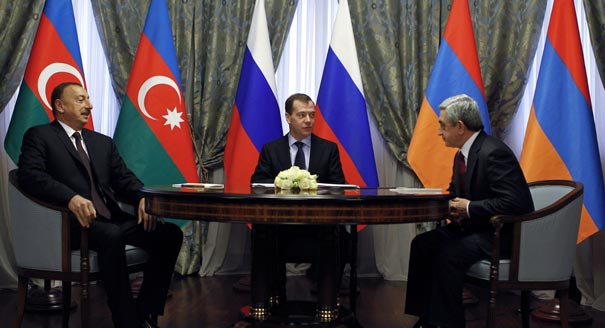
The personal involvement of Russian President Dmitry Medvedev in attempting to broker peace in the conflict over Nagorno-Karabakh may help usher in a fundamentally new phase in a conflict that has been stalled for the past two decades.
Source: National Interest

The peace process for Nagorno-Karabakh, mediated by the co-chairs of the Minsk Group of the Organization for Security and Cooperation in Europe, France, Russia and the United States, does not get much attention, for understandable reasons. It has dragged on for years without results. There is nothing newsworthy about it. Negotiations are conducted behind closed doors between an inner group of about a dozen individuals, making it very closed — in fact, far too closed for its own good.
A few near successes trumpeted by the mediators over the years inevitably evoke cynicism about the latest initiative. Many Armenians, having won a military victory in 1994, do not want to give up captured territory in return for an uncertain future. Many Azeris, flush with oil and gas revenues, believe they can wait until circumstances turn more in their favor in a few years.
This time could be different, however. President Dmitry Medvedev has convened a meeting of Azeri President Ilham Aliyev and Armenian President Serzh Sargsyan in Kazan on Friday. He is calling on them to agree to a framework deal, the Document on Basic Principles, which the parties to the conflict have been discussing in various drafts since 2007 and whose basic ideas were first formulated in 2004. In other words, a small document has been under discussion for a period longer than World War II. It is truly a moment of decision.
The outline of the Document on Basic Principles was released into the public domain in two declarations made at the Group of Eight summits at L’Aquila and Muskoka in 2009 and 2010. It consists of six elements that seek to reconcile the Armenian aspiration for Nagorno-Karabakh’s secession with Azerbaijan’s claim to territorial integrity.
The six elements, as stated at Muskoka, are: “The return of the occupied territories surrounding Nagorno-Karabakh; interim status for Nagorno-Karabakh guaranteeing security and self-governance; a corridor linking Armenia to Nagorno-Karabakh; final status of Nagorno-Karabakh to be determined in the future by a legally binding expression of will; the right of all internally displaced persons and refugees to return; and international security guarantees, including a peacekeeping operation.”
The most eye-catching elements in this package are the second and fourth points, which try to square the impossible issue of Nagorno-Karabakh’s status. They are designed to persuade the Armenian side to give up the Azeri territories it captured outside Nagorno-Karabakh and has kept as a “security zone” pending a decision on the future status of the disputed enclave. The innovative term “interim status” will fascinate diplomats and international legal scholars as they ponder similar sovereignty disputes. It means a status that falls short of independence but gives Nagorno-Karabakh a place in the international system it does not have at the moment. The “legally binding expression of will” constitutes the theoretical promise of a vote on independence for the Armenian side. The timing and modalities of such a vote are the main target of concern for the Azeri side as it goes to Kazan.
The declaration made at the G8 summit in Deauville in May by Medvedev, U.S. President Barack Obama and French President Nicolas Sarkozy crystallized the impression that the mediators have decided that now is the moment — five years on — to make the leaders bridge their differences on the Document on Basic Principles. The differences on paper are small enough for Medvedev to raise the stakes and demand his two colleagues to close the deal.
Medvedev has personally involved himself in this process. This is the fifth meeting he has convened, and he has edited the document himself. His central role usefully turns the spotlight on Aliyev and Sargsyan so that they have fewer places to hide. It also exposes him and his reputation to the risk of failure.
Up until now, resistance in the region to a peace settlement has always been stronger than international pressure. The suspicion has always been that the Armenian and Azeri leaders are too comfortable with their status quo, bad as it is for their citizens, and prefer not to step into terra incognita, unleash domestic opposition and make peace with the enemy. Leaders on both sides — especially Azerbaijan, the losing party in the conflict of 1991-1994 — continue to use strong nationalist rhetoric at home, even as they negotiate peace in private in foreign capitals. For peace to begin to happen on the ground, there needs to be a “rhetoric cease-fire” in which trust can start to form gradually between the two conflicting parties.
It is worth underscoring the amazing fact that for all the years of diplomacy that have gone into it, the Document on Basic Principles is only a framework agreement. If it is agreed, there will then be a push to sign a comprehensive peace treaty several months down the line. That also means there will be a dangerous moment of hiatus in which even if initial agreement is reached, heavy domestic Armenian and Azeri opposition will remain against the deal.
Medvedev’s mini-summit in Kazan could usher in a fundamentally new phase in this protracted conflict, but there will still be a lot of work to do. If there is a breakthrough, it will require much greater international commitment to make peace a reality on the ground. If there is disappointment, expectations will have been raised and will have to be handled. There will be a greater risk of conflict, and the other international actors — primarily the United States — will need to move in and apply pressure to hold things together in the Caucasus.

Senior Fellow, Carnegie Europe
Thomas de Waal is a senior fellow at Carnegie Europe, specializing in Eastern Europe and the Caucasus.
Recent Work
Thomas de Waal
Thomas de Waal
Carnegie does not take institutional positions on public policy issues; the views represented herein are those of the author(s) and do not necessarily reflect the views of Carnegie, its staff, or its trustees.

Understanding the climatic pain points is necessary for policymakers hoping to minimize the war’s negative environmental consequences.



Alejandro Martin Rodriguez, Joy Arkeh, Sarah Yerkes

The books, podcasts, and films that explain the world it made.

Andrew Leber

With the growth in points of friction between the great powers, organizations like the SCO will continue to play a role in the strategic adaptation of the smaller powers caught between them.

Temur Umarov
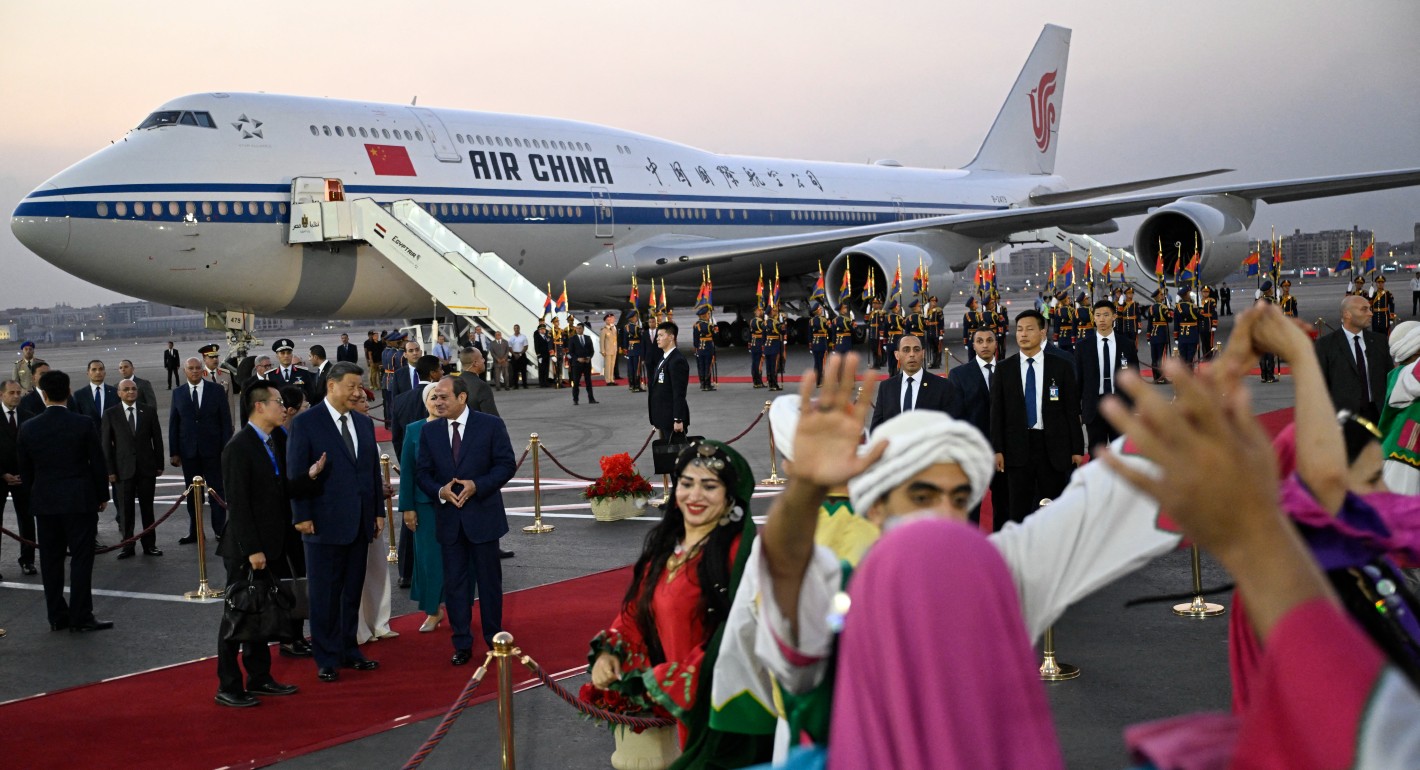
Amid celebrations of bilateral ties was a deeper focus on stability in the Middle East.

Amr Hamzawy
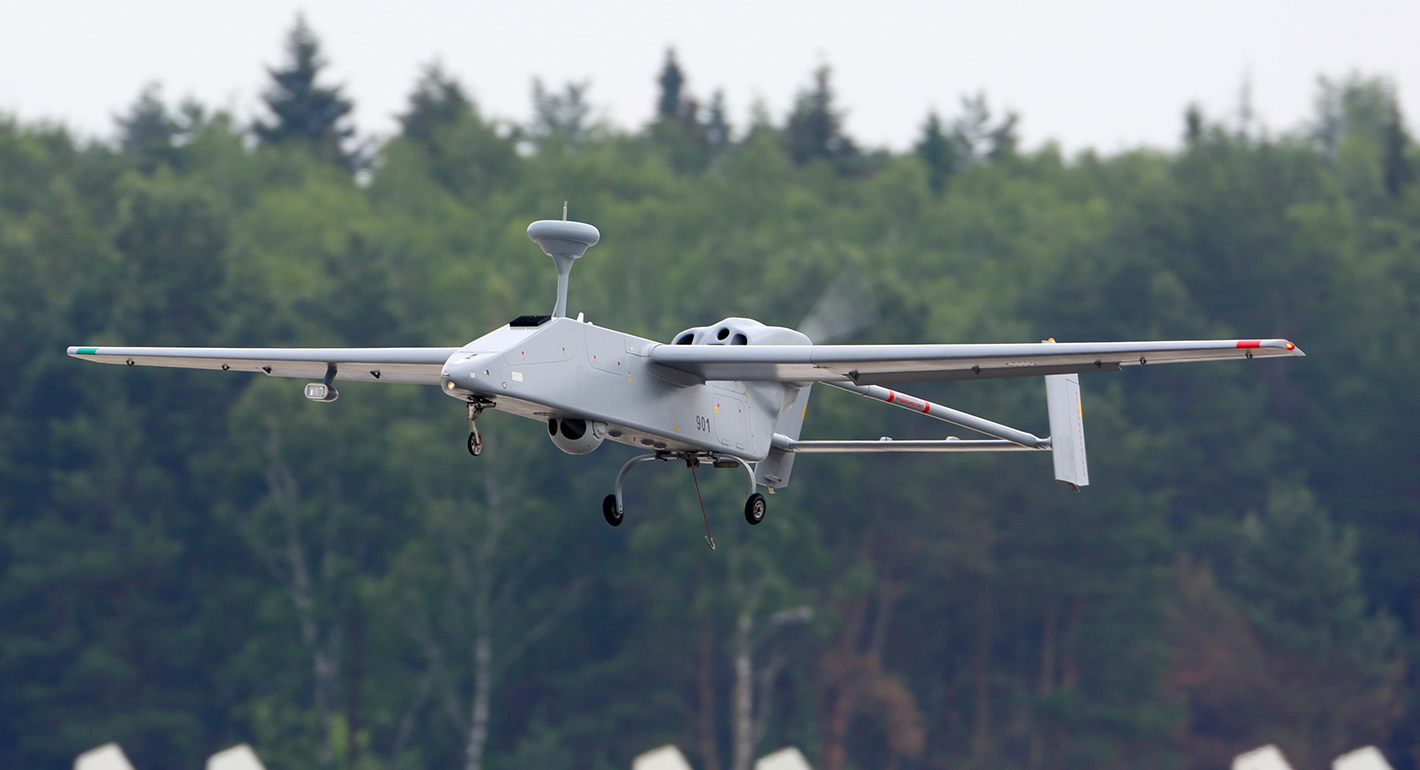
Moscow is testing Europe’s defenses with drone incursions and could decide to use drones against the continent on a much larger scale once the war in Ukraine pauses. European countries will need Kyiv to help them prepare for such a possibility.
Pavlo Zvenyhorodskyi