• Research
  • Emissary
  • About
  • Experts
Carnegie Global logoCarnegie lettermark logo
DemocracyIran
  • Donate
{
  "authors": [],
  "type": "other",
  "centerAffiliationAll": "dc",
  "centers": [
    "Carnegie Endowment for International Peace"
  ],
  "collections": [
    "Arab Awakening"
  ],
  "englishNewsletterAll": "menaTransitions",
  "nonEnglishNewsletterAll": "",
  "primaryCenter": "Carnegie Endowment for International Peace",
  "programAffiliation": "MEP",
  "programs": [
    "Middle East"
  ],
  "projects": [],
  "regions": [
    "North Africa",
    "Egypt"
  ],
  "topics": [
    "Political Reform",
    "Democracy",
    "Foreign Policy"
  ]
}
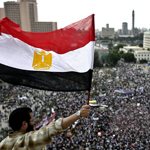
Source: Getty

Other

U.S. Should Give Meaningful and Constructive Support to Egypt’s Democratic Transition: A Statement by the Working Group on Egypt

The United States must renew its support for the democratic principles that guided Egypt's revolution to ensure that Egypt realizes its potential as a free and independent regional leader.

Link Copied
Published on Jun 7, 2011
Program mobile hero image

Program

Middle East

The Middle East Program in Washington combines in-depth regional knowledge with incisive comparative analysis to provide deeply informed recommendations. With expertise in the Gulf, North Africa, Iran, and Israel/Palestine, we examine crosscutting themes of political, economic, and social change in both English and Arabic.

Learn More

Source: June 7

Egypt’s popular uprising succeeded in its goal of dismantling Hosni Mubarak’s authoritarian regime, but the country’s democratic transition has only just begun. It is imperative that the United States renew its support for the democratic principles that guided the revolution, to ensure that Egypt realizes its potential as a free and independent regional leader.

President Obama’s call for $1 billion in debt relief, plus loan guarantees and the creation of an enterprise fund to stimulate investment, was a positive gesture signaling the administration’s commitment to the political transition underway in Egypt.

  • Congress must now support this vital assistance package in order to provide greater opportunity for all Egyptians and ensure that an economic downturn does not jeopardize democratic reforms.

  • U.S. assistance will also set an example for other donors and creditors to Egypt.

  • Debt relief and other assistance, as well as steps toward free trade, should be structured to provide incentives for and reward passage of key milestones such as free and fair parliamentary and presidential elections, as well as the writing of a new constitution that enshrines human rights and civil liberties, including the right to assembly, freedom of expression, religious freedom, and equal opportunity for women.

As Egypt’s military leadership prepares to transfer authority to an elected civilian government:

  • The United States should support free, fair, and monitored elections that extend participation to all peaceful political forces committed to the rights and freedoms defined above.

  • While various candidates and political parties in Egypt may espouse positions troubling to Americans in the course of the election campaign, the United States should determine the future of its relationship with Egypt based on how a new government formed on the basis of these elections comports itself on critical issues, from respecting human rights and civil liberties to adhering to international commitments.

The Working Group on Egypt is a nonpartisan initiative bringing substantial expertise on Egyptian politics and political reform, and aimed at ensuring that Egypt’s elections are free and fair and open to opposition candidates.

Political ReformDemocracyForeign PolicyNorth AfricaEgypt

Carnegie does not take institutional positions on public policy issues; the views represented herein are those of the author(s) and do not necessarily reflect the views of Carnegie, its staff, or its trustees.
More Work from Carnegie Endowment for International Peace

  • City at night
    Commentary
    Emissary
    The Iran War Is Also Now a Semiconductor Problem

    The conflict is exposing the deep energy vulnerabilities of Korea’s chip industry.

      Darcie Draudt-Véjares, Tim Sahay

  • Commentary
    Strategic Europe
    Taking the Pulse: Is France’s New Nuclear Doctrine Ambitious Enough?

    French President Emmanuel Macron has unveiled his country’s new nuclear doctrine. Are the changes he has made enough to reassure France’s European partners in the current geopolitical context?

      • Rym Momtaz

      Rym Momtaz, ed.

  • Commentary
    The Iran War’s Dangerous Fallout for Europe

    The drone strike on the British air base in Akrotiri brings Europe’s proximity to the conflict in Iran into sharp relief. In the fog of war, old tensions in the Eastern Mediterranean risk being reignited, and regional stakeholders must avoid escalation.

      Marc Pierini

  • Indian Prime Minister Narendra Modi, wearing an orange cap, and the Chief Minister of Uttar Pradesh, Yogi Adityanath, dressed in saffron robes, are greeting supporters of the Bharatiya Janata Party (BJP) during a roadshow ahead of the Indian General Elections in Ghaziabad, Uttar Pradesh, India, on April 6, 2024.
    Paper
    India’s Foreign Policy in the Age of Populism

    Domestic mobilization, personalized leadership, and nationalism have reshaped India’s global behavior.

      Sandra Destradi

  • Heavily armed security personnel standing atop an armored vehicle
    Commentary
    Emissary
    When Do Mass Protests Topple Autocrats?

    The recent record of citizen uprisings in autocracies spells caution for the hope that a new wave of Iranian protests may break the regime’s hold on power.

      • McKenzie Carrier

      Thomas Carothers, McKenzie Carrier

Get more news and analysis from
Carnegie Endowment for International Peace
Carnegie global logo, stacked
1779 Massachusetts Avenue NWWashington, DC, 20036-2103Phone: 202 483 7600Fax: 202 483 1840
  • Research
  • Emissary
  • About
  • Experts
  • Donate
  • Programs
  • Events
  • Blogs
  • Podcasts
  • Contact
  • Annual Reports
  • Careers
  • Privacy
  • For Media
  • Government Resources
Get more news and analysis from
Carnegie Endowment for International Peace
© 2026 Carnegie Endowment for International Peace. All rights reserved.