

Commentary
Uri Dadush
{
  "authors": [
    "Uri Dadush"
  ],
  "type": "legacyinthemedia",
  "centerAffiliationAll": "",
  "centers": [
    "Carnegie Endowment for International Peace"
  ],
  "collections": [],
  "englishNewsletterAll": "",
  "nonEnglishNewsletterAll": "",
  "primaryCenter": "Carnegie Endowment for International Peace",
  "programAffiliation": "",
  "programs": [],
  "projects": [],
  "regions": [
    "North America",
    "United States"
  ],
  "topics": [
    "Political Reform",
    "Economy"
  ]
}
Source: Getty
Because the U.S. economy is both competitive and flexible, policy makers in the United States can afford to be bold in tackling the country’s large fiscal problem.
Source: Financial Times

Precisely because of concerns about the US fiscal trajectory, however, and given that the US economy is in the middle of a recovery, I am less convinced by his call to hold on implementation of the programme “over the next two to three years until the recovery takes hold”. Though there is a case for targeted support for the unemployed – unemployment remains high and long-term unemployment is higher still (45 per cent of the unemployed have been so for more than six months compared to an average of 18 per cent since 1980) – the US economy is likely to continue to expand and create new jobs.
Recent indicators point to a US corporate sector in good shape, with capacity utilisation only about 2 per cent below the 20-year average, consumer confidence resilient and world trade continuing to grow rapidly; these factors together with low interest rates will play an important role in propping up demand. Again delaying budget consolidation in this situation may well be counterproductive, especially if it undermines confidence about the government’s determination to put its fiscal house in order, as it might well.
Partly because it has paid so little attention to it so far, there is lot that the US can do to correct its fiscal trajectory. US tax revenue over the last decade is the second lowest among the larger advanced countries, after Japan – whose public finances are in disastrous shape. The taxes paid by US corporations represent a much lower share of gross domestic product than either Greece or Italy, according to the Organisation for Economic Co-operation and Development. The US gasoline tax is a fraction of the OECD average.
The International Monetary Fund projects that US gross debt will reach 112 per cent of GDP in 2016; the only countries with higher debt are Japan and three European periphery countries under market attack: Italy , Greece and Ireland . However, among this group, only Japan will see a larger deterioration in its debt/GDP ratio than the US over the next five years. Net debt levels (excluding US government debt held by the Federal Reserve and other public agencies) are lower all around, but tell the same story. The US is also a complete outlier in its spending on healthcare and defence. And, like most other advanced countries, the US will see a large deterioration in its fiscal balances just as a result of aging: its old age dependency ratio is projected to rise from 19.5 per cent in 2010 to 32.7 per cent in 2030.
Unlike Italy, Greece and other European countries in bad fiscal shape, the US can count on a highly competitive and flexible private sector, an independent monetary policy, flexible exchange rate and, for the time being at least, its safe haven status and unparalleled ability to attract foreign investors. For these reasons, it can afford to be bolder than even Mr Rubin suggests in tackling its large fiscal problem.

Former Senior Associate, International Economics Program
Dadush was a senior associate at the Carnegie Endowment for International Peace. He focuses on trends in the global economy and is currently tracking developments in the eurozone crisis.
Recent Work
Uri Dadush
Uri Dadush
Carnegie does not take institutional positions on public policy issues; the views represented herein are those of the author(s) and do not necessarily reflect the views of Carnegie, its staff, or its trustees.

To remain effective, organizations need to master new media and legitimacy markers to make a once-in-a-century shift.

Renée DiResta, Rachel Kleinfeld, Margot Treadwell

Congress needs to step up and make EXIM a low-carbon financing powerhouse.
Jesse Young
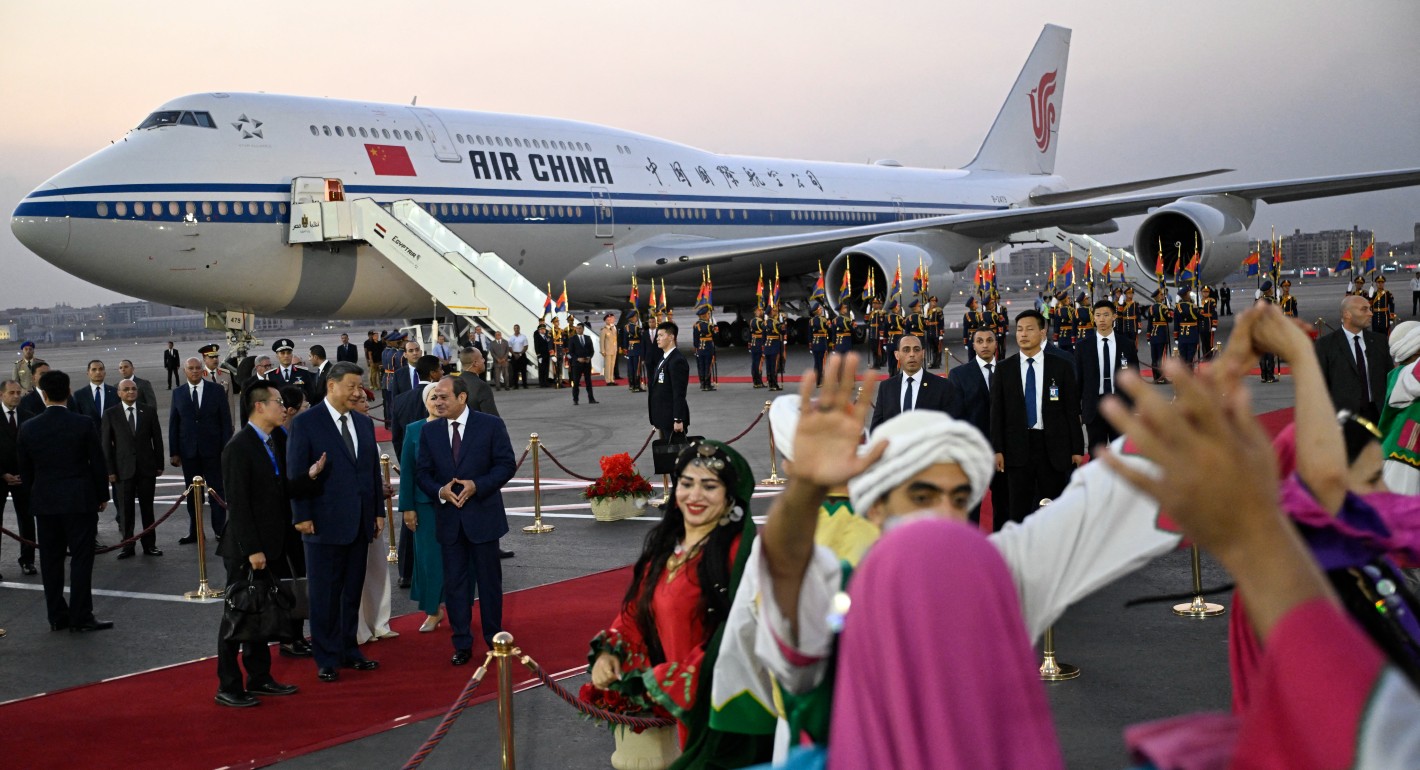
Amid celebrations of bilateral ties was a deeper focus on stability in the Middle East.

Amr Hamzawy

Canadian Prime Minister Mark Carney has twice inspired praise for standing up to U.S. President Donald Trump: at the 2026 World Economic Forum in Davos and on Canada-U.S. trade negotiations. Is Carney showing a third way better than the EU has in dealing with the Trump administration?

Rym Momtaz, ed.

Middle Eastern states should welcome an accelerated U.S. disengagement from their region.

Michael Young