

Commentary
Depleted financial reserves and a shrinking tax base mean it is no longer possible to simultaneously deliver high defense spending, price stability, and economic growth.
Alexandra Prokopenko
{
  "authors": [
    "Uri Dadush",
    "William Shaw"
  ],
  "type": "legacyinthemedia",
  "centerAffiliationAll": "dc",
  "centers": [
    "Carnegie Endowment for International Peace",
    "Carnegie Europe"
  ],
  "collections": [
    "China’s Foreign Relations",
    "China and the Developing World"
  ],
  "englishNewsletterAll": "asia",
  "nonEnglishNewsletterAll": "",
  "primaryCenter": "Carnegie Endowment for International Peace",
  "programAffiliation": "AP",
  "programs": [
    "Asia"
  ],
  "projects": [],
  "regions": [
    "East Asia",
    "China",
    "Asia",
    "North America"
  ],
  "topics": [
    "Economy"
  ]
}
Source: Getty
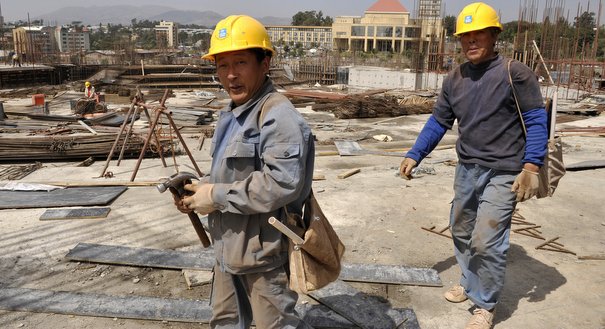
The transformation of China into an economic powerhouse will fundamentally alter Beijing’s relationship with the global economy and require far-reaching changes in the global institutional architecture.
Source: China Brief

In Juggernaut: How Emerging Markets are Reshaping Globalization, we predict that over the next few decades China, India, Brazil, Russia and other emerging markets will come to dominate the global economy. China’s growth will slow to about half of its current, blistering pace, as an aging population and the slowing absorption of rural workers into urban centers will reduce the rate of labor force increases in the modern sector, while as China’s productivity rises the gains from absorbing foreign technology will also slow, although by no means disappear. Nevertheless, China’s annual growth will continue to exceed 5 percent, or two and a half times the average growth rate of the advanced countries. In little more than a generation China will become the largest economy in the world. Extreme poverty, defined by the World Bank as an income of less than $1.25 a day, will virtually disappear, while perhaps a billion Chinese will enjoy incomes that will enable them to buy the modern goods and services that advanced country consumers take for granted. With the benefit of “backwardness,” in the space of 70 years from its opening to the world, China will have achieved what northern Europe needed more than two centuries to accomplish.
But this rapid progress is far from assured. The rise of China and other emerging markets as major global players arouses tensions and also challenges the established powers, and could lead to economic conflict or worse. The massive shifts in trade patterns implied by this forecast, where developing countries’ share of global trade rises from about one third today to nearly two thirds in 2050 (figure 1) and China alone could account for a quarter of global trade, could be met with protectionist responses. The necessary transition from a relatively undeveloped financial system, dominated by government-owned banks and subject to rigid controls on deposit interest rates and financial transactions with the rest of the world, to a modern, open financial system carries with it the potential for systemic financial crises originating not in the US or the UK (as in recent years) but in Brazil, Russia, or even China itself.

But perhaps the greatest threat to continued, rapid growth is climate change, where efforts to reach a concerted international approach to limiting carbon emissions have failed miserably. China has a critical interest in ensuring continued global prosperity through efforts to ameliorate climate change. While the advanced countries’ historical responsibility and greater wealth argue for their accepting the bulk of the sacrifices required, China’s growing share of new carbon emissions, which could reach nearly 40 percent of the world total by 2050, will make China’s participation in limiting emissions essential.
Climate change is also the most dramatic illustration of the coordination challenges that China, and the world, will face. Economic progress will come to depend even more on an increasingly complex web of economic relationships that will require ever more intensive global negotiations to manage. But the difficulties involved in achieving global agreements on critical issues will rise as the differences among the major economic powers increase. Over history, the largest countries with the greatest influence over global economic arrangements have also been the richest countries. This relationship will not hold in the future. For example, by 2035 China’s GDP will surpass that of the United States, but China’s per capita income will be less than one-third of America’s (figure 2). The sacrifices required to safeguard the global environment will be more costly for relatively low-income emerging markets than for the advanced countries, greatly complicating efforts to reach agreement on burden sharing. And weak institutions in emerging markets will hamper their ability to implement complex international agreements that require extensive domestic regulatory changes. Differences in political systems and social values among the emerging markets and between them and the advanced countries are also likely to hinder international negotiations.

Prosperity in China and the world as a whole will require efforts to achieve effective international coordination despite these differences. Tempting as it might be, this cannot be done by attempting to limit the influence of the emerging markets. Indeed, if international institutions are to remain relevant, then the emerging markets must be accorded decision making power that is comparable to their economic weight. The reliance on the G20 rather than the G8 as the primary forum for international economic discussions is only a first step in the right direction.
In addition, attempts to arrive at complex global deals through universal consensus are unlikely to succeed, as exemplified by the interminable Doha negotiations. The global economy is already too complex and diverse for all countries to agree on a large package of effective policies, and requiring consensus will result either in a minimalist solution that does not adequately address the issues or outright failure. Instead, negotiations should involve a critical mass of players, typically the largest countries that affect a particular issue. Provisions can be made to allow more countries to join once agreement is reached. Multilateral processes will still be important to frame the debate, promote the legitimacy of proposed solutions, and over time extend their reach. But multilateralism cannot be relied upon to speedily achieve the breakthroughs in coordinated action required to confront the coming challenges.
These relatively conservative forecasts imply continued income gains for China and other emerging markets over the next decades, a dramatic decline in absolute poverty, and increasing prosperity for the rich countries. To achieve these gains, global institutions will need to adapt to the reality of a more diverse, and potentially unstable, world. But ultimately, the decisions that will shape the future economic environment will be taken in the capitals of the largest economies. For China to maintain its remarkable economic progress, its government and citizens must develop what might be called a “global conscience.” In other words, in keeping with the nation’s greatly expanded global power and influence, Chinese policymakers will need to undergo a major shift in their decisionmaking that reflects an awareness not only of domestic needs, but also of a much broader global constituency. China is not alone in confronting this challenge, of course; the economic difficulties in the US and other advanced countries also risks making them overly inward-looking. The failure to develop much greater awareness of our increasingly interdependent world could spell economic disaster.

Former Senior Associate, International Economics Program
Dadush was a senior associate at the Carnegie Endowment for International Peace. He focuses on trends in the global economy and is currently tracking developments in the eurozone crisis.
Former Visiting Scholar, International Economics Program
Shaw was a visiting scholar in Carnegie’s International Economics Program. He is the co-author of Juggernaut: How Emerging Markets Are Reshaping Globalization.
Carnegie does not take institutional positions on public policy issues; the views represented herein are those of the author(s) and do not necessarily reflect the views of Carnegie, its staff, or its trustees.

Depleted financial reserves and a shrinking tax base mean it is no longer possible to simultaneously deliver high defense spending, price stability, and economic growth.

Alexandra Prokopenko

Huawei pushed hard to enter the Egyptian data centers market, until the Americans made a better offer.

Angie Omar
U.S. trading partners in Asia are closely watching the dispute for signs of how it may affect their own interests.

Barbara Weisel
Chinese strategists are once again debating whether American power is declining and whether U.S. hegemony is experiencing irreversible decay.
Wu Xinbo

With the growth in points of friction between the great powers, organizations like the SCO will continue to play a role in the strategic adaptation of the smaller powers caught between them.

Temur Umarov