

Commentary
Thomas de Waal
{
  "authors": [
    "Thomas de Waal"
  ],
  "type": "legacyinthemedia",
  "centerAffiliationAll": "dc",
  "centers": [
    "Carnegie Endowment for International Peace",
    "Carnegie Europe"
  ],
  "collections": [],
  "englishNewsletterAll": "ctw",
  "nonEnglishNewsletterAll": "",
  "primaryCenter": "Carnegie Europe",
  "programAffiliation": "russia",
  "programs": [
    "Russia and Eurasia"
  ],
  "projects": [],
  "regions": [
    "Caucasus",
    "Russia",
    "Azerbaijan",
    "Armenia",
    "Georgia"
  ],
  "topics": [
    "Foreign Policy"
  ]
}
Source: Getty
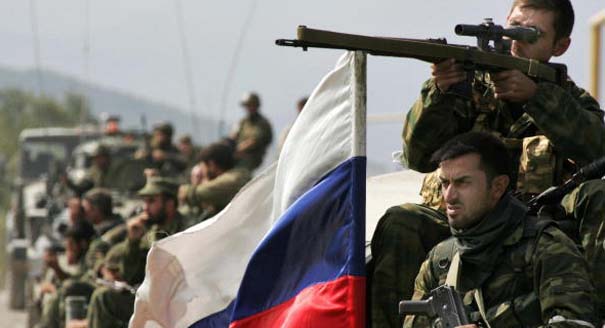
Vladimir Putin's return to the Russian presidency will have a significant impact on Moscow's relations with the South Caucasus, but the nature of that impact remains unclear.
Source: National Interest

Caucasian leaders’ calculations will certainly change in the wake of the Putin move. In Armenia, news of his return will have gladdened Robert Kocharian, another ex-president who has been lurking in the shadows. There are obvious parallels between the two: both men gave up the position of president in 2008 after serving two terms and handed over power to a trusted successor. Kocharian is, like Putin, a man of action with a tough, uncompromising personality. And he may see the return of his former ally as a chance to relaunch his own public career.
There are important differences, however. Unlike Dmitry Medvedev, current Armenian president Serzh Sarkisian (whose term expires in early 2013) is the equal of his predecessor. Indeed, the two men were partners for thirty years; when they began their political careers in the early 1980s, in the Komsomol (Young Communist Party organization) of the town of Stepanakert, Sarkisian was the senior partner and Kocharian was his junior.
More crucially, Putin is genuinely popular in Russia—if the country had an authentically competitive election and not just a choreographed coronation, he would probably win it. Kocharian, by contrast, is extremely unpopular with much of the Armenian public, and he would encounter strong public opposition if he initiated a comeback. Serzh Sarkisian will know that—and may indeed win some covert support from opposition figures, who prefer to see him in office over Kocharian.
In Azerbaijan, President Ilham Aliev will not be cracking open the champagne. He and Putin got off to a fairly good working relationship, but it deteriorated in 2006 when Aliev refused to cooperate with Putin’s plans to deprive Georgia of cheap gas. Aliev struck up a better relationship with Medvedev, who signed a grandiose declaration of Azerbaijani-Russian partnership and friendship in Baku in July 2008, a month before Georgia and Russia went to war.
When it comes to the biggest issue in the South Caucasus, the smoldering Armenian-Azerbaijani conflict over Nagorny Karabakh, we can expect far less engagement from Putin than from Medvedev. Putin was reportedly infuriated on the one occasion he genuinely tried to mediate between the Armenian and Azerbaijani presidents in September 2004 in Astana. The two men kept him waiting, then quarreled with each other in his presence. Putin does not like being treated that way—unlike Medvedev, who had the stamina to convene nine meetings between Aliev and Sarkisian.
In February 2007, at one of Putin’s marathon Kremlin press conferences, an Azerbaijani journalist asked a question about the Karabakh conflict. The answer reveals all one needs to know about Putin’s views on the issue. The Russian leader began sensibly, telling the Azerbaijani that Russia would not impose a solution, “You [Armenians and Azerbaijanis] shouldn’t shift this problem onto us. It’s you who have to find an acceptable way out of this situation.” But Putin didn’t stop there. He went on to muse aloud how drinkable the Soviet-era cheap alcoholic drink Agdam portvein had been and said the Armenians and Azerbaijanis should restore the town (now under Armenian control and in ruins) and resume alcoholic production. He gave the impression that this conflict was a far-away problem unworthy of much concern and which he associated with a student-era cheap tipple.
In Georgia, the reality is stark. Putin and Georgian leader Mikheil Saakashvili deeply loathe each other. Putin told French president Nicolas Sarkozy that he wanted to see his Georgian adversary hung by the testicles. Saakashvili’s joke about the smaller man being “Liliputin” got back to Moscow. They went to war once, and their animosity should guarantee that Georgian-Russian relations will go from bad to very bad next year as Putin returns. In the mean time, Georgia is still, using its veto power to block Russia’s World Trade Organization accession until it gets concessions over monitoring of the borders of Abkhazia and South Ossetia. We can only hope that a deal is done before Putin returns.
None of this is very promising. But any predictions on the Putin comeback are inevitably incomplete. After all, Putin is a pragmatist who will be dealing with a different and probably weaker Russia—certainly a Russia in a very different economic and political circumstance from 2008. Hence, it’s possible that Putin could use his authority to be the Charles de Gaulle of the Caucasus, promising his small southern neighbors a big strategic reconciliation on the part of Russia. Possible, but not probable.

Senior Fellow, Carnegie Europe
Thomas de Waal is a senior fellow at Carnegie Europe, specializing in Eastern Europe and the Caucasus.
Recent Work
Thomas de Waal
Thomas de Waal
Carnegie does not take institutional positions on public policy issues; the views represented herein are those of the author(s) and do not necessarily reflect the views of Carnegie, its staff, or its trustees.
The real test may come after the leaders leave the room.



Sheena Chestnut Greitens, Oriana Skylar Mastro, Yukon Huang, …

The Horn of Africa countries are among those facing a new security calculus.


Andrew Leber, Lesley Anne Warner

The European far right might fail to steer EU policy in the direction Russia wants, but they will create enough chaos inside Europe to benefit the Kremlin.

Dimitar Bechev

The new U.S.–Denmark–Greenland agreement will help Washington exert political, economic, and financial dominance under the guise of security. Yet, it acknowledged Copenhagen’s and Nuuk’s sovereignty on the island.

Marc Pierini
Washington needs to recognize that influence in the Western Hemisphere comes from presence, delivery, and reliability. It also must recognize that while the United States remains the key external actor, it no longer operates in a permissive environment and cannot presume deference from regional players who have other options, namely China.
Juan S. Gonzalez