• Research
  • Emissary
  • About
  • Experts
Carnegie Global logoCarnegie lettermark logo
DemocracyIran
  • Donate
{
  "authors": [
    "Ashley J. Tellis"
  ],
  "type": "testimony",
  "centerAffiliationAll": "dc",
  "centers": [
    "Carnegie Endowment for International Peace",
    "Carnegie Russia Eurasia Center"
  ],
  "collections": [],
  "englishNewsletterAll": "ctw",
  "nonEnglishNewsletterAll": "",
  "primaryCenter": "Carnegie Endowment for International Peace",
  "programAffiliation": "SAP",
  "programs": [
    "South Asia"
  ],
  "projects": [
    "Eurasia in Transition"
  ],
  "regions": [
    "South Asia",
    "Afghanistan",
    "Pakistan"
  ],
  "topics": [
    "Security",
    "Military",
    "Foreign Policy"
  ]
}
Source: Getty

Testimony

Negotiations Cannot Solve Afghanistan's Problems

The United States should stop emphasizing talks with the Quetta shura and the Haqqani network as the solution to Afghanistan’s problems. The insurgency has virtually no incentive to negotiate when its adversaries are headed for the exit.

Link Copied
By Ashley J. Tellis
Published on Nov 3, 2011
Program mobile hero image

Program

South Asia

The South Asia Program informs policy debates relating to the region’s security, economy, and political development. From strategic competition in the Indo-Pacific to India’s internal dynamics and U.S. engagement with the region, the program offers in-depth, rigorous research and analysis on South Asia’s most critical challenges.

Learn More
Project hero Image

Project

Eurasia in Transition

Learn More

Source: November 3

The Obama administration made a grave mistake in announcing a deadline for withdrawal from Afghanistan, argues Ashley J. Tellis in testimony before the House Foreign Affairs Committee. He explains why reconciliation talks risk failure, why the real problem lurks across the border in Pakistan, and the steps the United States can take to improve the prospects for a successful transition.

U.S. Policy Recommendations for Afghanistan:

  • Forget reconciliation: The United States should stop emphasizing talks with the Quetta shura and the Haqqani network as the solution to Afghanistan’s problems. The insurgency has virtually no incentive to negotiate when its adversaries are headed for the exit.
     
  • Postpone the withdrawal of U.S. forces: Washington should delay the withdrawal of surge troops beyond 2012 to consolidate security gains in the south and east.
     
  • Expand supply networks: As a hedge against continued reliance on Pakistan, the United States should expand its network of air and ground lines into Afghanistan.
     
  • Secure basing rights: The United States should ensure that the strategic partnership agreement currently being negotiated with Kabul provides sufficient U.S. basing rights to conduct counterterrorism operations and support the Afghan National Security Forces over the long term.

U.S. Policy Recommendations for Pakistan:

  • Reduce equipment transfers: Washington should stop transfers of military equipment that have no relevance to Pakistani counterinsurgency and counterterrorism operations.
     
  • Reform security aid: To ensure tax dollars are not wasted, the United States should gradually replace Coalition Support Funds with direct counterterrorism assistance tied to specific counterterrorism targets.
     
  • Reform civilian aid: Washington should condition future civilian aid to Pakistan on Islamabad’s support for accelerated South Asian economic integration and structural changes in its capacity to mobilize domestic resources.
     
  • Stand up for the civilian government: The Pakistani security services exercise disproportionate control over key national decisions within Pakistan. The United States should more forcefully support the civilian government in Islamabad, despite its serious weaknesses.

Tellis concludes, “None of these policy changes by themselves will suffice to transform Pakistan into a successful state or to shift the Pakistani military’s current strategies in more helpful directions. But they will signal the limits of American patience and spare the American taxpayer the indignity of having to subsidize Pakistani state actions that directly threaten American lives and interests.”

About the Author

Ashley J. Tellis

Former Senior Fellow

Ashley J. Tellis was a senior fellow at the Carnegie Endowment for International Peace.

    Recent Work

  • Paper
    Multipolar Dreams, Bipolar Realities: India’s Great Power Future

      Ashley J. Tellis

  • Commentary
    India Sees Opportunity in Trump’s Global Turbulence. That Could Backfire.

      Ashley J. Tellis

Ashley J. Tellis
Former Senior Fellow
SecurityMilitaryForeign PolicySouth AsiaAfghanistanPakistan

Carnegie does not take institutional positions on public policy issues; the views represented herein are those of the author(s) and do not necessarily reflect the views of Carnegie, its staff, or its trustees.

More Work from Carnegie Endowment for International Peace

  • City at night
    Commentary
    Emissary
    The Iran War Is Also Now a Semiconductor Problem

    The conflict is exposing the deep energy vulnerabilities of Korea’s chip industry.

      Darcie Draudt-Véjares, Tim Sahay
  • Commentary
    Strategic Europe
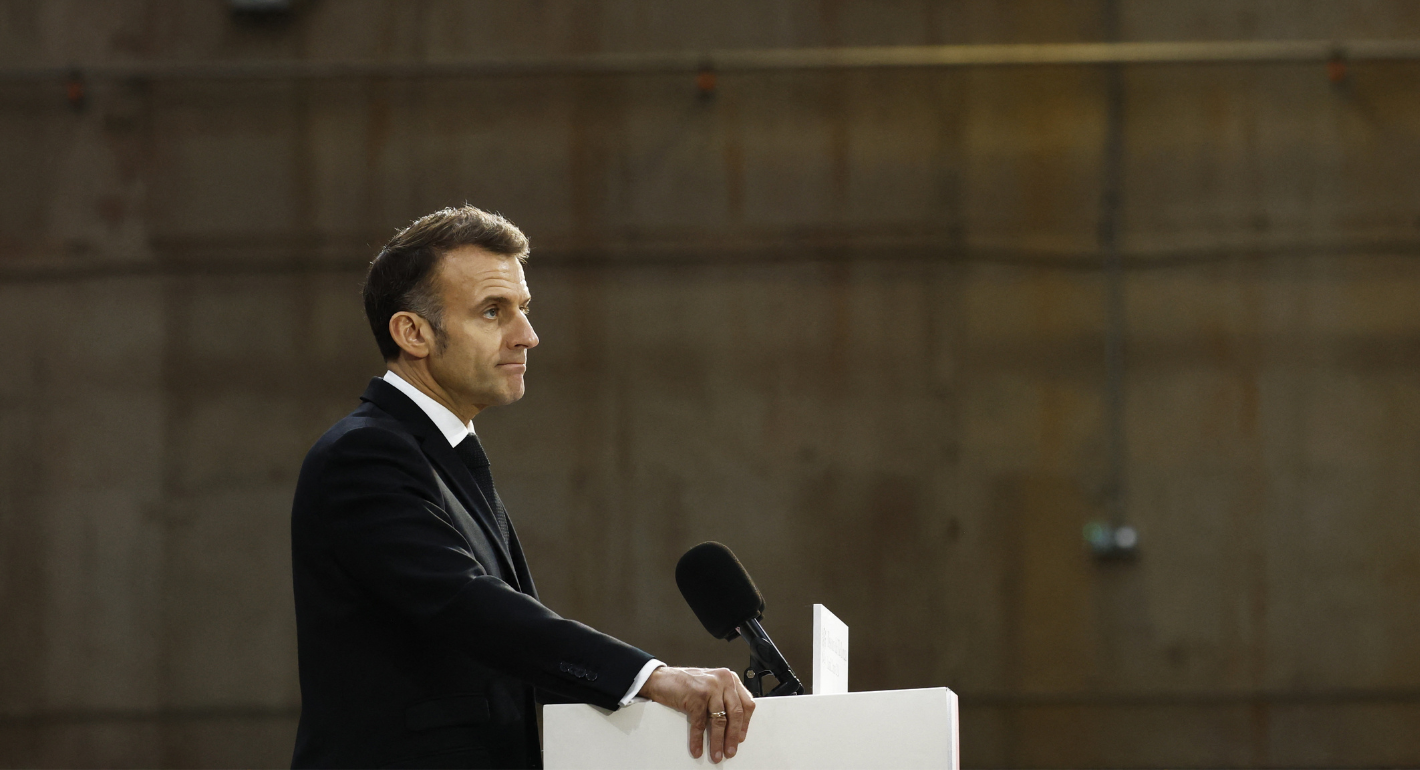
    Taking the Pulse: Is France’s New Nuclear Doctrine Ambitious Enough?

    French President Emmanuel Macron has unveiled his country’s new nuclear doctrine. Are the changes he has made enough to reassure France’s European partners in the current geopolitical context?

      • Rym Momtaz

      Rym Momtaz, ed.

  • Commentary
    The Iran War’s Dangerous Fallout for Europe

    The drone strike on the British air base in Akrotiri brings Europe’s proximity to the conflict in Iran into sharp relief. In the fog of war, old tensions in the Eastern Mediterranean risk being reignited, and regional stakeholders must avoid escalation.

      Marc Pierini
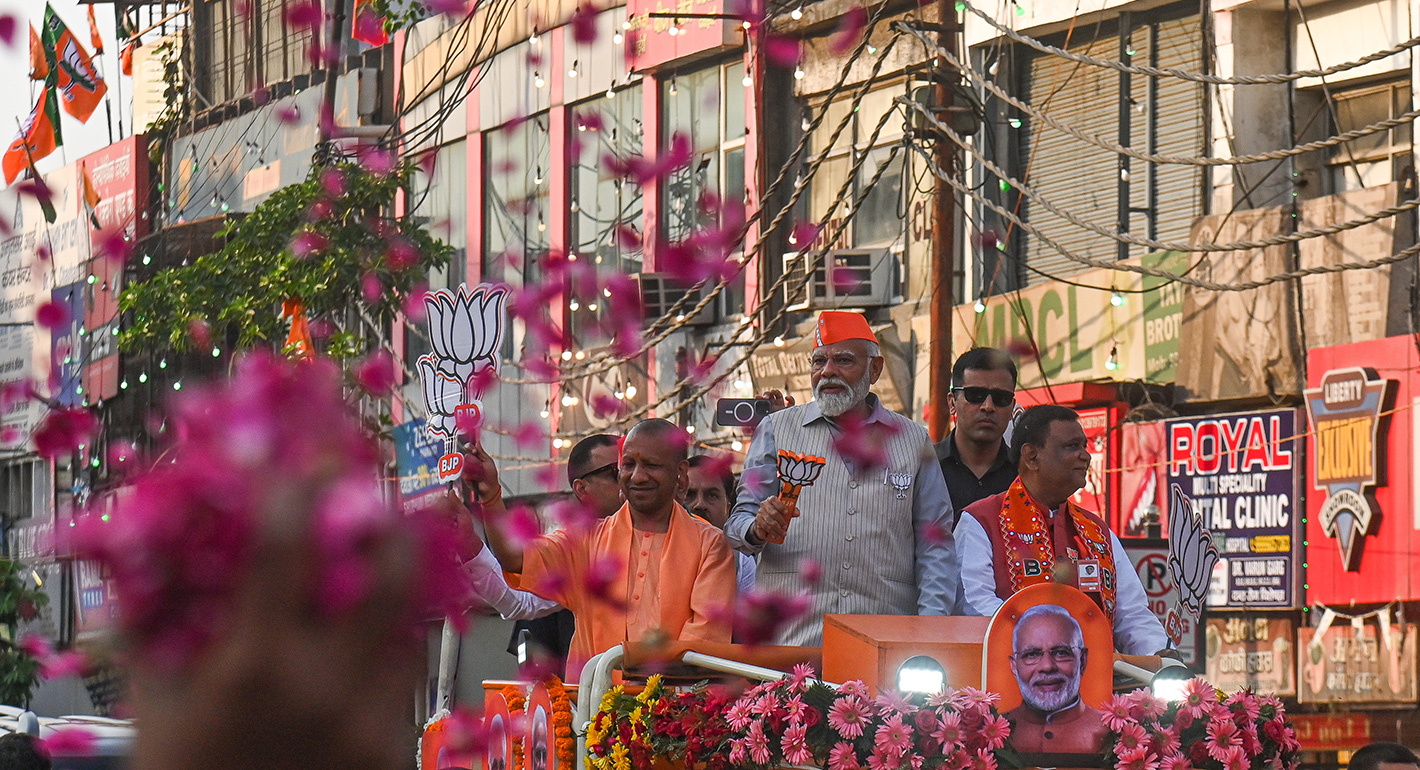
  • Indian Prime Minister Narendra Modi, wearing an orange cap, and the Chief Minister of Uttar Pradesh, Yogi Adityanath, dressed in saffron robes, are greeting supporters of the Bharatiya Janata Party (BJP) during a roadshow ahead of the Indian General Elections in Ghaziabad, Uttar Pradesh, India, on April 6, 2024.
    Paper
    India’s Foreign Policy in the Age of Populism

    Domestic mobilization, personalized leadership, and nationalism have reshaped India’s global behavior.
      Sandra Destradi
  • Trump United Nations multilateralism institutions 2236462680
    Article
    Resetting Cyber Relations with the United States

    For years, the United States anchored global cyber diplomacy. As Washington rethinks its leadership role, the launch of the UN’s Cyber Global Mechanism may test how allies adjust their engagement.

      • Christopher Painter

      Patryk Pawlak, Chris Painter

Get more news and analysis from
Carnegie Endowment for International Peace
Carnegie global logo, stacked
1779 Massachusetts Avenue NWWashington, DC, 20036-2103Phone: 202 483 7600Fax: 202 483 1840
  • Research
  • Emissary
  • About
  • Experts
  • Donate
  • Programs
  • Events
  • Blogs
  • Podcasts
  • Contact
  • Annual Reports
  • Careers
  • Privacy
  • For Media
  • Government Resources
Get more news and analysis from
Carnegie Endowment for International Peace
© 2026 Carnegie Endowment for International Peace. All rights reserved.