

Paper
Ashley J. Tellis
{
  "authors": [
    "Ashley J. Tellis"
  ],
  "type": "other",
  "centerAffiliationAll": "dc",
  "centers": [
    "Carnegie Endowment for International Peace"
  ],
  "collections": [],
  "englishNewsletterAll": "ctw",
  "nonEnglishNewsletterAll": "",
  "primaryCenter": "Carnegie Endowment for International Peace",
  "programAffiliation": "SAP",
  "programs": [
    "South Asia"
  ],
  "projects": [],
  "regions": [
    "North America",
    "United States",
    "South Asia",
    "Afghanistan",
    "Pakistan"
  ],
  "topics": [
    "Security",
    "Military",
    "Foreign Policy"
  ]
}
Source: Getty
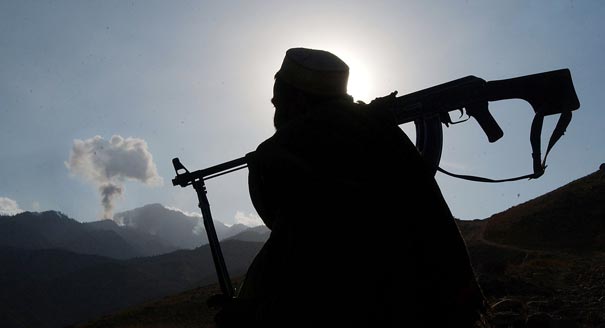
The Obama administration is supporting political reconciliation between the Taliban and coalition forces in Afghanistan in order to safeguard the upcoming security transition, but numerous challenges still loom.
U.S. forces are beginning the long process of withdrawal from Afghanistan. The international community is committed to completing a security transition by 2014, at which point coalition forces will cease to have primary responsibility for assuring Afghan security. But even the best-laid transition plans are at risk of failure if shoring up the Afghan state is not made a priority. The international conference on Afghanistan in Bonn on December 5 offers the United States and its allies an opportunity to institute the changes necessary for success.
Although NATO’s efforts to train Afghan national forces have made remarkable progress in recent years, it is unlikely that the indigenous military, police, and militia will be capable of independently securing the country against the wide range of terrorist and insurgent groups that will still be present in the region in 2014. Moreover, President Barack Obama’s decision to withdraw the surge forces from Afghanistan by September 2012 will prevent U.S. military commanders from being able to complete what they have so effectively begun: decimating the mid-level command structure of the Taliban that serves as the vital link between the rahbari shura (the leadership council) based in Quetta, Pakistan, and their foot soldiers in the field.
The administration, supported by the international community, has attempted to resolve this conundrum by promoting reconciliation with the Taliban, but that effort too is faltering. The insurgent leadership simply does not believe that it has been conclusively defeated—and accepting the U.S. terms now would surely be tantamount to acknowledging defeat. These challenges are exacerbated by the most vexing issue of all—the problematic role of Pakistan, which provides the insurgents sanctuary while using them as tools in its efforts to subordinate Afghanistan. All things considered, therefore, the prospects for successful reconciliation are indeed dim.
Yet, after 2014, the international community can still leave behind an Afghanistan that is durable enough to ensure that the Taliban can never regain effective control. Such meaningful success will require not jettisoning reconciliation so much as recommitting to the “hardening” of the Afghan state. First, the United States and its allies must invest in strengthening Afghan political institutions to deepen democracy, foster internal reconciliation, and ensure a peaceful transition of presidential power in 2014.
Second, the international community must help Afghanistan shift away from its current dependency-inducing pattern of economic growth underwritten by large quantities of foreign aid. Budgetary support for Kabul will be necessary for some time, but Washington and its allies must also assist Afghanistan in developing policy frameworks that expand private investment, effectively manage the country’s mineral resources, sustain improvements in agriculture, and deepen its economic integration with Pakistan and India.
Third, the international community must commit to funding Afghanistan’s national security forces through sustained contributions to a dedicated trust fund. Meanwhile, Washington should conclude the strategic partnership agreement currently being negotiated with Kabul to permit both counterterrorism operations and operational support for Afghan security forces over the long term. The United States must also delay the planned withdrawal of American surge troops and maintain the remaining U.S. forces in country until 2014.
In the absence of such commitments, the desire that Afghanistan “never again” become a haven for terrorism will remain merely a pious invocation.
Former Senior Fellow
Ashley J. Tellis was a senior fellow at the Carnegie Endowment for International Peace.
Recent Work
Ashley J. Tellis
Ashley J. Tellis
Carnegie does not take institutional positions on public policy issues; the views represented herein are those of the author(s) and do not necessarily reflect the views of Carnegie, its staff, or its trustees.

Trump has promised Belarus a massive potash deal. But Minsk is seeking something greater: restored Western transit and greater room for maneuver from Russia.

Balázs Jarábik
The real test may come after the leaders leave the room.



Sheena Chestnut Greitens, Oriana Skylar Mastro, Yukon Huang, …

The Horn of Africa countries are among those facing a new security calculus.


Andrew Leber, Lesley Anne Warner

The European far right might fail to steer EU policy in the direction Russia wants, but they will create enough chaos inside Europe to benefit the Kremlin.

Dimitar Bechev

The new U.S.–Denmark–Greenland agreement will help Washington exert political, economic, and financial dominance under the guise of security. Yet, it acknowledged Copenhagen’s and Nuuk’s sovereignty on the island.

Marc Pierini