• Research
  • Emissary
  • About
  • Experts
Carnegie Global logoCarnegie lettermark logo
Democracy
  • Donate
{
  "authors": [
    "Hans Timmer",
    "Uri Dadush"
  ],
  "type": "other",
  "centerAffiliationAll": "",
  "centers": [
    "Carnegie Endowment for International Peace"
  ],
  "collections": [],
  "englishNewsletterAll": "",
  "nonEnglishNewsletterAll": "",
  "primaryCenter": "Carnegie Endowment for International Peace",
  "programAffiliation": "",
  "programs": [],
  "projects": [],
  "regions": [
    "North America"
  ],
  "topics": [
    "Economy",
    "Trade"
  ]
}
Source: Getty

Other

On the Brink

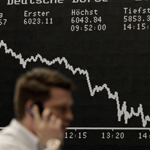
The probability of severe economic consequences around the world is substantial and increasing.

Link Copied
By Hans Timmer and Uri Dadush
Published on Dec 21, 2011
Is the world on the brink of an economic collapse?
Hans Timmer
The probability of severe economic consequences around the world is substantial and increasing.

The situation in Europe is not good. There is a major financial crisis building and this is reflected in the real economy with several countries either in or entering recession. But what worries us most at the World Bank given our mandate is the risk of the economic crisis spreading to the developing world.
 

Read more

Developing countries are dependent on exports—the weakened demand in Europe is already felt. The banking sector is already seeing the impact of deleveraging in European banks, especially toward Eastern Europe. That is serious, but also there are the connections between European banks and Latin American banks that are different in nature but still bring risk.

There is a possibility that the uncertainty will take its toll everywhere in the world and there will be weaker demand in emerging markets that have until now been the drivers of economic growth. This worry is already being seen in India, Turkey, and Brazil but the risk of seeing this in more countries is real.
 
Uri Dadush
Outside the eurozone, the underlying dynamics are actually quite positive. The U.S. economy is on a recovery path with reassuring recent data. And the emerging markets were going to slow down simply because they were overheating and facing inflationary pressures and they need to tighten policy, but the emerging markets could have stayed on a strong, sustained expansion.

The European crisis directly relates to the inner workings of its monetary union and the problems that have built up over the past decade. This is the principal cause of the current uncertainties. And it is no simple matter as the eurozone is the largest bloc in the economic world.
 
Hans Timmer
I disagree. The economic crisis is not necessarily a very specific shock coming out of Europe that is directly related to a malfunctioning of the European system. One could even argue that the current economic crisis has little to do with the euro.

We are in the midst of a serious financial crisis that could’ve existed with or without the euro. It is a reflection of the structural problems in high-income countries. For a long time the underlying growth rates have been very modest and the boom periods that come from time to time are more bubbles than real growth based on competitive economies. And the bubbles can’t last, and we see the consequences of this in Europe.

Imagining a world without a euro, crises can still occur and have occurred in the past. What we are seeing is the consequence of over-borrowing, underpricing risk, and the follow up of the huge financial crisis that we went through only a couple of years ago.  MORE►

————————
Hans Timmer is the director of the World Bank's development prospects group.

Authors

Hans Timmer
Uri Dadush
Former Senior Associate, International Economics Program
Uri Dadush
EconomyTradeNorth America

Carnegie does not take institutional positions on public policy issues; the views represented herein are those of the author(s) and do not necessarily reflect the views of Carnegie, its staff, or its trustees.

More Work from Carnegie Endowment for International Peace

  • Commentary
    Strategic Europe
    Taking the Pulse: Can the EU Attract Foreign Investment and Reduce Dependencies?

    EU member states clash over how to boost the union’s competitiveness: Some want to favor European industries in public procurement, while others worry this could deter foreign investment. So, can the EU simultaneously attract global capital and reduce dependencies?

      • Rym Momtaz

      Rym Momtaz, ed.

  • Commentary
    Strategic Europe
    Europolis, Where Europe Ends

    A prophetic Romanian novel about a town at the mouth of the Danube carries a warning: Europe decays when it stops looking outward. In a world of increasing insularity, the EU should heed its warning.

      Thomas de Waal

  • Wide shot of Trump and Modi, with Trump pointing
    Commentary
    Emissary
    The Trump-Modi Trade Deal Won’t Magically Restore U.S.-India Trust

    Washington and New Delhi should be proud of their putative deal. But international politics isn’t the domain of unicorns and leprechauns, and collateral damage can’t simply be wished away.

      Evan A. Feigenbaum

  • people sitting on a stage
    Commentary
    From Loss and Damage to Climate Mobility Action

    Senior climate, finance, and mobility experts discuss how the Fund for Responding to Loss and Damage could unlock financing for climate mobility.

      • Alejandro Rodriguez

      Alejandro Martin Rodriguez

  • Commentary
    Strategic Europe
    Europe Falls Behind in the South Caucasus Connectivity Race

    The EU lacks leadership and strategic planning in the South Caucasus, while the United States is leading the charge. To secure its geopolitical interests, Brussels must invest in new connectivity for the region.

      Zaur Shiriyev

Get more news and analysis from
Carnegie Endowment for International Peace
Carnegie global logo, stacked
1779 Massachusetts Avenue NWWashington, DC, 20036-2103Phone: 202 483 7600Fax: 202 483 1840
  • Research
  • Emissary
  • About
  • Experts
  • Donate
  • Programs
  • Events
  • Blogs
  • Podcasts
  • Contact
  • Annual Reports
  • Careers
  • Privacy
  • For Media
  • Government Resources
Get more news and analysis from
Carnegie Endowment for International Peace
© 2026 Carnegie Endowment for International Peace. All rights reserved.