• Research
  • Emissary
  • About
  • Experts
Carnegie Global logoCarnegie lettermark logo
DemocracyIran
  • Donate
{
  "authors": [
    "Togzhan Kassenova"
  ],
  "type": "legacyinthemedia",
  "centerAffiliationAll": "dc",
  "centers": [
    "Carnegie Endowment for International Peace"
  ],
  "collections": [
    "U.S. Nuclear Policy",
    "Korean Peninsula"
  ],
  "englishNewsletterAll": "ctw",
  "nonEnglishNewsletterAll": "",
  "primaryCenter": "Carnegie Endowment for International Peace",
  "programAffiliation": "NPP",
  "programs": [
    "Nuclear Policy"
  ],
  "projects": [],
  "regions": [
    "North America",
    "United States",
    "East Asia",
    "North Korea"
  ],
  "topics": [
    "Nuclear Policy"
  ]
}
Source: Getty

In The Media

Radiological Materials and the Nuclear Security Summit

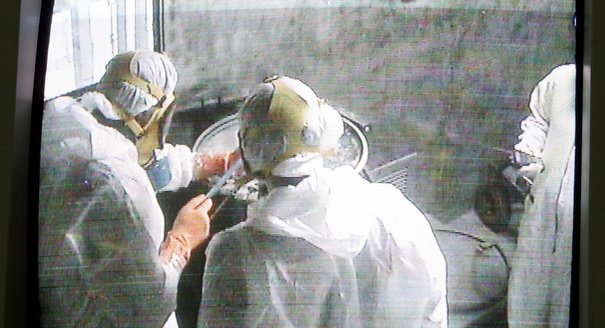
With the second Nuclear Security Summit fast approaching, it is a good moment to reflect on the issue of radiological security.

Link Copied
By Togzhan Kassenova
Published on Dec 21, 2011
Program mobile hero image

Program

Nuclear Policy

The Nuclear Policy Program aims to reduce the risk of nuclear war. Our experts diagnose acute risks stemming from technical and geopolitical developments, generate pragmatic solutions, and use our global network to advance risk-reduction policies. Our work covers deterrence, disarmament, arms control, nonproliferation, and nuclear energy.

Learn More

Source: Bulletin of the Atomic Scientists

Radiological Materials and the Nuclear Security SuWith the second Nuclear Security Summit fast approaching, it is a good moment to reflect on one of the new issues with which the Seoul summit will attempt to grapple: radiological security. The first Nuclear Security Summit in Washington focused on weapons-usable nuclear materials -- highly enriched uranium and plutonium. The rationale behind a strictly defined agenda was to attract attention to the materials that pose the gravest dangers, as they can be used in a nuclear weapon. The organizers of the second summit, however, have expanded the agenda to include issues pertaining to radioactive materials.

About the Author

Togzhan Kassenova
Togzhan Kassenova

Nonresident Fellow, Nuclear Policy Program

Kassenova is a nonresident fellow in the Nuclear Policy Program at the Carnegie Endowment.

    Recent Work

  • Commentary
    How Kazakhstan Fought Back Against Soviet Nuclear Tests
      • Togzhan Kassenova

      Togzhan Kassenova

  • Report
    Perspectives on the Evolving Nuclear Order
      • Togzhan Kassenova

      Toby Dalton, Togzhan Kassenova, Lauryn Williams

Togzhan Kassenova
Nonresident Fellow, Nuclear Policy Program
Togzhan Kassenova
Nuclear PolicyNorth AmericaUnited StatesEast AsiaNorth Korea

Carnegie does not take institutional positions on public policy issues; the views represented herein are those of the author(s) and do not necessarily reflect the views of Carnegie, its staff, or its trustees.

More Work from Carnegie Endowment for International Peace

  • illustration of AI chat bubbles
    Commentary
    California Sees Ways AI Can Support Policymaking. Here’s What It Needs to Succeed.

    For AI to capture the public’s policy concerns, people need to know that the models are elevating human concerns in human words, not generating their own.

      • Micah Weinberg headshot

      Micah Weinberg

  • Commentary
    Strategic Europe
    Taking the Pulse: Is it NATO’s Job to Support Trump’s War of Choice?

    Donald Trump has demanded that European allies send ships to the Strait of Hormuz while his war of choice in Iran rages on. He has constantly berated NATO while the alliance’s secretary-general has emphatically supported him.

      • Rym Momtaz

      Rym Momtaz, ed.

  • Commentary
    Carnegie Politika
    Lukashenko’s Bromance With Trump Has a Sell-By Date

    Lukashenko is willing to make big sacrifices for an invitation to Mar-a-Lago or the White House. He also knows that the clock is ticking: he must squeeze as much out of the Trump administration as he can before congressional elections in November leave Trump hamstrung or distracted.

      Artyom Shraibman

  • Mullin with his hand raised, taking an oath
    Commentary
    Emissary
    Can Mullin Revive FEMA?

    Restoring competence and trust to the anemic, neglected disaster recovery agency is a matter of national security.

      • Sarah Labowitz
      • Debbra Goh

      Sarah Labowitz, Debbra Goh

  • Worker pushing machinery toward a car frame
    Commentary
    Emissary
    Europe’s New Industrial Policy Can Learn From U.S. Mistakes

    Although the IAA often differs from the IRA, European policymakers can still take note of the U.S. act’s shortcomings.

      Milo McBride

Get more news and analysis from
Carnegie Endowment for International Peace
Carnegie global logo, stacked
1779 Massachusetts Avenue NWWashington, DC, 20036-2103Phone: 202 483 7600Fax: 202 483 1840
  • Research
  • Emissary
  • About
  • Experts
  • Donate
  • Programs
  • Events
  • Blogs
  • Podcasts
  • Contact
  • Annual Reports
  • Careers
  • Privacy
  • For Media
  • Government Resources
Get more news and analysis from
Carnegie Endowment for International Peace
© 2026 Carnegie Endowment for International Peace. All rights reserved.