

Q&A
Matt Ferchen
{
  "authors": [
    "Matt Ferchen"
  ],
  "type": "legacyinthemedia",
  "centerAffiliationAll": "",
  "centers": [
    "Carnegie Endowment for International Peace",
    "Carnegie China"
  ],
  "collections": [
    "China and the Developing World",
    "China’s Foreign Relations"
  ],
  "englishNewsletterAll": "",
  "nonEnglishNewsletterAll": "",
  "primaryCenter": "Carnegie China",
  "programAffiliation": "",
  "programs": [],
  "projects": [],
  "regions": [],
  "topics": [
    "Economy"
  ]
}
Source: Getty
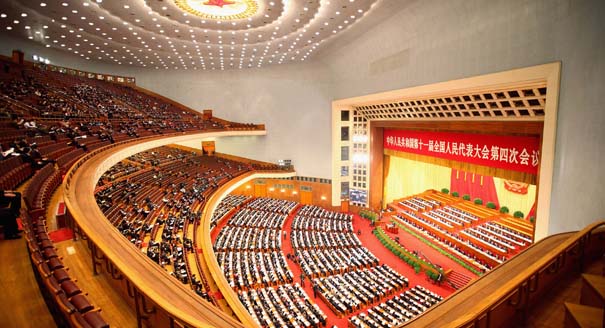
China's future role in the international community is hotly debated both inside and outside the country. It remains to be seen how China's growing public power might affect the government's foreign policy.
Source: Global Times

GT: There are calls for democracy in China, but the public is often hawkish on the country's disputes with its neighbors. So how will foreign policy change when the Chinese government becomes more democratic?
Ferchen: The relationship between public opinion and foreign policy, even in formal democratic systems like the US, is complicated, often indirect, and can therefore be difficult to specify. Foreign policy, unlike many purely domestic issues, is often directed and influenced by specialists both inside and outside of government.
In China, as more and more people are able to voice their opinions via the Internet or other social networks, there is undoubtedly scope for increased influence from public opinion on a huge range of issues, including foreign policy.
I don't see any necessary reason to fear an increase in hawkish sentiment, but it's not difficult to imagine that public opinion about foreign policy could quite easily become a proxy for any range of more local concerns or grievances.
So anxiety about rising food or property prices could express itself in anger about an event halfway across the world. The real challenge is for Chinese foreign policy leaders to maintain clear-minded policies and responsible approaches to global challenges even amid the rising number of voices.
GT: Some Chinese opinion leaders say China has gained more "enemies" than "friends" over the past years, as a result of rejecting universal values and a Western-style democratic system. What's your opinion on this?
Ferchen: This question of whether or not China's own political or economic system is attractive or unattractive to China's neighbors or those in other developing countries as far away as Africa or Latin America is very much tied into debates about a "China Model."
Those debates, as I explore in my own research, are taking place both inside and outside of China. Broadly speaking, the debate outside of China is between those who see China as an illiberal, "state capitalist" threat to liberal Western political and economic systems and those who see China as a welcome and successful alternative to a failed Western "neoliberal" political and economic ideology.
Within China I see an ongoing debate that is tied to those outside of China, but that is also somewhat different: those on the New Left generally promote a unique Chinese path to modernity versus those who promote a liberal economic and political perspective that often ties into the language of "universal values."
From my perspective, there can be no definitive and "correct" answer to these debates, but there is an important contest for power and authority that is driving them.
Moreover, I think it's important for those outside of China to understand that within China, these most basic issues of how the government should relate to the economy and society are not necessarily settled but instead are being vigorously discussed and debated. I see this as both exciting and healthy.
GT: Some scholars suggest that China should take a more active role in dealing with issues in countries like Libya, Syria, since "greater power means greater responsibility." But this "responsibility" comes at the cost of interfering with other country's internal affairs, which contradicts with China's long-term non-interference foreign policy. What do you think?
Ferchen: In my research about China's growing relationship with regions like Latin America I have come to see a number of emerging challenges that I think the country's political and business leaders will need to work together to address sooner or later.
Countries like Brazil, Argentina, Chile and Peru have become tied into rapidly expanding trade and investment relationships with China, relationships largely driven by Chinese demand for key mineral, agricultural and energy commodities from these countries. Therefore seemingly out of the blue, these countries have found their own economies deeply tied into China's own development process.
China's leaders will need to increasingly deal with the fact that policies of noninterference and respect for sovereignty will not necessarily help China to address the very real and complicated issues involved in managing these rapidly expanding and increasingly complex relationships.
Events of the last year in North Africa and the Middle East have simply highlighted the fact that a policy of noninterference is not necessarily the most practical guide to foreign policy in countries and regions that are undergoing fundamental transformations and with which China has important economic and political ties.
GT: How can China convince its neighbors of its peaceful intentions?
Ferchen: This question is also connected to the combination of expectations and anxieties that China's rapid growth and rising influence have created both in China's neighborhood and beyond. Some issues, for instance with North Korea or in the South China Sea, have complicated historical backgrounds that make their resolution more complicated. But others are the result of China's own rapid economic growth and China's rising demand for a range of raw materials.
A policy of peaceful diplomacy could all too easily be undermined by the behavior of firms acting in their self interest.
China's policymakers, like their counterparts elsewhere, are going to increasingly need to think about questions of governance and image as the countries' state and private firms expand their presence abroad. A policy of peaceful diplomacy could all too easily be undermined by the behavior of firms acting in their self interest, but policies that ensure good corporate governance can go a long way toward assuring economic and political partners of China's peaceful intentions.

Former Nonresident Scholar, Carnegie-Tsinghua Center for Global Policy
Ferchen specializes in China’s political-economic relations with emerging economies. At the Carnegie–Tsinghua Center for Global Policy, he ran a program on China’s economic and political relations with the developing world, including Latin America.
Recent Work
Matt Ferchen
Matt Ferchen, Anarkalee Perera
Carnegie does not take institutional positions on public policy issues; the views represented herein are those of the author(s) and do not necessarily reflect the views of Carnegie, its staff, or its trustees.
Rubio’s recent visit brought welcome attention, but more capital requires governance changes that may be a hard sell for regional governments.

Jennifer B. Murtazashvili

China has showcased its engineering prowess with small modular reactor demonstration projects. But turning these technological achievements into commercial success will be a greater challenge.

Tong Zhao

Despite public disputes over trade and immigration, the strategic partnership’s foundations remain sturdy.

Sameer Lalwani

With its public finances in shambles, the far right polling at 35 percent ahead of the 2027 presidential election, and a growing protest movement, is France’s crisis a threat to the EU’s geopolitical awakening?

Rym Momtaz, ed.

Russian strikes are weakening the economy sustaining Ukraine’s war effort. Closing the growing funding gap will require more European support and politically contentious reforms in Kyiv.

Balázs Jarábik