
• Research
  • Emissary
  • About
  • Experts
Carnegie Global logoCarnegie lettermark logo
DemocracyIran
  • Donate
{
  "authors": [
    "Hans Timmer",
    "Uri Dadush"
  ],
  "type": "other",
  "centerAffiliationAll": "",
  "centers": [
    "Carnegie Endowment for International Peace"
  ],
  "collections": [],
  "englishNewsletterAll": "",
  "nonEnglishNewsletterAll": "",
  "primaryCenter": "Carnegie Endowment for International Peace",
  "programAffiliation": "",
  "programs": [],
  "projects": [],
  "regions": [
    "North America",
    "United States",
    "South America",
    "South Asia",
    "East Asia",
    "China",
    "Japan",
    "Southeast Asia",
    "Western Europe"
  ],
  "topics": [
    "Economy"
  ]
}

Source: Getty

Other

The Euro Crisis and Emerging Economies

A situation where Europe is unraveling, the United States is indecisive, and Japan is facing major long-term problems, calls into question the belief system and power system that has driven the global economy for the last fifty or sixty years.

Link Copied
By Hans Timmer and Uri Dadush
Published on Dec 16, 2011
What effect does the euro crisis have on emerging economies and the global economy?
Hans Timmer
There are three transmission mechanisms that make this a global phenomenon. First is the trade channel. We live in an integrated world and increasingly everyone is trading with everyone else. This network effect was seen after the earthquake and tsunami in Japan earlier this year when for a few months there were sharp declines in industrial production in every corner of the world.

For developing countries this is not the most important channel anymore given the increase in trade among themselves and the importance of their own domestic demand and productivity. Developing countries are increasingly the driver of the global cycle, so what is happening in their own economies is more important than what the American consumer is doing.

Read more

The second channel is financial. There is a reversal of capital flows and this can immediately cause problems in economies that are running current account deficits. This can instantly slow down an economy if there are not quick domestic responses to compensate for the financial capital.

Still, unlike in the past, developing countries are not dependent on the capital flows and there are not that many countries running large deficits. The situation in Asia reversed after the Asian financial crisis in the 1990s and Latin American countries are much more prudent. Brazil and Turkey are running significant current account deficits, but those are more exceptions than the rule.

The most important channel is that the world is becoming more integrated in economic behavior. Investment decisions and even consumption decisions are linked. Household purchases depend on global economic news, expectations, and uncertainty.

It is often not a question of whether to buy or not, but whether to postpone or not. If more and more of these decisions are being postponed, then there is a downward cycle. This helps explain the extraordinary collapse in trade and production in only a few months’ time during the global crisis a few years ago.

When we look at the data, the situation has gotten worse since August, partially because the financial contagion can now be clearly seen.
 
Uri Dadush
The European problem will be significantly augmented with the flow of money to the safe haven, which remains the United States. Emerging markets are still viewed as relatively risky investments, whether this assessment is true or not. But the U.S. outlook is extremely uncertain given its fiscal situation and the sense that it is not taking tough decisions. At some point there will likely be increases in taxes and cutbacks in spending that will cut growth. But when that will happen remains unclear because Washington is so politically divided.

The emerging markets are expected to suffer disproportionally through the safe haven effect and also through additional uncertainty generated in the United States and Europe.

What’s at stake is broader than the short-term economic outlook. A situation where Europe is unraveling, the United States is indecisive, and Japan is facing major long-term problems, calls into question the belief system and power system that has driven the global economy for the last fifty or sixty years.

How this translates into geopolitical issues is anyone’s guess. But I consider the phone call that French President Nicolas Sarkozy made to Chinese President Hu Jintao in October seeking financial support a historic event. When Europe was in trouble it didn’t call the United States, it called China. That is a very different world than the one we’re used to.

There is no clear leadership in the global economic architecture. This is seen in global trade talks, the inability to raise more money for the IMF, climate change policies, and international aid. No one is capable of taking the role America has filled for decades.

But to fix the problems requires global economic cooperation, so the United States still needs to play a more prominent role. It needs to develop a more cohesive view of what it wants and fix its own problems. The Cold War was a sad and dangerous episode, but at least it gave the United States direction. U.S. international economic policy is now lacking focus and this must change.  MORE►

————————
Hans Timmer is the director of the World Bank's development prospects group.

About the Authors

Hans Timmer

Uri Dadush

Former Senior Associate, International Economics Program

Dadush was a senior associate at the Carnegie Endowment for International Peace. He focuses on trends in the global economy and is currently tracking developments in the eurozone crisis.

Authors

Hans Timmer
Uri Dadush
Former Senior Associate, International Economics Program
Uri Dadush
EconomyNorth AmericaUnited StatesSouth AmericaSouth AsiaEast AsiaChinaJapanSoutheast AsiaWestern Europe

Carnegie does not take institutional positions on public policy issues; the views represented herein are those of the author(s) and do not necessarily reflect the views of Carnegie, its staff, or its trustees.

More Work from Carnegie Endowment for International Peace

  • Commentary
    Diwan
    The U.S. Risks Much, but Gains Little, with Iran

    In an interview, Hassan Mneimneh discusses the ongoing conflict and the myriad miscalculations characterizing it.

      Michael Young
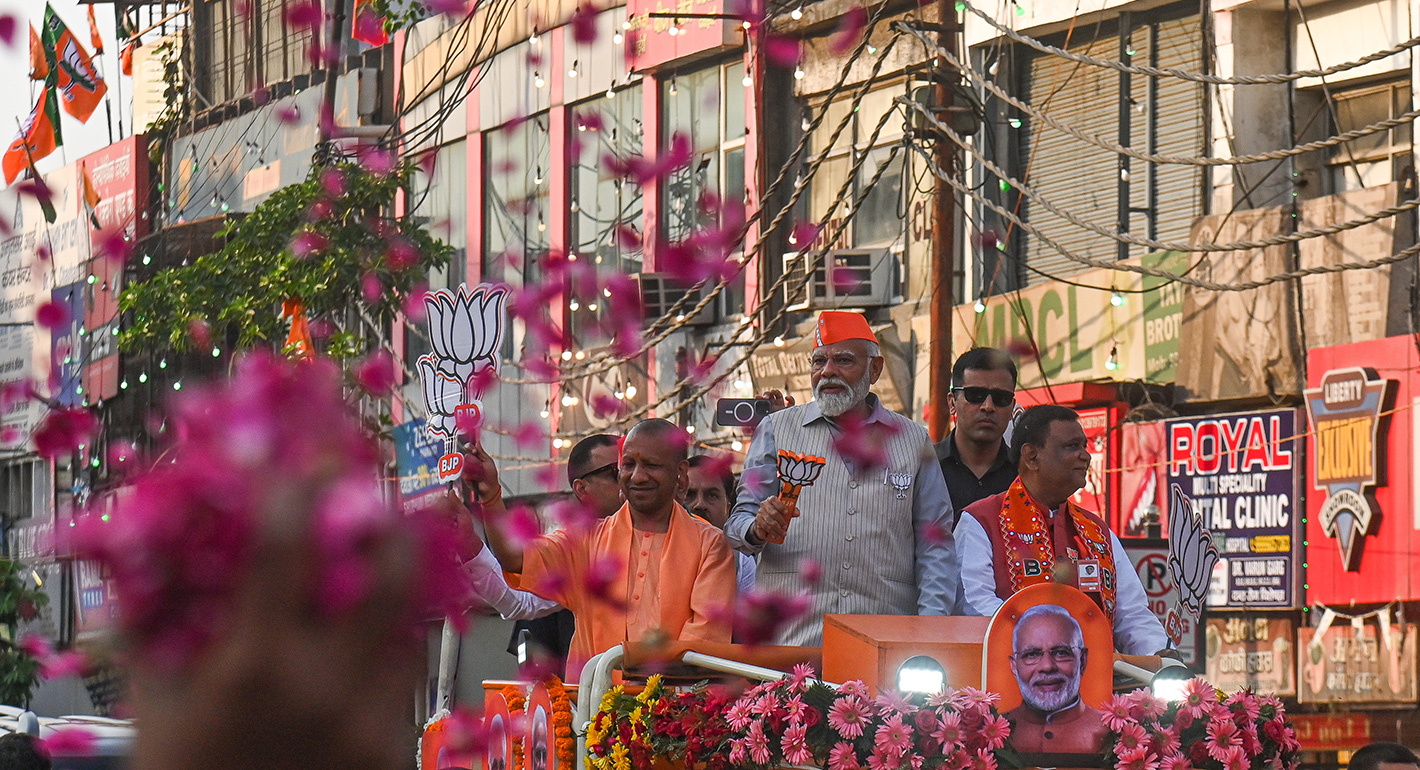
  • Indian Prime Minister Narendra Modi, wearing an orange cap, and the Chief Minister of Uttar Pradesh, Yogi Adityanath, dressed in saffron robes, are greeting supporters of the Bharatiya Janata Party (BJP) during a roadshow ahead of the Indian General Elections in Ghaziabad, Uttar Pradesh, India, on April 6, 2024.
    Paper
    India’s Foreign Policy in the Age of Populism

    Domestic mobilization, personalized leadership, and nationalism have reshaped India’s global behavior.
      Sandra Destradi
  • Commentary
    Diwan
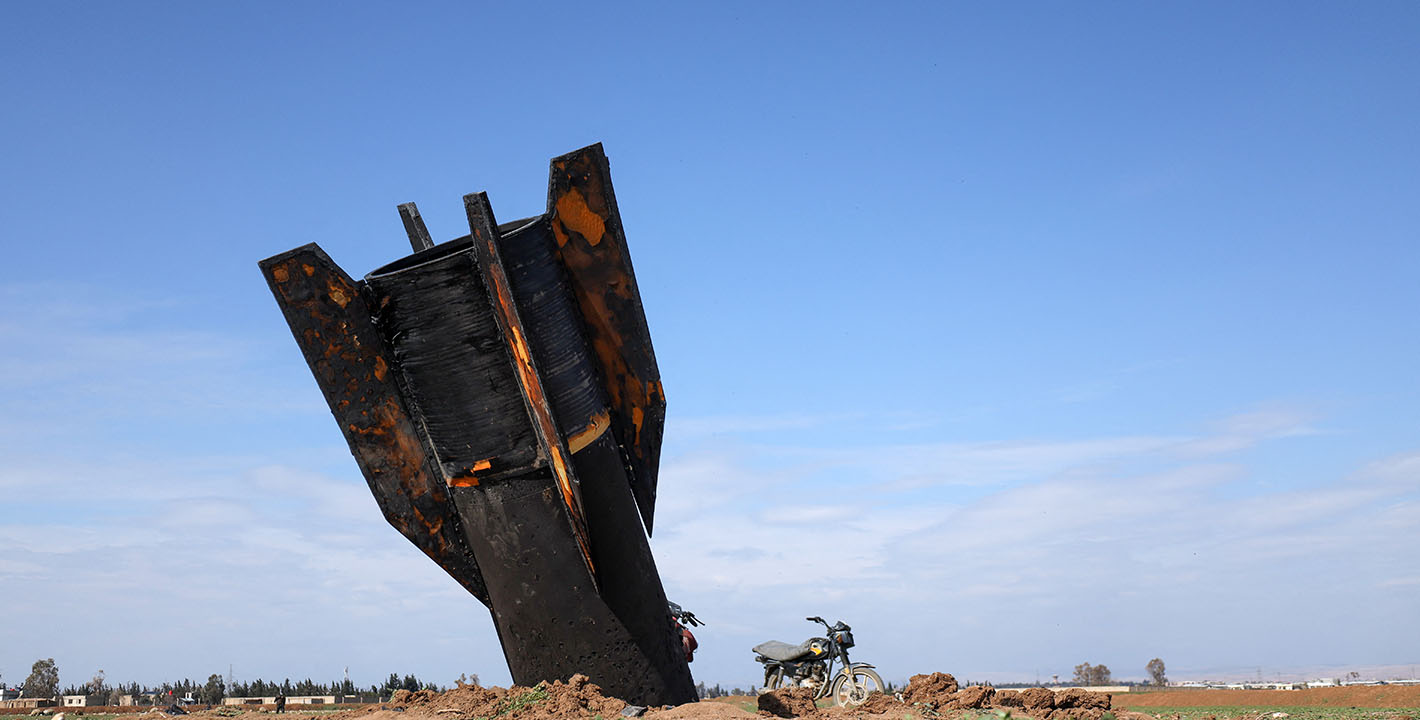
    The Greatest Dangers May Lie Ahead

    In an interview, Nicole Grajewski discusses the military dimension of the U.S. and Israeli attacks on Iran.

      Michael Young
  • Commentary
    Strategic Europe
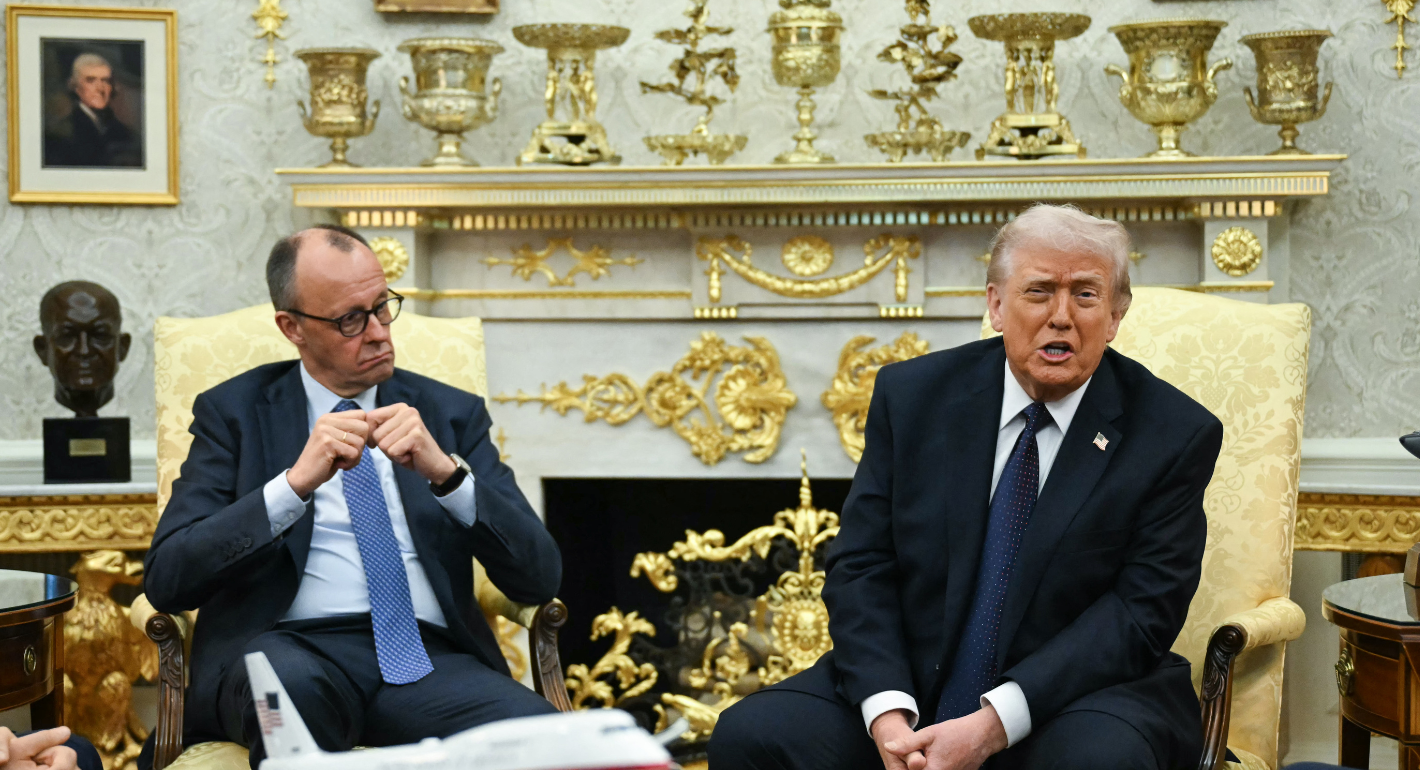
    The EU Needs a Third Way in Iran

    European reactions to the war in Iran have lost sight of wider political dynamics. The EU must position itself for the next phase of the crisis without giving up on its principles.

      Richard Youngs
  • Trump United Nations multilateralism institutions 2236462680
    Article
    Resetting Cyber Relations with the United States

    For years, the United States anchored global cyber diplomacy. As Washington rethinks its leadership role, the launch of the UN’s Cyber Global Mechanism may test how allies adjust their engagement.

      • Christopher Painter

      Patryk Pawlak, Chris Painter

Get more news and analysis from
Carnegie Endowment for International Peace
Carnegie global logo, stacked
1779 Massachusetts Avenue NWWashington, DC, 20036-2103Phone: 202 483 7600Fax: 202 483 1840
  • Research
  • Emissary
  • About
  • Experts
  • Donate
  • Programs
  • Events
  • Blogs
  • Podcasts
  • Contact
  • Annual Reports
  • Careers
  • Privacy
  • For Media
  • Government Resources
Get more news and analysis from
Carnegie Endowment for International Peace
© 2026 Carnegie Endowment for International Peace. All rights reserved.
