

Commentary
Judy Dempsey
{
  "authors": [
    "Judy Dempsey"
  ],
  "type": "legacyinthemedia",
  "centerAffiliationAll": "",
  "centers": [
    "Carnegie Endowment for International Peace",
    "Carnegie Europe"
  ],
  "collections": [],
  "englishNewsletterAll": "",
  "nonEnglishNewsletterAll": "",
  "primaryCenter": "Carnegie Europe",
  "programAffiliation": "",
  "programs": [],
  "projects": [],
  "regions": [
    "Middle East",
    "Europe"
  ],
  "topics": [
    "Foreign Policy"
  ]
}
Source: Getty
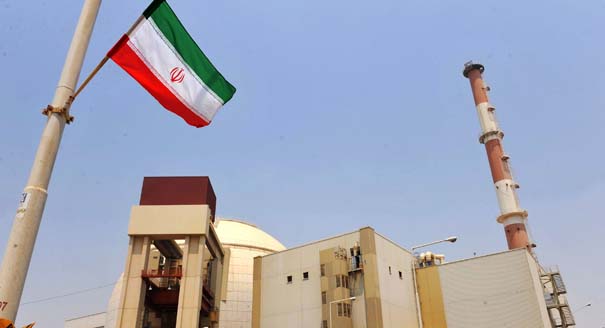
Do sanctions work? This question preoccupies numerous gatherings of security, defense, and diplomatic experts, given the rise of fear over Iran’s nuclear program.
Source: Munich Calling

The United States and the European Union agreed this month—overcoming very significant differences—to tighten sanctions against Iran by suspending oil imports. China, which imports 11 per cent of its oil from Iran, and Russia have criticized the move.
This latest round of sanctions will deal a big blow to the Iranian economy. In all likelihood, it also spells the end to Europe’s attempts to bring Iran back into the fold through diplomatic means.For several years, the European Union used both the carrot of incentives and the stick of sanctions, to try to persuade Iran to comply with its international obligations concerning the use of nuclear power.
But with the International Atomic Energy Agency now certain of Iran’s nuclear weapons capability, the response on both sides of the Atlantic has become much tougher.
Western hardliners hope that the punishment now inflicted on the Iranian population might change things on the ground. In other words: precipitate regime change.
But sanctions have a poor record in toppling regimes or having them change course.
Sanctions did not persuade the former Soviet Union to leave Afghanistan, or Saddam Hussein to withdraw from Kuwait, or Slobodan Milosevic to stop his Serbs forces from ethnic cleansing in Kosovo and Bosnia, or Pakistan to stop its nuclear weapon program, or Muammar Gaddafi of Libya to stop killing the rebels.
It was military force that led to change.
In the case of Iran, this is not an option for the United States and the Europeans. The consequences on the entire region could be devastating, and, given Russia’s and China’s position, military intervention would never receive a mandate from the United Nations Security Council.
“At the moment, sanctions are our only option,” said a U.S. official. “We have to be doing something.”
Proponents of sanctions also argue that punitive measures can act as deterrence to other countries with nuclear weapons ambitions.
That is possible. In the case of Libya, Colonel Gaddafi did give up developing weapons of mass destruction.
But if a country has really set its mind on acquiring nuclear weapons because they confer status, power and immense bargaining strength vis-à-vis its neighbors and especially the United States, dissuasion will be difficult.
Non-proliferation efforts, even when backed with sanctions, have failed vis-à-vis a number of countries. Pakistan, India, and closer to home, Israel, have all acquired the bomb.
Consider North Korea, too. Very tough sanctions have only emboldened the regime to press ahead with building up its nuclear weapon capability. It sees the bomb as its most valuable bargaining chip and its only guarantee against military intervention. Sadly, that is probably an accurate assessment.
Iran might be a similar case. The latest batch of sanctions might even strengthen a regime that is making an astute use of them for its anti-western and anti-Israeli propaganda. Iranian experts suggest that there is a national consensus emerging on Iran becoming a nuclear power.
There is also the question of where the pain of the oil embargo will fall. It is clear that the urban middle class in Iran, those with cars and some small prosperity, will suffer, even though they were the ones who in 2009 took to the streets and risked their lives to demonstrate against the fraudulent presidential elections.
The Revolutionary Guard, Iran’s dominant security force, will suffer far less. So far, it has benefitted rather than suffered from any of the existing sanctions. The reason is that it’s the Guard that controls smuggling, including access to the import of consumer goods and especially gasoline.
Some European diplomats say Washington and Brussels should avoid the more sweeping sanctions and concentrate the pain as far as possible on the Revolutionary Guard by imposing a comprehensive travel/visa ban.
After all, they say, members of the Revolutionary Guard have their children educated abroad in the finest schools and universities.
More could also be done to freeze the assets of more members of the Revolutionary Guard, if the European Union or the United States had a comprehensive list of the guard’s membership.
But even that would not be likely to cause a quick turn-around in Iranian politics.
So, if regime change is impossible and non-proliferation unlikely, what argument can be made in favor of sanctions?
They can buy time—inside Iran and outside.
“The sanctions will not stop Iran’s nuclear program, but they will delay it,” said a top European diplomat.
“Back in 2005, we were told by experts that Iran would have the bomb in two years. That did not happen. I am convinced that because of sanctions introduced since that time, it has become much harder for Iran to import certain materials required for building nuclear weapons,” the diplomat added.
Then there are Israel’s intentions.
The Israeli media has for months been speculating about Prime Minister Benjamin Netanyahu’s intentions with regard to bombing Iran.
President Barak Obama’s influence over Mr. Netanyahu is limited, to say the least.
Besides being an election year, the administration has already been humiliated by Mr. Netanyahu who last year received a standing ovation from Congress for his obdurate stance on the Palestinian issue.
Israeli officials have in the meantime given ambiguous answers as to whether they would bomb targets in Iran. They have also left it open whether their security services were implicated in killing Iranian nuclear scientists.
Whatever Israel’s intentions, diplomats say that the latest round of sanctions is also about buying time with Israel, at least until after the U.S. elections. Then, it might become possible to think about negotiating a special non-proliferation system across the Middle East. If it is not too late.
This article was originally published in the Munich Security Conference's Munich Calling.

Nonresident Senior Fellow, Carnegie Europe
Judy Dempsey is a nonresident senior fellow at Carnegie Europe
Recent Work
Judy Dempsey
Judy Dempsey
Carnegie does not take institutional positions on public policy issues; the views represented herein are those of the author(s) and do not necessarily reflect the views of Carnegie, its staff, or its trustees.

A summer of escalation in the Black Sea has hurt Ukraine economically and is exacerbating world food security. A truce is needed—as is a broader reframing of Europe’s Ukraine strategy.

Thomas de Waal

As the U.S. stumbles in its war with Iran, we are likely to see an acceleration of its disengagement from the region.

Michael Young
Why governance of rapidly evolving technology will be distributed and complex.


Stewart Patrick, Scott Singer

It should address the shortcomings of previous crisis communication efforts and adapt to the demands of frontier AI.

Lucy Luo

If the Russian-speaking community in Latvia cannot articulate their interests without being seen as disloyal, they could end up embracing a pro-Kremlin agenda.

Sergejs Potapkins