

Paper
Paul Salem
{
  "authors": [
    "Paul Salem"
  ],
  "type": "legacyinthemedia",
  "centerAffiliationAll": "",
  "centers": [
    "Carnegie Endowment for International Peace",
    "Carnegie Europe",
    "Malcolm H. Kerr Carnegie Middle East Center"
  ],
  "collections": [],
  "englishNewsletterAll": "",
  "nonEnglishNewsletterAll": "",
  "primaryCenter": "Malcolm H. Kerr Carnegie Middle East Center",
  "programAffiliation": "",
  "programs": [],
  "projects": [],
  "regions": [
    "Egypt",
    "Gulf",
    "Levant",
    "Maghreb",
    "Middle East"
  ],
  "topics": [
    "Political Reform"
  ]
}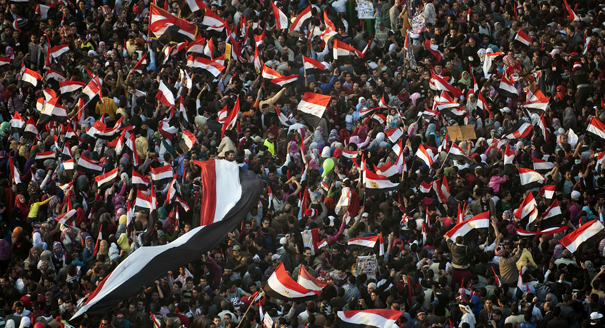
Source: Getty
While the 2011 revolutions in North Africa move toward stabilization and transition, the headlines in the eastern Middle East seem darker as the region faces internal conflict and regional war.
Source: Al-Hayat

Tunisia has led the way in terms of positive change. The first to rise up in revolt, it has been the first to hold elections and begin a promising post-revolutionary transition to democracy. Egypt is following a slightly different path, but it too has held successful post-revolutionary elections, and the victorious Muslim Brotherhood has emphasized its commitment to individual, civil, and religious liberties. The Brotherhood is likely to be the dominant political party in Egypt for the next decade or more, governing in coalition with various nationalist, liberal, and secular parties. It will also likely share power with the military in a semi-democratic order dominated by a strong Brotherhood-Military axis.
After a recent visit to Libya, I returned optimistic that, despite the many security and political challenges it faces, Libya is likely to succeed in transitioning toward stability and elected government. There are regional and tribal divisions, but nothing to compare with the deep sectarian and ethnic divisions of the Levant. There is a strong sense of Libyan nationalism, pride about removing the dictator, and wide consensus about the need to move forward with elections, a constitution, and a new government. The tens of thousands of armed rebels pose a serious security risk, but they want jobs not conflict, and the transitional government is already in the process of integrating them into the army and police.The eastern part of the Middle East is moving in almost the opposite direction. The Syrian regime is at war with its own people, has refused any form of change or compromise, and is also in conflict with Turkey, the Arab League, and the West.
The Iraqi government of Nouri al-Maliki, after the U.S. withdrawal, is making use of its accumulated oil billions and the armed forces the Americans built to impose a new authoritarian order, weakening previous Sunni and Kurdish partners, in favor of a Shi’i-dominated central power.
Tehran is facing a whole range of tensions, and 2012 might indeed bring Iran to the breaking point. Internally, tensions between the regime and millions of its citizens remain unresolved after the mass demonstrations of 2009, and conflict between the camp of President Mahmoud Ahmadinejad and the power of the supreme leader Ali Khamenei remains high. This is exacerbated by economic sanctions that have triggered runaway inflation. And then there are external tensions over Iran’s nuclear program, with Iran on the one side and the United States or Israel on the other—potentially on a military collision course.
This pattern of internal division and external conflict appears to define an “arc of crisis” from Iran, through Iraq and Syria, and possibly including Lebanon. It carries the risks of regional conflict and internal civil wars. It stands in sharp contrast to the pattern of positive change in Egypt and North Africa, encompassing internal conciliation and accommodation along with external cooperation and global integration. Whether Lebanon can find balance amid the contradictions between these two wings of the Arab world in 2012 remains to be seen.
Meanwhile, Saudi Arabia has charted a different course entirely. Unprepared to accommodate the democratic wave of the Arab Spring and worried about the chaos that is engulfing the Levant, Saudi Arabia and its Gulf partners have intensified their cooperation in the Gulf Cooperation Council. Indeed, the Arabian Peninsula is emerging as an almost separate political zone in the Middle East with its own institutions and dynamics.
The main challenges will be adding a measure of political reform to the large economic benefits offered to GCC populations. More importantly, Saudi Arabia and the Gulf have to consider ways to save Yemen from further collapse and offer it better integration with their own wealthy economies and with GCC institutions. Just as West Germany helped stabilize most of Central and Eastern Europe, Saudi Arabia and the GCC should be able to at least help integrate and stabilize Yemen.
Indeed, 2012 might be as tumultuous as 2011. While the revolutions of 2011 in North Africa move toward stabilization and transition, in the eastern Middle East, there could be darker headlines of internal conflict and regional war.
This article was originally published in Arabic in Al-Hayat .
Senior Fellow at the Middle East Institute
Paul Salem is a senior fellow at the Middle East Institute.
Recent Work
Paul Salem
Paul Salem
Carnegie does not take institutional positions on public policy issues; the views represented herein are those of the author(s) and do not necessarily reflect the views of Carnegie, its staff, or its trustees.
The Lebanese authorities’ clampdown on illicit cross-border activity threatens to leave inhabitants of the historically neglected village, and the wider Akkar region, in an economically precarious position.

Mohanad Hage Ali
The return of parliamentary politics reflects a broader shift from earlier expectations of a settlement and elections toward the reality of a prolonged war.
Balázs Jarábik
When municipalities and local actors are empowered with regulatory authority, knowledge, and resources, they can fill critical governance gaps.
Sabine Saad
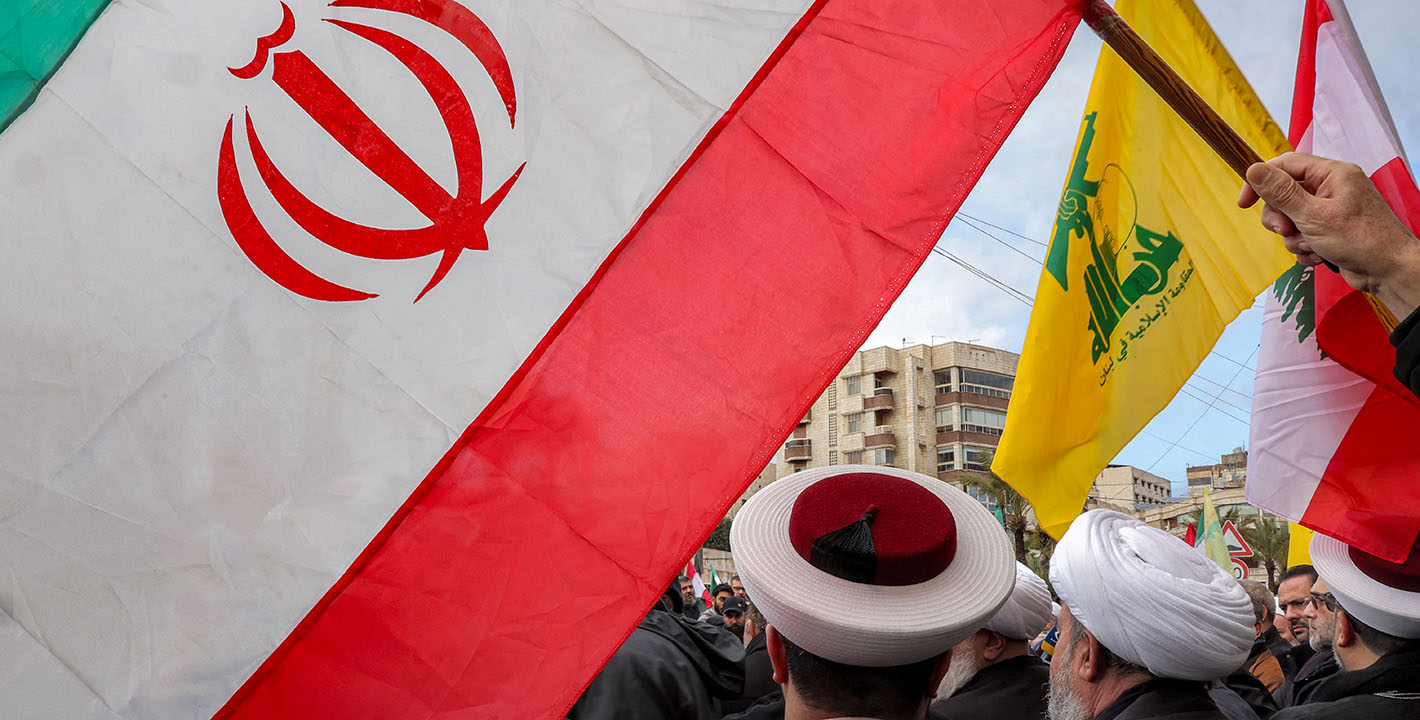
The community seeks maintain a distance from Hezbollah, and an even greater one from normalization with their southern neighbor.
Mohamad Fawaz
The conflict is exposing the flaws and fissures of their domestic governance and social cohesion.

Frederic Wehrey, Charles H. Johnson