

Commentary
Despite the agreement’s uncertainty, it’s still a significant development in regional and nuclear policy.
Andrew Leber, Jane Darby Menton
{
  "authors": [
    "Wei Hongxia"
  ],
  "type": "other",
  "centerAffiliationAll": "dc",
  "centers": [
    "Carnegie Endowment for International Peace"
  ],
  "collections": [],
  "englishNewsletterAll": "asia",
  "nonEnglishNewsletterAll": "",
  "primaryCenter": "Carnegie Endowment for International Peace",
  "programAffiliation": "AP",
  "programs": [
    "Asia"
  ],
  "projects": [],
  "regions": [
    "North America",
    "United States",
    "East Asia",
    "China"
  ],
  "topics": [
    "Foreign Policy"
  ]
}
Source: Getty
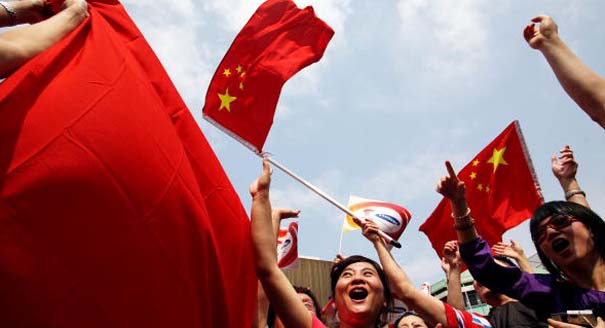
Despite perceptions of tense bilateral relations, Chinese public opinion reflects positive views of the United States, and opportunities exist for the two countries to work cooperatively.
Source: Affordable World Security Conference

For quite some time, I wanted to catch the theme of this conference and prepare my speech. But as a young scholar, what I see, what I learn, and what I know are not enough to help me to give a comprehensive comment on what is happening in China and its implications for China-U.S. relations. Mr. Lees gave me many good suggestions. Thank you, Mr. Lees. And listening to Ambassador Freeman’s comments on China and China-U.S. relations yesterday also encouraged me a lot. Thank you, Ambassador.
Because new ideas occurred to me frequently, I decided to give up the prepared speech and pick up my new thoughts.First of all, I want to talk about Chinese attitudes toward the United States. For recent years, China, as its economy grows very fast, has been considered more and more assertive on international affairs. This is the key reason which has caused distrust and tensions between China and the United States. People draw the conclusion of China’s assertiveness mostly from some media’s assertive articles or debates on China’s foreign policy. But is it the real attitude of Chinese to the world or to the United States? Here I have three points to help you to understand the reality of China's attitude.
First, my institute in China, the Institute of American Studies, CASS, has done some polls on China-U.S. relations since 2008. The questionnaire survey covers Beijing, Shanghai, Tianjin, Yunnan in southwest China, Lanzhou in northwest China, Ha’erbin in northeast China, Guangzhou in south China as well Chongqing in west China. Here I just have available data in 2008 and 2010. Let me do a simple comparison.
In 2008, when the recession began to appear in the United States, 42 percent of those surveyed believed American economic power will maintain the status quo, 20 percent believed the American economy will weaken slowly, and only 2.4 percent think it might weaken quickly.


That’s the basic attitude of the public.
As for the policymakers, we should pay more attention to what has changed and what has not changed in Beijing. Beijing actually has ceased to refer to U.S. foreign policy as seeking global hegemony, and also has reduced its criticism of U.S. behavior seen to be directly opposed to China. Actually, while pursuing different goals, China's official documents such as the white paper on national defense even shares some common understanding on international situations with the U.S. position.1
The media’s position is very confused. Some newspapers and websites always want to challenge policies and create debates among policy analysts.2 This is really contradictory, because the world believes China’s media is under the control of the Communist Party. But on the other side, people also believe the media will reflect public opinion. Actually, for political and historical reasons, most media outlets want to keep consistent with the Central Propaganda Department, while they have to do something maverick to attract readers and then achieve commercial goals.3 China’s media had no commercial goals before the reform and opening up, but now their goals sometimes contradict each other. They are even confused by themselves. And either for the purpose of propaganda or commerce, media always overstate the facts. This also happens in other countries.
Anyway, whatever the attitude reflected in China, we should bear in mind the reality of more and more cooperation between China and the United States in various fields.4 While many conflicts of interests and ideas exist between China and the United States, China recognizes the fact of sharing important interests and ideas. Comparing the mounting pressures on China at home, the current international environment seems benign, providing Beijing and Washington and other countries find ways to solve global issues to achieve cooperative security.
1For example, in White Paper of China's National Defense in 2010, it is stated that “The international situation is currently undergoing profound and complex changes . . . On the whole, the world remains peaceful and stable.” The National Security Strategy 2010 issued by the White House also said that “major powers are at peace” when describing the world situation.
2For example, the hyper-nationalistic newspaper Global Times has attracted wide attention for its nationalistic op-eds and debates on international issues. Due to its official background, viewpoints published in this newspaper have been widely cited as examples of China's assertiveness. But actually, it is not welcome among the Chinese public and sometimes it is even criticized sharply in China. This publication has managed to use many commercial means to attract authors and readers. So it cannot be taken as the official voice of China.
3Comment in Chinese, available at http://www.ftchinese.com/story/001025913.
4Both Beijing and Washington seek to build a constructive partnership for the long run. U.S.-China relations are, moreover, mature. The two sides understand well each others’ positions on all major issues and deal with each other extensively. The highest level leaders meet relatively frequently, and there are more than 60 regular government-to-government dialogues between agencies in the two governments each year. See Kenneth G. Lieberthal, Wang Jisi, "Addressing U.S.-China Strategic Distrust," March 30, 2012, available at http://www.brookings.edu/papers/2012/0330_us_china_lieberthal.aspx.

Former Visiting Scholar, Carnegie Asia Program
Wei Hongxia (Victoria) is a visiting scholar in Carnegie’s Asia Program where her research focuses on U.S. policy toward East Asia, particularly U.S.-China relations and multilateral architecture in East Asia.
Carnegie does not take institutional positions on public policy issues; the views represented herein are those of the author(s) and do not necessarily reflect the views of Carnegie, its staff, or its trustees.
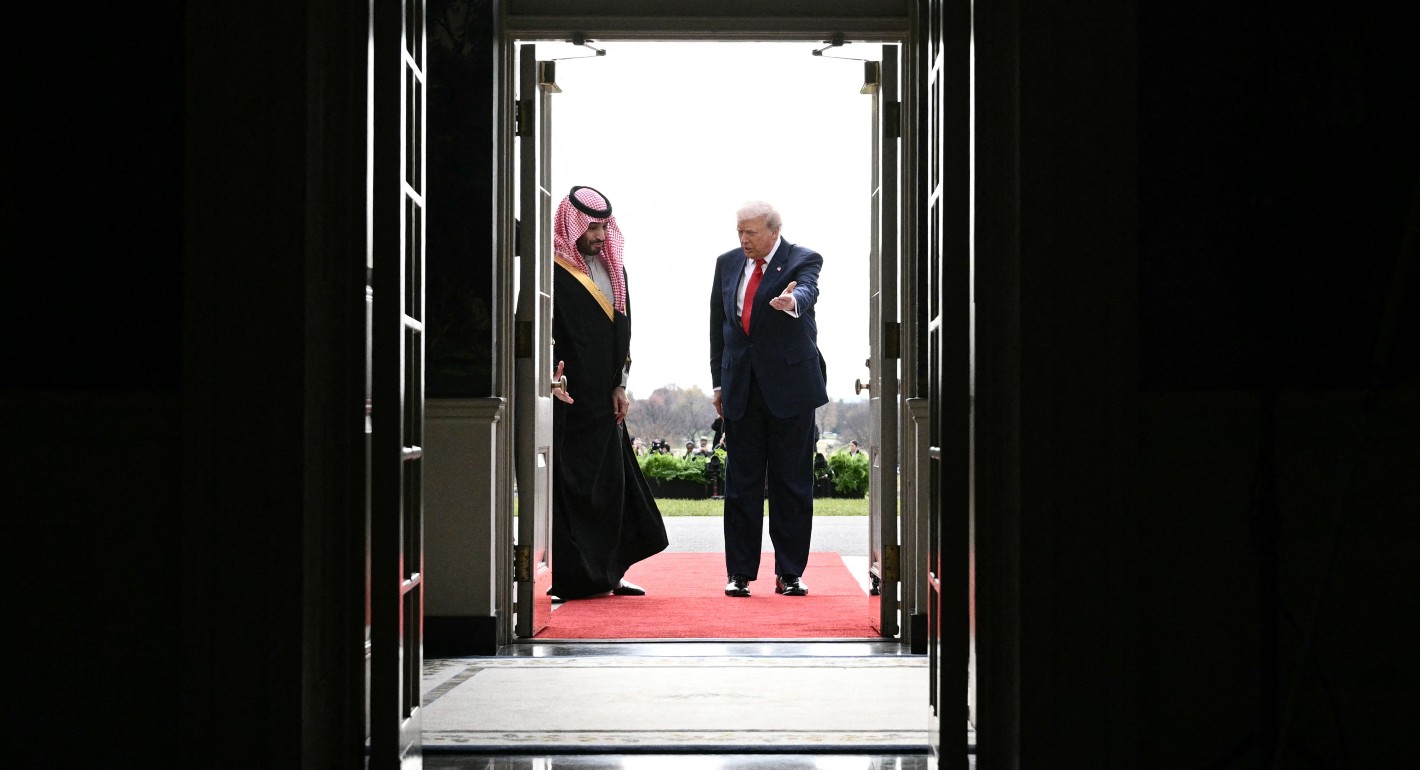
Despite the agreement’s uncertainty, it’s still a significant development in regional and nuclear policy.


Andrew Leber, Jane Darby Menton
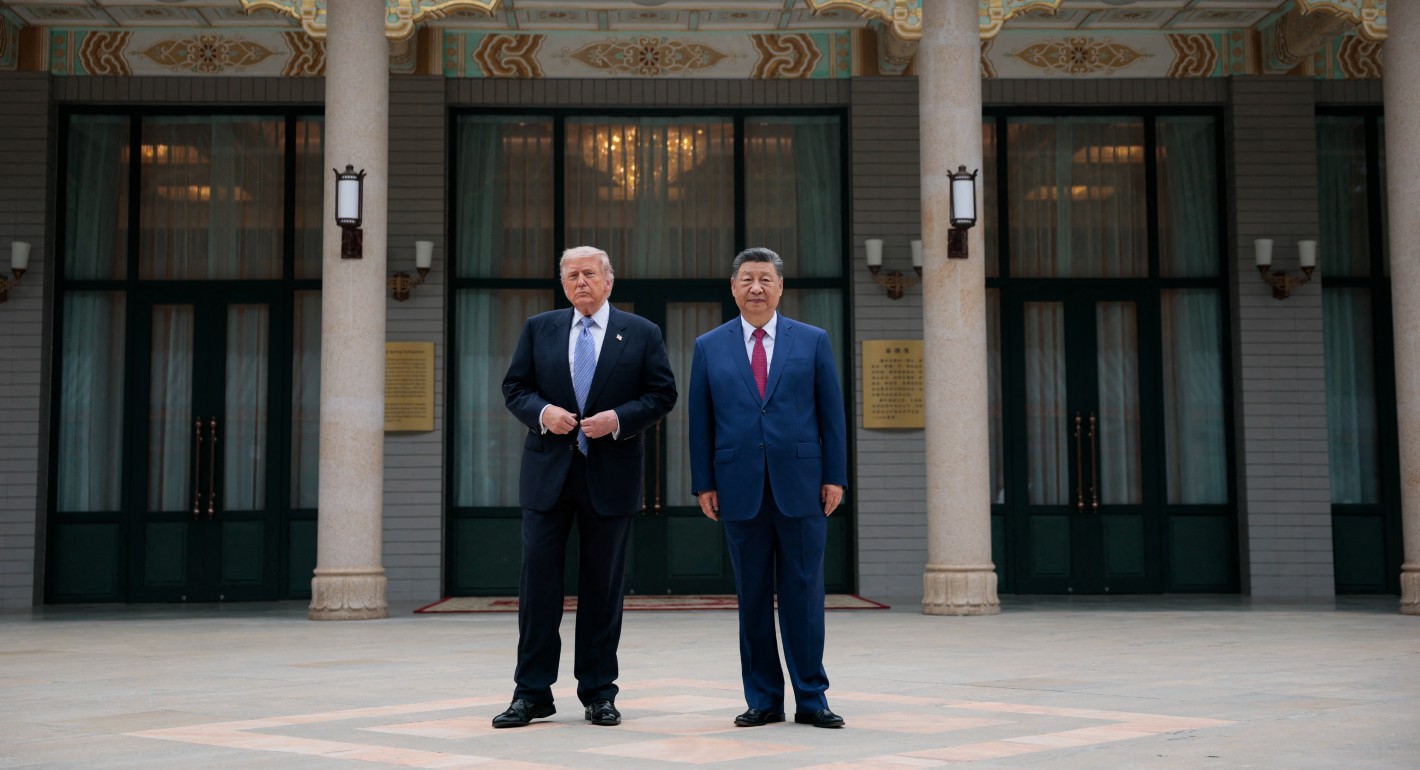
“AI safety in parallel” is modest and pragmatic but vital.

Matt Sheehan

Trump is distracted and Ukraine wants Europe to step up. The continent’s leaders must find their voice and assert it in talks with Russia.

Alissa de Carbonnel

Unresolved tensions within the AfD may ultimately constrain the its potential as a leader among European and global populist forces.
Jeremy Cliffe

There is a deeply rooted assumption in post–Cold War American statecraft that overwhelming military and economic power translates directly into favorable political outcomes. But force alone is rarely enough. To meet the challenges of the mid-21st century, Washington needs a cultural shift toward a mindset that takes negotiation far more seriously.

Cecily Brewer