

In The Media
Vikram Nehru
{
  "authors": [
    "Vikram Nehru"
  ],
  "type": "legacyinthemedia",
  "centerAffiliationAll": "dc",
  "centers": [
    "Carnegie Endowment for International Peace"
  ],
  "collections": [],
  "englishNewsletterAll": "asia",
  "nonEnglishNewsletterAll": "",
  "primaryCenter": "Carnegie Endowment for International Peace",
  "programAffiliation": "AP",
  "programs": [
    "Asia"
  ],
  "projects": [],
  "regions": [
    "Southeast Asia"
  ],
  "topics": [
    "Economy",
    "Trade"
  ]
}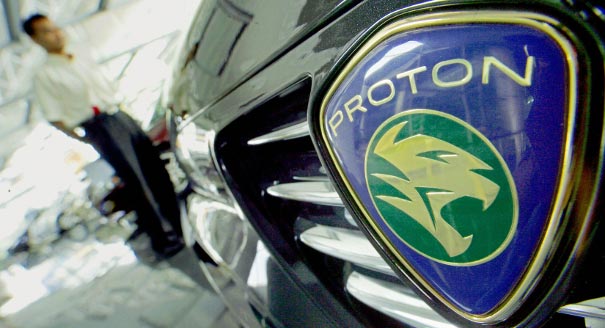
Source: Getty
Malaysia’s National Automotive Policy is currently under review so the time is ripe for change. The objective should be to alter the incentive structure away from domestic market protection and toward increased competition.
Source: Star

Less noticed was an announcement by Khazanah that it had sold its 47.2% stake in Proton to conglomerate DRB-Hicom.
At first blush, this action appears to be another reformist measure by Prime Minister Datuk Seri Najib Razak, who is seeking to burnish his credentials ahead of the elections.
But to be genuinely reformist, it is imperative that this divestiture of a flagship state enterprise now be followed by fundamental policy reforms to rejuvenate Malaysia’s ailing automobile sector and to give a boost to growth. Without such reforms, Malaysia’s automobile sector will continue to be a drag on the rest of the economy.The reality is that Malaysia’s automobile sector is protected from foreign competition by elaborately constructed barriers of tariffs, investment approval permits, differential excise taxes, subsidised credit, procurement arrangements and tax allowances.
Much of this is designed to protect Proton (and its domestic component suppliers), the brainchild of former Prime Minister Tun Dr Mahathir Mohamad, and the spoiled child of his and subsequent administrations. Despite its substantial political, policy and financial support, Proton’s share of the growing Malaysian car market has been declining.
The company now uses only 45% of its capacity and is steadily losing ground to its domestic and international competitors.
Divesting Proton to a private company is a good first step. Its new owner will be able to build new partnerships with global brands that could apply the latest technologies and rejuvenate the company’s product line. But new partners will be unwilling to join forces with Proton unless the new owners are given a free hand in deciding where to source component supplies and whom to employ.
If the new company continues to operate under the existing regulatory framework, then there will be little incentive to upgrade technologically and improve efficiency, and the new owners would expect to continue to receive significant resource transfers from the state through generous financial, regulatory, and institutional treatment that Proton has enjoyed since its establishment.
So Proton’s divestment on its own will do little to stimulate Malaysia’s automobile industry, which has fallen further and further behind its neighbor, Thailand.
In the short term, the status quo may serve vested interests in Malaysia’s automobile industry and in the political establishment. But the past has shown that it will do nothing in the long term to make it more competitive internationally.
The brave political decision would be to do the right thing – follow Proton’s divestment with measures that allow all car manufacturers, domestic and foreign, to attract the finest talent, source the best components from the most efficient and reliable suppliers, and permit competition on a level playing field.
Not only will this help Proton attract the right partner and get the international technology it so desperately needs to become internationally competitive, it will also give Malaysia’s entire automotive sector a new lease on life by attracting foreign investment, encouraging production at economies of scale, and potentially becoming a production hub for serving the South-East Asian car market.
The economy will receive a big boost and the electorate will rightly view the move as serving the national interest and signaling a decisive break from the past.
Policymakers need only look as far as India and Thailand to see the benefits that liberalization of the automobile sector can bring.
Malaysia’s National Automotive Policy is currently under review so the time is ripe for change. The objective should be to alter the incentive structure away from domestic market protection and toward increased competition.
Then the sale of Proton to the private sector would be a useful first step in the opening up of Malaysia’s automobile sector, its re-integration into global supply chains, and would represent a significant down payment in Malaysia’s negotiations with Trans-Pacific Partnership countries.
This article was originally published in the Star.
Former Nonresident Senior Fellow, Asia Program
Nehru was a nonresident senior fellow in the Carnegie Asia Program. An expert on development economics, growth, poverty reduction, debt sustainability, governance, and the performance and prospects of East Asia, his research focuses on the economic, political, and strategic issues confronting Asia, particularly Southeast Asia.
Recent Work
Vikram Nehru
Vikram Nehru
Carnegie does not take institutional positions on public policy issues; the views represented herein are those of the author(s) and do not necessarily reflect the views of Carnegie, its staff, or its trustees.

With its public finances in shambles, the far right polling at 35 percent ahead of the 2027 presidential election, and a growing protest movement, is France’s crisis a threat to the EU’s geopolitical awakening?

Rym Momtaz, ed.

Without a ceasefire with Ukraine on attacking each other’s energy infrastructure—to which the Kremlin is unlikely to agree—the diesel agreement between Putin and Trump is largely for show, rather than representing a genuine increase in the volumes of Russian diesel on the global market.

Sergey Vakulenko

Russian strikes are weakening the economy sustaining Ukraine’s war effort. Closing the growing funding gap will require more European support and politically contentious reforms in Kyiv.

Balázs Jarábik

Much has been said of the changes Brussels is trying to make to the EU enlargement process. Here’s why gradual integration might—or might not—be the answer.

Dimitar Bechev
Economic recovery has brought Sri Lanka a modicum of stability, but domestic strains and great-power rivalry could test how long it lasts.

Avinash Paliwal