

In The Media
Lahcen Achy
{
  "authors": [
    "Lahcen Achy"
  ],
  "type": "legacyinthemedia",
  "centerAffiliationAll": "",
  "centers": [
    "Carnegie Endowment for International Peace",
    "Malcolm H. Kerr Carnegie Middle East Center"
  ],
  "collections": [],
  "englishNewsletterAll": "",
  "nonEnglishNewsletterAll": "",
  "primaryCenter": "Malcolm H. Kerr Carnegie Middle East Center",
  "programAffiliation": "",
  "programs": [],
  "projects": [],
  "regions": [
    "Maghreb"
  ],
  "topics": [
    "Political Reform",
    "Economy"
  ]
}
Source: Getty
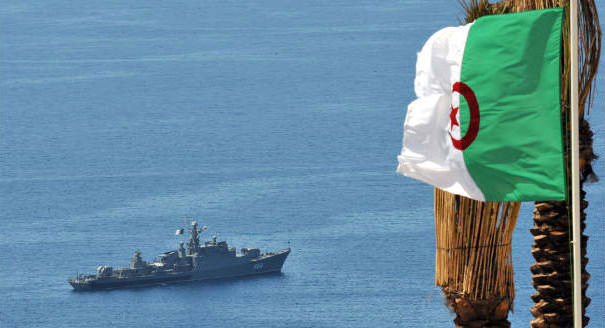
Algeria’s oil and gas resources enable it to accumulate large amounts of wealth with relative ease. But this blessing should not be used as an excuse for excessive government spending without clear priorities.
Source: Al-Hayat

Algerian Finance Minister Karim Djoudi has announced that the IMF made a formal request to the government of Algeria for a loan that would aim to provide the necessary liquidity to distressed countries. According to the latest IMF estimates, the Algerian central bank has $200 billion in foreign reserves, which can fund more than three years of Algeria’s imports.
The announcement is puzzling due to a glaring gap between the financial wealth in the government’s hands and the poor socioeconomic conditions faced by a large majority of Algerians. Access to and the quality of basic social services, including education and health, is declining due to inadequate government policies.Unemployment—especially among young people—continues to skyrocket and now stands at more than 20 percent according to official figures. Government policies have failed to absorb an increase in the number of job seekers, even though that number is already lower than it could be due to a slowdown in population growth over the past two decades and a decline in participation rate in the job market, which does not exceed 40 percent of the population. Many Algerians choose to give up looking for work after losing hope.
The informal sector has played an important role in job creation in Algeria in recent years. Yet, those jobs have been characterized by poor working conditions and are often not in compliance with international standards.
Access to housing is limited as well, due to the government's failure to implement an efficient policy that would give citizens—particularly those with limited resources—easy access to decent housing at a reasonable price and without wasting public money. The cost of social housing already strains the state budget.
Many Algerian households have experienced a sharp decline in their purchasing power as a result of the high cost of living—including the cost of food. The country lacks market competition mechanisms that could act to moderate prices and suffers from monopolistic practices that prevail in Algeria’s import and domestic distribution networks.
Government spending has increased tremendously over the past three years, but poor socioeconomic conditions persist. Protests began in Algeria even before the Arab Spring, and still continue in different forms. The low turnout in the legislative elections in May can also be seen in part as a form of protest against mismanagement of the country's resources and the government’s failure to develop a comprehensive economic diversification strategy. The country remains overly dependent on the oil and gas sector, which accounts for one-third of Algeria’s GDP, about two-thirds of government revenues, and 98 percent of the country’s exports.
Meanwhile, the productive sectors have deteriorated considerably. The agricultural sector contributes just 8 percent of GDP and the manufacturing sector only 5 percent. That seriously affects the economy’s ability to create employment opportunities and improve household welfare.
Algeria thus must rely on imports to meet domestic demand. The value of imports has doubled in the past five years to around $50 billion. This increase is occurring despite administrative measures to restrict imports.
The Algerian economy is undergoing a crucial phase in which policymakers must take advantage of the fiscal space available to transform the economy’s structure, diversify its productive system, and increase its competitiveness. Failure to do so may expose the country to real dangers in the future.
Algeria’s volume of hydrocarbon production has declined by 20 percent over the last five years due to unattractive contract terms imposed by the government on foreign companies. Meanwhile, low local fuel prices that benefit from substantial subsidies pushed domestic consumption upward. The downward trend in production combined with a surge in domestic consumption has a destabilizing effect on Algeria’s current account surplus, which has already decreased by 50 percent in the past five years. This has occurred at a time when the overall current account surplus in Arab oil-exporting countries rose by 70 percent over the same period. With a massive increase in public government spending over the last three years, Algeria’s budget deficit is expected to climb to 6 percent of GDP by the end of the year despite relatively high oil prices on the international market.
Public investment, although necessary, cannot on its own achieve sustainable economic development without strong private sector involvement. But Algeria is ranked 148 on the World Bank’s 2012 Doing Business Index—a position too low even when compared to other North African and Middle Eastern countries. The government must create an appropriate legal and administrative environment to stimulate entrepreneurship and attract both domestic and foreign private investment.
Algeria’s oil and gas resources enable it to accumulate large amounts of wealth with relative ease. But this blessing must not be used as an excuse for excessive government spending without clear priorities. Nor can it be permitted to serve as a means of illicit enrichment for a select few elite at the expense of the Algerian people as a whole.
Former Nonresident Senior Associate, Middle East Center
Achy is an economist with expertise in development, institutional economics, trade, and labor and a focus on the Middle East and North Africa.
Recent Work
Lahcen Achy
Lahcen Achy
Carnegie does not take institutional positions on public policy issues; the views represented herein are those of the author(s) and do not necessarily reflect the views of Carnegie, its staff, or its trustees.

By fueling the arguments of both supporters and opponents of Armenian Prime Minister Nikol Pashinyan, Azerbaijan wants to ensure he is re-elected with a weaker mandate.

Bashir Kitachaev

A much-discussed disagreement over internet restrictions in Russia was never an existential threat for Putin: It was about elite groups protecting their interests.

Alexandra Prokopenko

The demands of the Kremlin’s war in Ukraine, demographic problems, and public hostility toward Central Asians mean Russia does not have enough workers.

Salavat Abylkalikov
The U.S.-China Summit produced a welcome commitment to build a constructive, strategically stable relationship. However, the United States has a full agenda, including the USMCA review beginning this week, that will likely target Chinese practices of concern. If China views these efforts as inconsistent with the agreements reached in Beijing, it may slow or halt progress in response.

Barbara Weisel
Between the United States’ market-driven approach and China's state-led industrial strategy, Europe is reckoning with how it can remain competitive in the global economy. But is Europe in danger of becoming a U.S. or China colony?


Noah Barkin, Anu Bradford