• Research
  • Emissary
  • About
  • Experts
Carnegie Global logoCarnegie lettermark logo
DemocracyIran
  • Donate
{
  "authors": [
    "Paul Schulte"
  ],
  "type": "legacyinthemedia",
  "centerAffiliationAll": "dc",
  "centers": [
    "Carnegie Endowment for International Peace",
    "Carnegie Europe"
  ],
  "collections": [
    "Transatlantic Cooperation"
  ],
  "englishNewsletterAll": "ctw",
  "nonEnglishNewsletterAll": "",
  "primaryCenter": "Carnegie Endowment for International Peace",
  "programAffiliation": "NPP",
  "programs": [
    "Nuclear Policy"
  ],
  "projects": [],
  "regions": [
    "Western Europe",
    "Europe",
    "North America"
  ],
  "topics": [
    "Nuclear Policy",
    "Foreign Policy"
  ]
}
Source: Getty

In The Media

NATO Sticks to Nuclear Status Quo - For Now

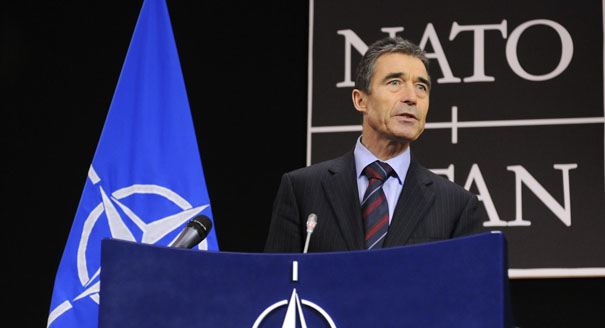
At its Chicago summit, NATO reaffirmed its commitment to its European-based arsenal of tactical nuclear weapons.

Link Copied
By Paul Schulte
Published on May 25, 2012
Program mobile hero image

Program

Nuclear Policy

The Nuclear Policy Program aims to reduce the risk of nuclear war. Our experts diagnose acute risks stemming from technical and geopolitical developments, generate pragmatic solutions, and use our global network to advance risk-reduction policies. Our work covers deterrence, disarmament, arms control, nonproliferation, and nuclear energy.

Learn More

Source: World Politics Review

Paul Schulte was interviewed by World Politics Review's Global Insider about NATO's decision to reaffirm its commitment to its European-based arsenal of tactical nuclear weapons.

WPR: What is the current size and scope of NATO's nuclear weapons?

Paul Schulte: Some 160-200 U.S. B61 gravity bombs are understood to be deployed in Europe and Turkey, the remains of the alliance’s Cold War arsenal of 7,000 nonstrategic nuclear weapons (NSNWs). They are often called “NATO’s nuclear weapons," although the latest alliance Strategic Concept states that “The supreme guarantee . . . of security . . . is provided by the strategic nuclear forces” of the U.S., France and U.K., which are collectively much larger. The unique feature of NATO's European NSNWs is the system of "nuclear sharing," allowing nonnuclear allies to participate in nuclear planning and providing for certain NATO European air forces (currently Germany, Belgium, Netherlands and Italy) to deliver the B61s from their dual-capable aircraft (DCAs). The NSNWs’ value is contested, but proponents believe they strengthen the trans-Atlantic link with the U.S. strategic deterrent. This is of special importance to some Central and East European countries. Partly due to their concerns, present NSNW arrangements were confirmed at NATO's 2012 Chicago Summit, pending hoped-for negotiations to achieve reciprocal reductions in Russia's estimated arsenal of 3,700-5,400 NSNW.

WPR: Why are planned upgrades for NATO's nuclear weapons necessary, and how do they fit into the context of NATO's nuclear posture?

Schulte: The variable yield B61 bomb is the only remaining nuclear weapon in the U.S. Enduring Stockpile and the only one used in the nonstrategic role. It was first produced as long ago as 1968, and a Life Extension Program (LEP) is planned, the projected costs of which have recently risen to more than $5 billion. The LEP will extend service life; consolidate multiple variants into one modification; and improve safety, security and user control of the roughly 500 B61s. A new tail subassembly is intended to raise the B61's accuracy to latest standards.

Greater accuracy could permit smaller quantities of fissile material, lower yields, less radioactivity and more-precise and more-effective strikes against hardened targets. Especially if delivered by new stealth F-35 replacement DCAs, this would offer extra operational flexibility, facilitating future reductions in overall U.S. nuclear numbers. But critics argue it would be unnecessary and unavoidably provocative in Europe.

WPR: How is the nuclear weapon upgrade likely to be received by NATO members and non-NATO countries, particularly Russia?

Schulte: Those NATO members -- Germany, Benelux and Norway -- who would prefer U.S. NSNWs be withdrawn from Europe argue that America could spend its money better elsewhere, but they are unlikely to oppose the LEP openly, since it improves safety and security. The upgrade program will, however, increase domestic opposition from anti-nuclear groups. Moreover, Russian denunciation can be taken for granted, given Moscow's past statements insisting on total American nuclear withdrawal from Europe as a precondition for talks on NSNW arms control. This may make negotiations to reduce numbers, increase transparency or reposition NSNWs even less likely to succeed.

This article originally appeared in World Politics Review.

About the Author

Paul Schulte

Former Nonresident Senior Associate, Nuclear Policy Program

Schulte was a nonresident senior associate in the Carnegie Nuclear Policy Program, where his research focuses on the future of deterrence, nuclear strategy, nuclear nonproliferation, cybersecurity, and their political implications.

    Recent Work

  • Paper
    Looking Beyond the Chicago Summit: Nuclear Weapons in Europe and the Future of NATO
      • +2

      George Perkovich, Malcolm Chalmers, Steven Pifer, …

  • Other
    Is NATO’s Nuclear Deterrence Policy a Relic of the Cold War?

      Paul Schulte

Paul Schulte
Former Nonresident Senior Associate, Nuclear Policy Program
Paul Schulte
Nuclear PolicyForeign PolicyWestern EuropeEuropeNorth America

Carnegie does not take institutional positions on public policy issues; the views represented herein are those of the author(s) and do not necessarily reflect the views of Carnegie, its staff, or its trustees.
More Work from Carnegie Endowment for International Peace

  • Commentary
    Deciphering Europe’s Relationship with Turkey

    Debate is heating up on how Turkey could be integrated into a common European defense framework. Commercial and industrial deals offer a better chance at alignment than sweeping political efforts.

      Marc Pierini

  • Commentary
    Emerging From the “Zombie State” of Trade Agreements: The India-EU FTA

    The India–EU Free Trade Agreement (FTA) is shaping up to be one of the most consequential trade negotiations, both economically and strategically. But, what’s in the agreement, what’s missing, and what will determine its success in the years ahead

      Vrinda Sahai, Nicolas Köhler-Suzuki

  • Commentary
    Strategic Europe
    Taking the Pulse: Is it Worth it for Europeans to Placate Trump?

    After spending much of 2025 trying to placate Donald Trump, some European leaders are starting to change posture. But is even a hostile Washington still so important to Europe that the U.S. president’s outbursts are worth putting up with?

      • Rym Momtaz

      Rym Momtaz, ed.

  • Gas station attendant gesturing while a woman gets her motorcycle refilled
    Commentary
    Emissary
    Fuel Subsidies Are an Easy Fix for the Iran War’s Energy Price Shock—and the Wrong One

    Instead, governments should adopt climate-friendly measures to address the impact of rising prices.

      • Henok Asmelash

      Henok Asmelash

  • Commentary
    Strategic Europe
    Europeans Are Quiet Quitting the United States

    European leaders have now not only lost faith in Donald Trump’s U.S. presidency, but also in America’s hegemony as a whole. But short-term challenges make an immediate divorce unwise.

      • Rym Momtaz

      Rym Momtaz

Get more news and analysis from
Carnegie Endowment for International Peace
Carnegie global logo, stacked
1779 Massachusetts Avenue NWWashington, DC, 20036-2103Phone: 202 483 7600
  • Research
  • Emissary
  • About
  • Experts
  • Donate
  • Programs
  • Events
  • Blogs
  • Podcasts
  • Contact
  • Annual Reports
  • Careers
  • Privacy
  • For Media
  • Government Resources
Get more news and analysis from
Carnegie Endowment for International Peace
© 2026 Carnegie Endowment for International Peace. All rights reserved.