

In The Media
David Rothkopf
{
  "authors": [
    "David Rothkopf"
  ],
  "type": "legacyinthemedia",
  "centerAffiliationAll": "",
  "centers": [
    "Carnegie Endowment for International Peace"
  ],
  "collections": [],
  "englishNewsletterAll": "",
  "nonEnglishNewsletterAll": "",
  "primaryCenter": "Carnegie Endowment for International Peace",
  "programAffiliation": "",
  "programs": [],
  "projects": [],
  "regions": [
    "North America",
    "United States"
  ],
  "topics": [
    "Political Reform"
  ]
}
Source: Getty
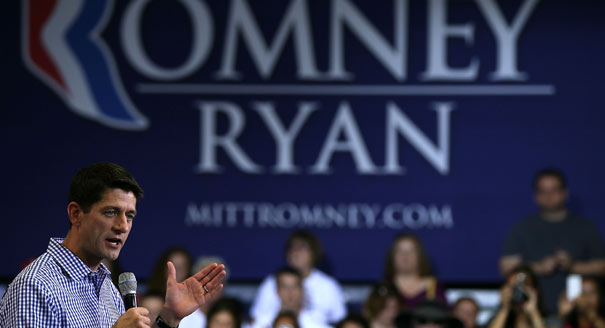
Pundits cannot decide on the impact that Republican vice presidential candidate Paul Ryan is likely to have. Many originally described him as a a game changer, but are now calling him a liability.
Source: CNN

But within 48 hours, the so-called "narrative" had changed. The narrative is not actual facts. It is how those facts look after they've been run through the political spin cycle. Thanks to modern technology, the whole process of spinning narratives that once took weeks, now happens in the blinking of an eye. Twitter, in its manic frenzy, hopped up on bite-size bits of emotion-filled social interaction, condenses months into hours, news cycles into moments, but without any of the perspective that time or thought brings.
Within a few ticks of the clock of Ryan bounding down the gangplank of the USS Wisconsin, he went from "It boy" to calamity. Comments about his hair and his missing necktie were so rapidly and extensively commented upon that they had become clichés before they could be written about in the next morning's paper. Saturday, he was a bold stroke. By Tuesday, Ryan was a potential liability. Old people were sure to hate him. And once an America that's a bit on the chubby side took note of his 6% body fat, he would be a goner.
What had promised to be the beginning of a long overdue debate about "big ideas" was now seen, often by the same commentators who were upbeat days earlier, as a trigger for more hopelessly divisive bickering.
Meanwhile, seemingly cooler heads sniffed that this wasn't much of a story in the first place. After all, this was all about a vice presidential nomination. John Nance Garner's quip about the vice presidency not being worth "a bucket of warm spit" was dusted off as it is every four years, this time with a little more seeming relevance since Garner was, back in 1932, the last sitting House member to "ascend" to veepdom. Ezra Klein, writing for The Washington Post, suggested it was likely the pick didn't "much matter at all," asserting "that's usually what happens with vice presidential picks."
So, let's take a step back now that we have the Olympian perspective half a week offers. Does the pick matter? Could it? How?
First, the conventional wisdom that vice presidential picks don't matter is just wrong. For more than half a century, vice presidents and vice presidential nominees have had a huge impact. Dwight Eisenhower's vice president, Richard Nixon, became president. John F. Kennedy's vice president, Lyndon Johnson, became president. One of Nixon's vice presidents, Spiro Agnew, was at the center of a scandal. His next one, Gerald Ford, became president.
Jimmy Carter elevated the vice presidency into a real position of policy-partnership, giving Walter Mondale an unprecedented role, which led him to be the Democratic presidential nominee in 1984. Reagan's vice president, George H.W. Bush, became president. Bill Clinton's vice president, Al Gore, was a true policy partner, won the popular vote in the 2000 presidential election and later picked up a Nobel Prize.
George W. Bush's vice president, Dick Cheney, was the most powerful vice president in history. Joe Biden is both a policy partner and, as his "back in chains" gaffe showed, he is still a headline grabber. And even losing nominees for the office, from Lloyd Bentsen to Jack Kemp to Joe Lieberman to John Edwards and Sarah Palin, have had a lasting impact.
Thus, even if Ryan were not one of the leaders of perhaps the single most influential new political movement in America in the past decade, the tea party-aligned deficit hawks of "the New Right," he, as a vice presidential pick, would immediately vault to the forefront of U.S. politics.
Already his budget plan is one of the defining documents of that movement, and thrust him to the forefront of it. Naturally, this makes him a lightning rod for criticism from Democrats -- even though in the past, Democratic budget experts such as Ron Wyden and Erskine Bowles praised his command of the numbers -- but could also be the trigger for a debate that Democrats, if they believe in their principles, should welcome.
Demagoguery is the temptation for both camps and seems preferred by most of their hired guns and super PAC supporters. But they don't have to rule the day. A top Democratic donor friend of mine, former Loral Space & Communications chief executive Bernard Schwartz, sees an alternative approach. "I see an opportunity," he told me, "for the two candidates to present their adversarial cases as best they know how on the basis of principles rather than irrelevancies like how many years of tax disclosure has been made."
He went on to add, "Let's view this selection of Ryan as the beginning of the development of a true Republican national viewpoint and let's view it as a challenge to President Obama to stop going after Romney personally and to speak to the core issues. Both sides have to have the courage to own their ideas, defend them and make the case for the sacrifices any serious approach will entail. This could help elevate that and the debate and give the American people the kind of true choice they deserve right now."'
Encouragingly, this is a view echoed in the comments of thought leaders in the Republican Party such as commentators David Brooks, Charles Krauthammer or Bill Bennett. That's significant because as important as the vice presidential pick actually is, the greater vices with which we must contend in contemporary politics are the tendency to demonize our opponents and to chase after the rapidly moving but ephemeral targets set by the social-networking shouting match.
This is not just dangerous because it's vapid, alienates voters and sheds no light on anything. It's dangerous because sometimes in their zeal for the spotlight or their love of scorched earth politics, candidates, campaign advisers and partisan commentators forget that both sides in this contest are us.
In the end, as appealing as substantive debate is, it's not enough. Because debate that is not followed by the cooperation required for action is wasted. That is why we must hope that both sides see the possibilities for turning this vice presidential pick, like him or not, into a catalyst for the change in the character of our politics that our times require.

Former Visiting Scholar
David Rothkopf was a visiting scholar at the Carnegie Endowment as well as the former CEO and editor in chief of the FP Group.
Recent Work
David Rothkopf
David Rothkopf
Carnegie does not take institutional positions on public policy issues; the views represented herein are those of the author(s) and do not necessarily reflect the views of Carnegie, its staff, or its trustees.

Neither the Abraham Accords nor the presence of large U.S. bases are enough to protect Arab Gulf states.

Marwan Muasher

The U.S.-sponsored TRIPP deal is driving the Armenia-Azerbaijan peace process forward. But foreign and domestic hurdles remain before connectivity and economic interdependence can open up the South Caucasus.



Thomas de Waal, Areg Kochinyan, Zaur Shiriyev

The incoming government has swept Nepal’s election. The real work begins now.
Amish Raj Mulmi
Assessing U.S. compliance with the international laws of war is essential at a time when these frameworks are already fraying.
Federica D’Alessandra
In an interview, Hamidreza Azizi discusses how Tehran has adapted in real time to the conflict with the United States and Israel.

Michael Young