

Commentary
Rubio’s recent visit brought welcome attention, but more capital requires governance changes that may be a hard sell for regional governments.
Jennifer B. Murtazashvili
{
  "authors": [],
  "type": "other",
  "centerAffiliationAll": "",
  "centers": [
    "Carnegie Endowment for International Peace",
    "Carnegie China",
    "Malcolm H. Kerr Carnegie Middle East Center",
    "Carnegie Russia Eurasia Center"
  ],
  "collections": [
    "China’s Foreign Relations",
    "U.S.-China Relations"
  ],
  "englishNewsletterAll": "",
  "nonEnglishNewsletterAll": "",
  "primaryCenter": "Carnegie Endowment for International Peace",
  "programAffiliation": "",
  "programs": [],
  "projects": [
    "Eurasia in Transition"
  ],
  "regions": [
    "North America",
    "United States"
  ],
  "topics": []
}
Source: Getty
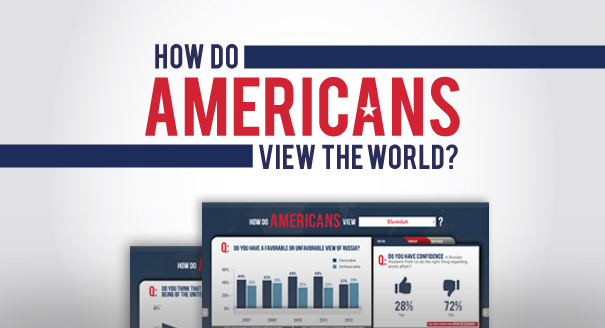
Find out what Americans think, and where you fit in, with a new interactive resource from Carnegie and the Pew Research Center.

41% of Americans think China is the world’s leading economic power. 58% think the United States will achieve its goals in Afghanistan. 64% think tough international economic sanctions won’t convince Iran to give up its nuclear program.
Americans’ views of the world have changed dramatically in the last decade—track how U.S. attitudes are evolving and where you fit in with this groundbreaking interactive feature from Carnegie and the Pew Research Center.


Access the latest analysis on the election and America’s role in the world with viewpoints from Carnegie’s global centers.
Carnegie does not take institutional positions on public policy issues; the views represented herein are those of the author(s) and do not necessarily reflect the views of Carnegie, its staff, or its trustees.

Rubio’s recent visit brought welcome attention, but more capital requires governance changes that may be a hard sell for regional governments.

Jennifer B. Murtazashvili

America’s foreign-policy objectives have grown more demanding while Americans have demanded greater focus on their own affairs.

Stephen Wertheim

Despite public disputes over trade and immigration, the strategic partnership’s foundations remain sturdy.

Sameer Lalwani

It signals a new era of tech diffusion and warfare.

Steve Feldstein

Ahead of a tough winter for Ukraine, Donald Trump’s swing back toward Russia bodes ill. But instead of panicking, Kyiv’s European allies are focusing on action.

Rym Momtaz