• Research
  • Emissary
  • About
  • Experts
Carnegie Global logoCarnegie lettermark logo
Democracy
  • Donate
{
  "authors": [
    "Nikolay Petrov"
  ],
  "type": "legacyinthemedia",
  "centerAffiliationAll": "",
  "centers": [
    "Carnegie Endowment for International Peace",
    "Carnegie Russia Eurasia Center"
  ],
  "collections": [],
  "englishNewsletterAll": "",
  "nonEnglishNewsletterAll": "",
  "primaryCenter": "Carnegie Russia Eurasia Center",
  "programAffiliation": "",
  "programs": [],
  "projects": [],
  "regions": [
    "Caucasus",
    "Russia"
  ],
  "topics": [
    "Political Reform"
  ]
}
In The Media
Carnegie Russia Eurasia Center

Kremlin Fanning Ethnic And Religious Tensions

Inter-religious and interethnic relations are rapidly deteriorating in Russia, but the authorities lack the programs to cope with them, the mechanisms to create new programs, and the realization that both are urgently needed.

Link Copied
By Nikolay Petrov
Published on Sep 4, 2012

Source: The Moscow Times

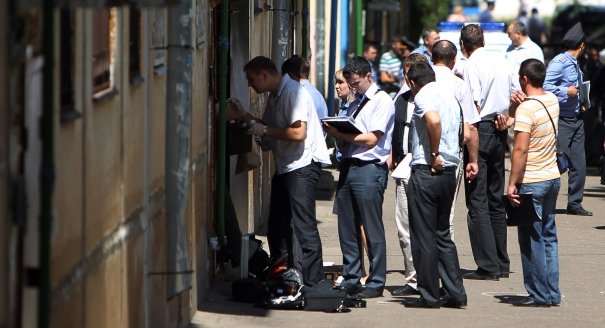
Last week's murder of a respected spiritual leader in Dagestan, a recent terrorist attack in Kazan and overall tensions in Muslim-dominated regions point to what could become an avalanche of problems. The Kazan attack alone prompted a campaign against suspected adherents of Wahhabism and possible plans for the Federal Security Service to closely monitor Muslims in general. But the bureaucratic zeal of the reformed police force might wreak more havoc than a host of terrorists.

Vigilantes may join the fray, escalating the potential for conflict. Dagestani leader Magomedsalam Magomedov has called for the organization of self-defense squads, "teams of young people who are ready to work under the guidance of the Interior Ministry to provide domestic security." The Dagestani Interior Ministry has welcomed the idea. Local authorities have suggested that the groups be composed of Murids, disciples of the late sheik Said Atsayev. Such a move could unleash a low-intensity civil war in Dagestan.

This summer, Krasnodar Governor Alexander Tkachyov suggested organizing armed groups — composed of Cossacks. In fact, his initiative was not the first; other regions have revived the idea of using Cossack units to maintain order. Calls have also recently been made to form "Orthodox squads" in response to vandalized crosses and the desecration of Russian Orthodox churches.

The Kremlin, meanwhile, has used the Pussy Riot case as an ideological tool, defending traditional and Russian Orthodox values in a bid to consolidate its conservative electorate. But in doing so, it has polarized society and provoked the radicalization of opposing camps. That polarization is only heightened by the church's increasingly anti-modernist stance.

The Dagestan tragedy occurred almost simultaneously with a meeting of the new presidential council for interethnic relations, a blatantly ineffectual and ceremonial body that issues lofty statements about key problems even as the government cuts funding to the few programs intended to address them. And in true Soviet style, the council is not composed of specialists on interethnic relations but of leaders of the largest ethnic minorities and various officials.

Thus, as interethnic and inter-religious relations rapidly deteriorate, the authorities lack programs to cope with them, mechanisms to create new programs, and the realization that both are urgently needed. This leaves the police powerless. What's more, the reactionary measures being proposed on the regional level are likely to fan the flames.

This article originally appeared in The Moscow Times.

Nikolay Petrov
Former Scholar-in-Residence, Society and Regions Program, Moscow Center
Nikolay Petrov
Political ReformCaucasusRussia

Carnegie does not take institutional positions on public policy issues; the views represented herein are those of the author(s) and do not necessarily reflect the views of Carnegie, its staff, or its trustees.

More Work from Carnegie Endowment for International Peace

  • Commentary
    Carnegie Politika
    Is There Really a Threat From China and Russia in Greenland?

    The supposed threats from China and Russia pose far less of a danger to both Greenland and the Arctic than the prospect of an unscrupulous takeover of the island.

      Andrei Dagaev

  • Commentary
    Carnegie Politika
    Ukrainian Villages Are a Bigger Prize for Putin Than a Deal With Trump

    Western negotiators often believe territory is just a bargaining chip when it comes to peace in Ukraine, but Putin is obsessed with empire-building. 

      Andrey Pertsev

  • Commentary
    Carnegie Politika
    Has Trump the Destroyer Eclipsed Putin the Destroyer?

    Unexpectedly, Trump’s America appears to have replaced Putin’s Russia’s as the world’s biggest disruptor.

      Alexander Baunov

  • Soldier looking at a drone on the ground
    Commentary
    Emissary
    Are All Wars Now Drone Wars?

    From Sudan to Ukraine, UAVs have upended warfighting tactics and become one of the most destructive weapons of conflict.

      • Jon Bateman

      Jon Bateman, Steve Feldstein

  • Commentary
    Carnegie Politika
    Russia’s Latest Weapons Have Left Strategic Stability on the Brink of Collapse

    The Kremlin will only be prepared to negotiate strategic arms limitations if it is confident it can secure significant concessions from the United States. Otherwise, meaningful dialogue is unlikely, and the international system of strategic stability will continue to teeter on the brink of total collapse.

      Maxim Starchak

Get more news and analysis from
Carnegie Endowment for International Peace
Carnegie global logo, stacked
1779 Massachusetts Avenue NWWashington, DC, 20036-2103Phone: 202 483 7600Fax: 202 483 1840
  • Research
  • Emissary
  • About
  • Experts
  • Donate
  • Programs
  • Events
  • Blogs
  • Podcasts
  • Contact
  • Annual Reports
  • Careers
  • Privacy
  • For Media
  • Government Resources
Get more news and analysis from
Carnegie Endowment for International Peace
© 2026 Carnegie Endowment for International Peace. All rights reserved.