

In The Media
Lilia Shevtsova
{
  "authors": [
    "Lilia Shevtsova"
  ],
  "type": "legacyinthemedia",
  "centerAffiliationAll": "",
  "centers": [
    "Carnegie Endowment for International Peace",
    "Carnegie Russia Eurasia Center"
  ],
  "collections": [],
  "englishNewsletterAll": "",
  "nonEnglishNewsletterAll": "",
  "primaryCenter": "Carnegie Russia Eurasia Center",
  "programAffiliation": "",
  "programs": [],
  "projects": [],
  "regions": [],
  "topics": []
}
Source: Getty
As the traditional Russian system predicated on personalized power heads toward its end, the United States can either continue to support the current system or it can recognize the transience of this system and thus help Russian society cope with the changes to come.
Source: American Interest

To be sure, American movies about Russia are no less simplistic: full of samovar, caviar, matryoshka dolls, Russian mafiosi and bumbling spies. There is no shortage of stereotying, for that matter, in any country’s popular media. But the fuller truth is that there is a multitude of Russian attitudes toward America, because there are now, in the post-Soviet period, many different Russias. There is the Kremlin Russia, which speaks in the voice of its leader (Putin’s voice, for now), as well as those of its propaganda officials. There is the Russia of the ruling political class, which breaks down into segments that display varying feelings toward Americans and their country. The Russia of the liberal, left and nationalist oppositions speaks in many different voices as well. There is also an even vaster Russian public space, whose voice is seldom heard in official and political discourse.
Whatever the attitudes of Russia’s political class or society toward America, we can observe a general phenomenon in the fact that, 21 years after the collapse of the Soviet Union and the bipolar international system, Russia continues to view America not only as one of the most important factors in its foreign policy but also as a factor in its domestic scene. Moreover, the American factor has systemic significance for Russia. This means that the stance toward and the policies related to America combine to form one of the means of preserving the traditional Russian system predicated on personalized power, which we can call the “Russian Matrix.” Regardless of their willingness or readiness to do so, Americans play a significant role in the Russian drama. And there can be no doubt that what is now happening to Russia and its system is a civilizational and historical drama. How else could we characterize the dead end Russia finds itself trapped in—a plight which a substantial part of society recognizes but from which, so far, it sees no way out?
Please pay attention here: Despite there being a possibility of rapprochement, or even agreement, between the official and unofficial Russian interests of the moment, on the one hand, and American interests, on the other, nevertheless Russia and America represent two completely different, spiritually alien civilizations. What is the reason for this alienation? Some will say it is culture, political mentality, and tradition; in part, they are right, but such differences between, say, America and India do not interfere with their ability to cooperate and trust one another in areas of mutual concern. Others point to differences in value systems. That much is obvious; Russia and America developed around different principles. However, this should not automatically translate into hostility. Yes, Russia has an authoritarian regime, but the United States has rather friendly relations with many autocracies.
There are deep-seated reasons for the impossibility of close relations between the United States and present-day Russia. The problem lies in the distinctive set of principles along which the Russian state is developing—principles which testify to the existence of a distinctive Russian civilization.
This Russian “distinctiveness” or “uniqueness” is based on the following principles that create the conditions for the existence and endurance of the Russian Matrix: claims of Russia’s world role as a Great Power (derzhavnost’); expansionism; spheres of influence and satellite states; missionary outreach; and the constant search for a foreign enemy. The principle of missionary impulse exhausted itself with the fall of Communism; the Kremlin has run out of ideas that can be brought into the world. But all the other principles still apply and, as of yet, there is no basis for concluding that Russian authoritarianism can survive without them. They are intertwined in a reciprocal relationship. Thus, the personalized power in the Kremlin sustains itself by virtue of its world claims; the Kremlin’s world claims, in turn, justify the preservation of the authoritarianism. This specific characteristic—the way in which internal and external politics are tied together—makes the Russian Matrix different from other authoritarian systems like, for instance, the Chinese one, which does not require overtly aggressive and expansionist props to support it.
In this context, keeping up one’s great-power appearances and maintaining existing spheres of influence requires one constantly to compare oneself with a similar world power, to contain that power, to distance oneself from it, and to compete with it for world influence. If one isn’t even playing in the same league as the other power, the competition can be imitated. The United States is the only country in the world that affords the Russian Matrix an opportunity for self-affirmation of this kind. ...
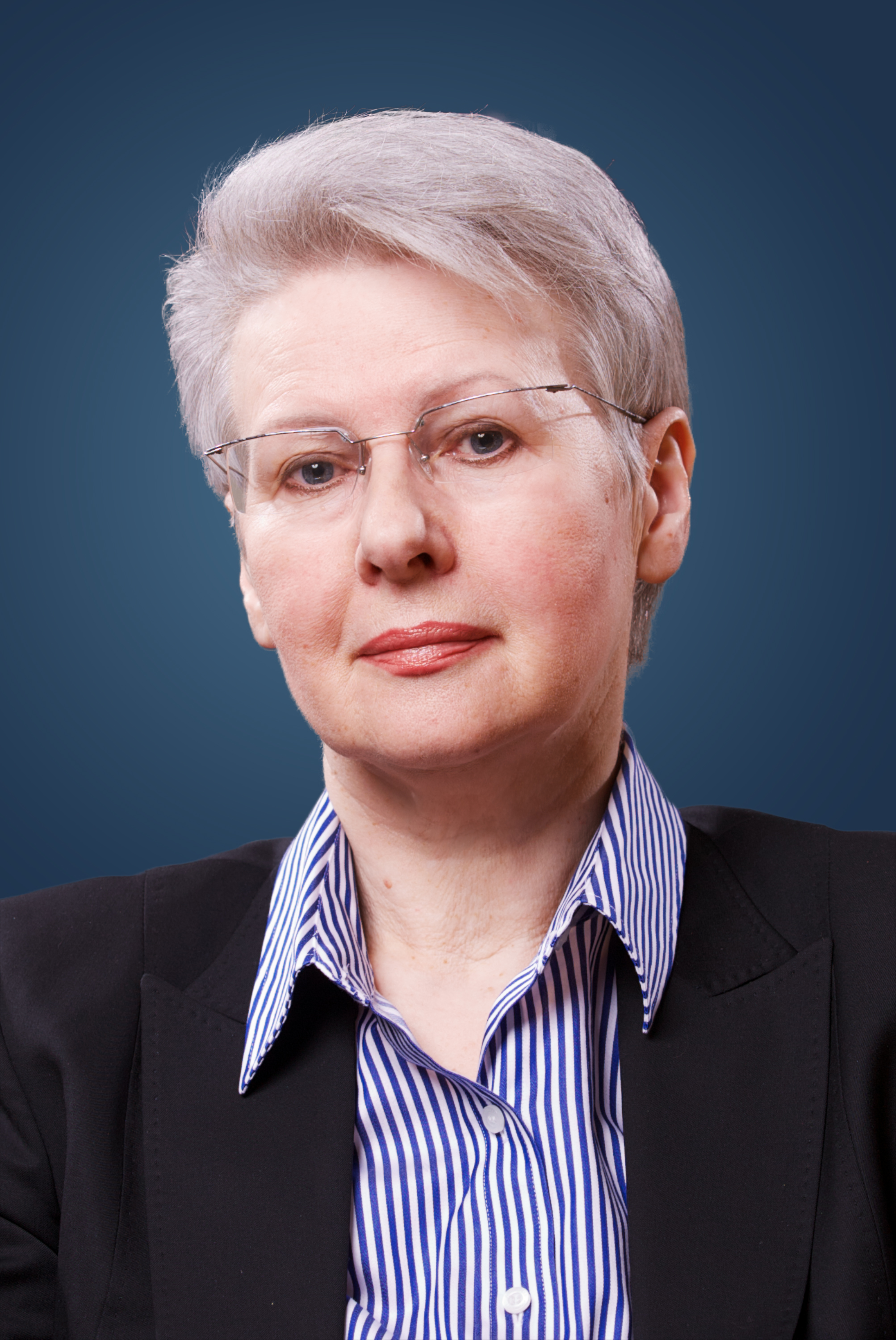
Former Senior Associate, Russian Domestic Politics and Political Institutions Program, Moscow Center
Shevtsova chaired the Russian Domestic Politics and Political Institutions Program at the Carnegie Moscow Center, dividing her time between Carnegie’s offices in Washington, DC, and Moscow. She had been with Carnegie since 1995.
Recent Work
Lilia Shevtsova
Lilia Shevtsova
Carnegie does not take institutional positions on public policy issues; the views represented herein are those of the author(s) and do not necessarily reflect the views of Carnegie, its staff, or its trustees.