

Research
- +4
Milan Vaishnav, Rahul Verma, Rukmini S., …
{
  "authors": [
    "Christophe Jaffrelot"
  ],
  "type": "legacyinthemedia",
  "centerAffiliationAll": "dc",
  "centers": [
    "Carnegie Endowment for International Peace"
  ],
  "collections": [],
  "englishNewsletterAll": "ctw",
  "nonEnglishNewsletterAll": "",
  "primaryCenter": "Carnegie Endowment for International Peace",
  "programAffiliation": "SAP",
  "programs": [
    "South Asia"
  ],
  "projects": [],
  "regions": [
    "South Asia",
    "India"
  ],
  "topics": [
    "Political Reform"
  ]
}
Source: Getty
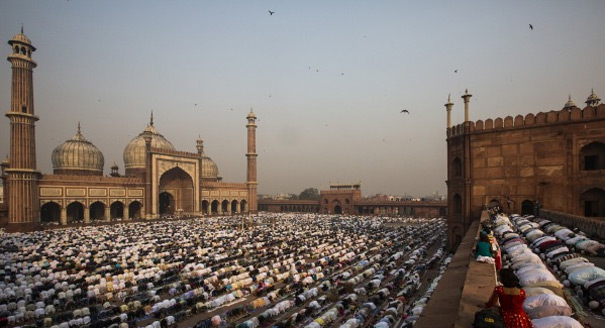
Muslims in India are a much less united and homogeneous group than conventional wisdom might suggest.
Source: Indian Express

National statistics show that Muslims are over-represented in towns and cities: 35.7 per cent of them lived in urban areas, while the urbanization rate was only 28 per cent on average in 2001, according to the census. This harks back to the Muslim origin of many Indian cities — as their very names suggest, Ahmedabad, Ahmednagar, Aligarh, Allahabad, Aurangabad, Hyderabad, etc. But statistics also say that Muslims are over-represented among the poor: 37 per cent of the urban Muslims live below the poverty line, against 27 per cent of the rural Muslims — against, respectively, 22 and 28 per cent of Hindus. Why? Because, according to the Sachar Committee report, 8 per cent of urban Muslims are part of the formal sector whereas the national average is 21 per cent for Indian city and town dwellers.
These aggregates conceal a wide range of trajectories. In the cities that were capitals of princely states, like Bhopal and Hyderabad, decline started at the time of Partition and even more after the merger with the Indian Union, which deprived the local Muslim minorities of their old privileges. In eastern and southern cities where communalism has been less pronounced, socioeconomic standards remained better (partly because of the Gulf connection, sometimes) and urban patterns were overdetermined more by class and caste than by religion.The nostalgia for the composite culture of the Indian city, expressed with formulas such as mili juli, mushtarka, ganga-jamna tahzib, etc, is often misplaced because Indian cities have always been structured along ethnic lines. However, it still makes sense because many old/walled cities were like mosaics with a lane dominated by a single caste or community was adjacent to those dominated by others.
This pattern is eroding for two reasons. First, religious groups tend to promote homogeneity and, therefore, (self-)segregation. Which means that members of a given community prefer to live with each other and exclude the Other from their neighborhood. They do not want to be minorities in localities and be exposed to the influence of another religion or have their children exposed to this influence. Nor do they wish to have members of the other community in their midst, so that their lifestyle, food habits, etc, are not affected by the others.
Second, in western and northern India, communal violence, unprecedented between the late 1980s and 2002, has led Muslims to leave the pockets where they were living next to the Other, and seek safe havens. This process has sometimes taken the form of ghettoization. In our book, we use the word ghetto — that has acquired a loose meaning in common parlance — in a very specific manner to designate a place (1) where members of a community gather together irrespective of their class, for safety, (2) where the state has withdrawn and (3) which is badly connected to the rest of the city. Juhapura, at the periphery of Ahmedabad, is a case in point, with its 4 lakh-plus inhabitants. After the 2002 pogrom which affected Muslim pockets (including middle class ones, see Gulberg Society), rich Muslims moved in there as well. This has been something of a blessing in disguise for the locals since the newcomers have started to develop the place, including in terms of education, which rich and poor long for.
Other Muslim slums have not benefited from this inflow. In Aligarh, the class and caste divide between Sir Syed Nagar and Shah Mahal forms an invisible wall. In fact, the Muslim community, when it does not have to cope with an existential threat, is no less divided than any other. In most of the cities under review, caste and class over-determine the range of social networks. And sometimes, sectarian affiliations make things even more complicated. Bhoras and Khojas in the West and Shias and Sunnis in Lucknow will not relate to each others as co-religionists, far from it.
Politicians sometimes form a class of exploiters in themselves. In many of the cities under review, Muslims dominated assembly constituencies, making them safe seats for Muslims candidates. Few of them — mostly nominated by the Congress — have addressed problems of development, including education, during the election campaigns. They preferred to surf on identity issues, like the management of the Waqf properties. These problems are less difficult to solve, and so long as the local Muslims are in a precarious socioeconomic situation, they are bound to need “saviors” and form votebanks.
This state of affairs, along with the fact that they have not found many jobs in the PSUs and the administration, partly explains why many middle-class Muslims members told us that they expected some improvement of their situation from the withdrawal of the state. Whether they will benefit from a more market-oriented economy remains to be seen.
Former Nonresident Scholar, South Asia Program
Jaffrelot’s core research focuses on theories of nationalism and democracy, mobilization of the lower castes and Dalits (ex-untouchables) in India, the Hindu nationalist movement, and ethnic conflicts in Pakistan.
Recent Work

Milan Vaishnav, Rahul Verma, Rukmini S., …
Christophe Jaffrelot
Carnegie does not take institutional positions on public policy issues; the views represented herein are those of the author(s) and do not necessarily reflect the views of Carnegie, its staff, or its trustees.

In the tenth year of his presidency, President Mirziyoyev’s system is becoming even more personalized than that of his predecessor Karimov.

Galiya Ibragimova

With the growth in points of friction between the great powers, organizations like the SCO will continue to play a role in the strategic adaptation of the smaller powers caught between them.

Temur Umarov
Xi, Putin, and other regional leaders are back-slapping in Bishkek, but the SCO has yet to answer the most serious questions about continental Asia's economic future.

Evan A. Feigenbaum

The greater threat to Zelensky comes not from Fedorov alone, but from the convergence between the former defense minister’s political campaign and the anti-corruption investigations moving ever closer to the presidential administration.

Balázs Jarábik
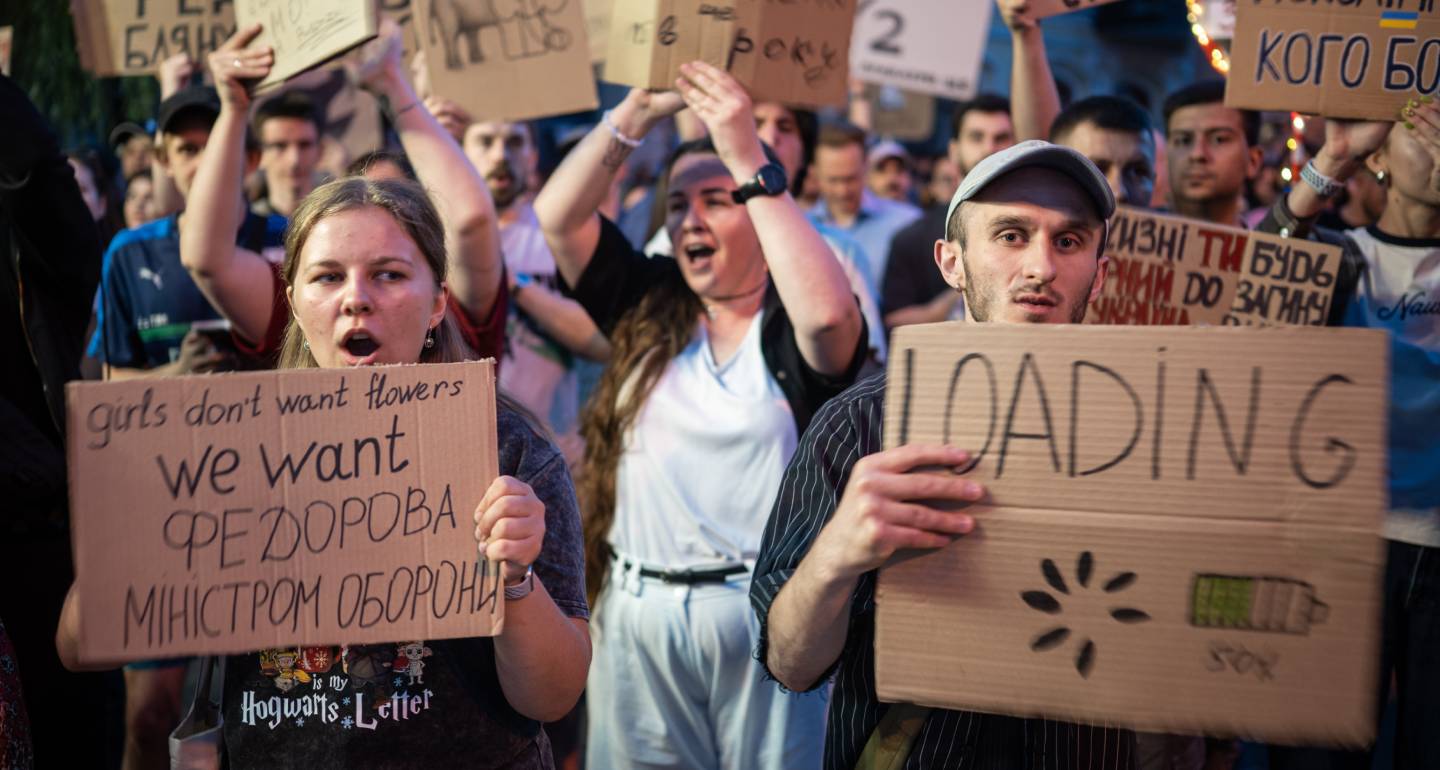
With his public call for new elections in Ukraine, ex-defense minister Mykhailo Fedorov has opened Pandora’s box.

Konstantin Skorkin