

Q&A
Matt Ferchen
{
  "authors": [
    "Matt Ferchen"
  ],
  "type": "legacyinthemedia",
  "centerAffiliationAll": "",
  "centers": [
    "Carnegie Endowment for International Peace",
    "Carnegie China"
  ],
  "collections": [
    "China and the Developing World",
    "China’s Foreign Relations"
  ],
  "englishNewsletterAll": "",
  "nonEnglishNewsletterAll": "",
  "primaryCenter": "Carnegie China",
  "programAffiliation": "",
  "programs": [],
  "projects": [],
  "regions": [],
  "topics": [
    "Economy"
  ]
}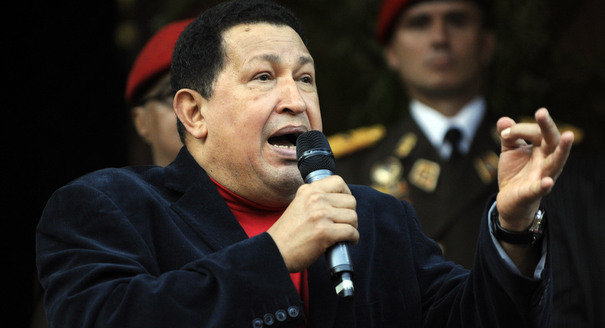
Source: Getty
China's relationship with Venezuela may rely on the health of President Chávez, which could prove a risky strategy if China wishes to maintain a long-term, sustainable presence in that country.
Source: Diplomat
The reelection of Hugo Chávez last month for another six-year term as president of Venezuela elicited almost universal praise from Chinese media and foreign policy analysts. Their general consensus was that his reelection was not only good for the people of Venezuela themselves, but also for economic and political ties between the two countries. However, Chinese government and business leaders who have assumed smooth relations for the foreseeable future are at risk of being unnerved because ties are only as healthy as Chávez himself. Recent reports that Chávez is back in Cuba for further cancer treatment serve to highlight that the new Chinese leadership may have therefore inherited a foreign policy time bomb from their predecessors.
China’s blithe optimism about the impact of continued Chávez dominance of Venezuelan politics sits uncomfortably with a growing anxiety about the effectiveness of the country's political risk analysis. This anxiety is directly related to the dramatic political changes in places like Libya and Burma over the last 18 months or so. Many in Chinese diplomatic and academic circles lament that the Chinese government and firms were caught off guard, and on the losing end of regime change in Libya in 2011 and by Burma’s ongoing political transformation.
Economic concerns rest on fears that billions of dollars in Chinese investments and contracts in Libya and Burma have been lost, suspended or put at risk, while diplomatic concerns are based on a perception that regime change in Libya and Burma’s ongoing domestic transformation have resulted in geostrategic gains for the West at the expense of China.China has therefore focused on improving its risk analysis to support its strategy of expanding already booming trade and investment in Africa, Latin American and Southeast Asia. This makes China’s deepening exposure to Venezuela, amid optimistic assessments about Chávez’ reelection paving the way for continued good relations, all the more potentially traumatic if China’s position in Venezuela were to deteriorate.
On the surface, China’s growing trade and investment relations with Venezuela fit the storyline of its ties elsewhere in South America: China needs key natural resources like iron ore (Brazil), copper (Chile), and oil (Venezuela) and the result is expanding complementary trade and investment in these commodities. Unlike Brazil and Chile, however, Venezuela is threatened by ailments including the so-called oil curse, high rates of violence and kidnapping, and tense relations with neighbors both near (Colombia) and far (the United States). Both praised and reviled as the most prominent figure of the contemporary Latin American left, Chávez is also the leader of the most polarizing and polarized country in the Americas.
Despite all of these obvious sources of risk, China has forged ahead with ever-deeper economic ties with Venezuela. In particular the China Development Bank (CDB), which has been dubbed “China’s Superbank” in a forthcoming book by Henry Sanderson and Michael Forsythe, has led China’s financing efforts in Venezuela with over U.S. $42 billion in loans-for-oil deals since 2007. The CDB’s Venezuela deals constitute the bank’s largest loan exposure anywhere outside of China and account for nearly 60 percent of the bank’s loans to Latin America and the Caribbean. In addition, and as part of the loans-for-oil deals, Chinese state-owned and private firms have signed billions of dollars more in construction, infrastructure and other contracts.
Chávez has dominated Venezuelan politics since he first came to office in 1999 and his courtship of China has served both his international ideological and economic agenda of diversifying the country away from a dependence on the United States. The Chinese government has been reticent to cooperate with Chávez on his ideological agenda, but its firms have more than compensated on the economic side with their vast build-up of financing and investment. The relationship has thus flourished as China has willingly stepped into the opening offered and guaranteed by Chávez’ personal leadership.
However, the longevity of that leadership has been called into question by Chávez’ cancer diagnosis in 2011 and by a reinvigorated Venezuelan political opposition movement. Chávez defeated the opposition in last month’s election and claims to have beaten cancer. But the state of his health is far from certain, and the opposition proved that after a long period of ineffectual leadership it is now a force to be reckoned with.
If the opposition comes to power, China will be left without its champion and guarantor of the thing China’s leaders crave most: stability. Henrique Capriles, the youthful leader of the opposition, has stated that if he were president, while not seeking to overturn the loans-for-oil deals with China, he would review their legality.
Since so little is publicly known about the deals' details the simple threat to openly publish them would give any post-Chávez leadership a great deal of leverage in the relationship with China. Moreover, in a highly polarized and oil-reliant country, China’s state-to-state, loans-for-oil deals are a potent and controversial symbol for those inside and outside of Venezuela who feel strongly one way or the other about Chávez.
While “losing” Venezuela may or may not turn out to be as traumatizing for China as its perceived losses in Libya or Burma have been, at some point China may learn that partnerships of convenience with polarizing, strong-man leaders like Chávez can also quickly and unexpectedly become highly inconvenient. In this context Venezuela may well provide a litmus test for the success or otherwise of China’s new investments in economic and political risk analysis.

Former Nonresident Scholar, Carnegie-Tsinghua Center for Global Policy
Ferchen specializes in China’s political-economic relations with emerging economies. At the Carnegie–Tsinghua Center for Global Policy, he ran a program on China’s economic and political relations with the developing world, including Latin America.
Recent Work
Matt Ferchen
Matt Ferchen, Anarkalee Perera
Carnegie does not take institutional positions on public policy issues; the views represented herein are those of the author(s) and do not necessarily reflect the views of Carnegie, its staff, or its trustees.

The domestic impacts of how long it is taking to end the war in Ukraine have pushed the French electorate to the political extremes and compromised the country’s diplomatic capacity.

Rym Momtaz

The Plaza Accord was not an externally imposed punishment of Japan but part of a broader restructuring that Japanese economists and policymakers themselves recognized was necessary. Its effects were undermined, however, when Tokyo responded to the resulting slowdown with policies that exacerbated investment, credit expansion, and the very imbalances the adjustment was intended to resolve.

Michael Pettis

A summer of escalation in the Black Sea has hurt Ukraine economically and is exacerbating world food security. A truce is needed—as is a broader reframing of Europe’s Ukraine strategy.

Thomas de Waal
The Bureau of Industry and Security needs to adjust its focus and practices to maintain its position as the U.S. government’s primary champion of international technological competition.
Geoffrey Irving

Depleted financial reserves and a shrinking tax base mean it is no longer possible to simultaneously deliver high defense spending, price stability, and economic growth.

Alexandra Prokopenko