

Commentary
Sarah Chayes
{
  "authors": [
    "Sarah Chayes"
  ],
  "type": "legacyinthemedia",
  "centerAffiliationAll": "dc",
  "centers": [
    "Carnegie Endowment for International Peace",
    "Malcolm H. Kerr Carnegie Middle East Center"
  ],
  "collections": [
    "Arab Awakening"
  ],
  "englishNewsletterAll": "ctw",
  "nonEnglishNewsletterAll": "",
  "primaryCenter": "Carnegie Endowment for International Peace",
  "programAffiliation": "SAP",
  "programs": [
    "South Asia"
  ],
  "projects": [],
  "regions": [
    "North America",
    "United States",
    "Middle East",
    "North Africa",
    "Libya",
    "Maghreb"
  ],
  "topics": [
    "Political Reform",
    "Security",
    "Foreign Policy"
  ]
}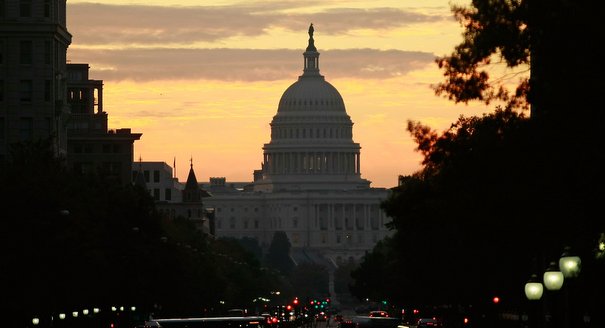
Source: Getty
One lesson from the Benghazi attack is that powerful bureaucratic filters prevent crucial information from reaching senior U.S. government leaders.
Source: Los Angeles Times

That issue flamed into white-hot partisanship ahead of the U.S. presidential election, with some accusing Obama appointees of deliberately downplaying Al Qaeda involvement for political reasons. But acting CIA Director Michael Morell has said that it was analysts within his agency, not political operatives, who changed the wording of the unclassified intelligence summary now under fire for misleading the public. His admission suggests that it is an image-conscious and cumbersome bureaucracy rather than political meddling that should be under scrutiny for the mischaracterization, and even perhaps for an intelligence failure.
Characterizations of events that chaotic night — provided both by then-CIA Director David H. Petraeus in closed congressional testimony and by U.N. Ambassador Susan Rice on television talk shows — were reportedly hammered out in a long flurry of exchanges within the intelligence community.The Wall Street Journal reported a "highly cautious, bureaucratic process that had the effect of watering down the U.S.'s own intelligence." Both the intelligence analyses prepared for officials and the talking points used by Rice were reportedly composed by committee, with as many as two dozen intelligence officials proposing changes to initial drafts. That process, according to the Wall Street Journal, resulted in "a bland summary" of the events.
This depiction bears out the surprise some intelligence analysts expressed to me at the time about the gap they saw between explicit and alarming "raw" intelligence, including transcripts of telephone intercepts, and the finalized assessments that reached senior officials.
Most important intelligence documents, such as the annual National Intelligence Estimate, typically emerge from this kind of time-consuming collaborative processes, with experts from across disparate civilian and military agencies contributing their assessments and commenting on those of their colleagues, often in track changes on a master document. The hairsplitting over single words can get epic, and the results are often watered-down compromises, which may reach leaders too late to matter.
In the process, institutional biases can seriously affect analysis. In 2011, I saw an egregious example of this phenomenon during a debate over one aspect of the insurgency in Afghanistan. A team of Defense Intelligence Agency analysts briefing a senior official on Taliban motivations had reversed the order of the motivations listed in a document of interviews with Taliban members, so as to downplay one that was not in vogue with the intelligence community. I had read the original document and could correct the analysis, but had I not been present, the official would never have known better.
Such biases don't always result in ignoring or watering down information. But in the case of the Benghazi incident — and the state of the Al Qaeda network before the attack — indications are that this is what happened.
Among other readily available documents, an August 2012 Library of Congress report on Al Qaeda in Libya concluded that "Al Qaeda senior leadership, based in Pakistan, is likely seeking to build a clandestine network in Libya," as part of a strategy for exploiting the Arab Spring awakenings. The report pointed out that although Al Qaeda had established a core group in Libya, which included "well-armed, well-trained and combat-experienced militias," it "remains clandestine and refrains from using the Al Qaeda name."
There is little indication that such detailed work on the reconstitution of Al Qaeda after the Arab awakenings and the raid that killed Osama bin Laden made much headway within the intelligence community through the summer of 2012. Even Petraeus' initial briefings on the Benghazi incident reportedly were more or less in line with what Rice said days later in public, suggesting that he himself may not yet have appreciated the sophistication of the Al Qaeda networks in Libya.
It seems odd that the intelligence community should display so little acuity — or even curiosity — about the condition and strategy of the outfit it has spent the last decade battling. One answer to this puzzle may lie in bureaucratic rivalries, which can be at least as fierce as political ones. The CIA, proud of its role in bringing down Bin Laden and the apparent effectiveness of its drones and covert operatives, may have been inclined to play down the regeneration of the Al Qaeda threat in the wake of the Bin Laden raid.
One lesson to be drawn from the Benghazi snafu is that powerful bureaucratic filters prevent crucial information from reaching senior U.S. government leaders. Whether the client at the top is the U.N. ambassador, the director of Central Intelligence or the president, bureaucracies consistently massage and filter information before passing it up the chain.
U.S. leaders must work actively to counterbalance this tendency. To nourish high-quality, timely decision-making, they must make a concerted effort to seek out analysis that contradicts what they normally get, as painful as the effort — and the hearing of it — may be.
Former Senior Fellow, Democracy, Conflict, and Governance Program
Sarah Chayes is internationally recognized for her innovative thinking on corruption and its implications. Her work explores how severe corruption can help prompt such crises as terrorism, revolutions and their violent aftermaths, and environmental degradation.
Recent Work
Sarah Chayes
Carnegie does not take institutional positions on public policy issues; the views represented herein are those of the author(s) and do not necessarily reflect the views of Carnegie, its staff, or its trustees.

It should address the shortcomings of previous crisis communication efforts and adapt to the demands of frontier AI.

Lucy Luo

If the Russian-speaking community in Latvia cannot articulate their interests without being seen as disloyal, they could end up embracing a pro-Kremlin agenda.

Sergejs Potapkins
Washington’s decision to support some UN functions while letting others wither is pulling the organization apart at the seams.

Stewart Patrick, Theodore Zaritsky
While there are notable demographic, economic, and geographic divides over AI, there is also substantial alignment between Republicans and Democrats.


Ian Klaus, Mark Baldassare, Rachel George, …

Are Germany’s economic, industrial, and political struggles becoming a liability for the EU’s ability to rise to the geopolitical moment?

Rym Momtaz, ed.