

Commentary
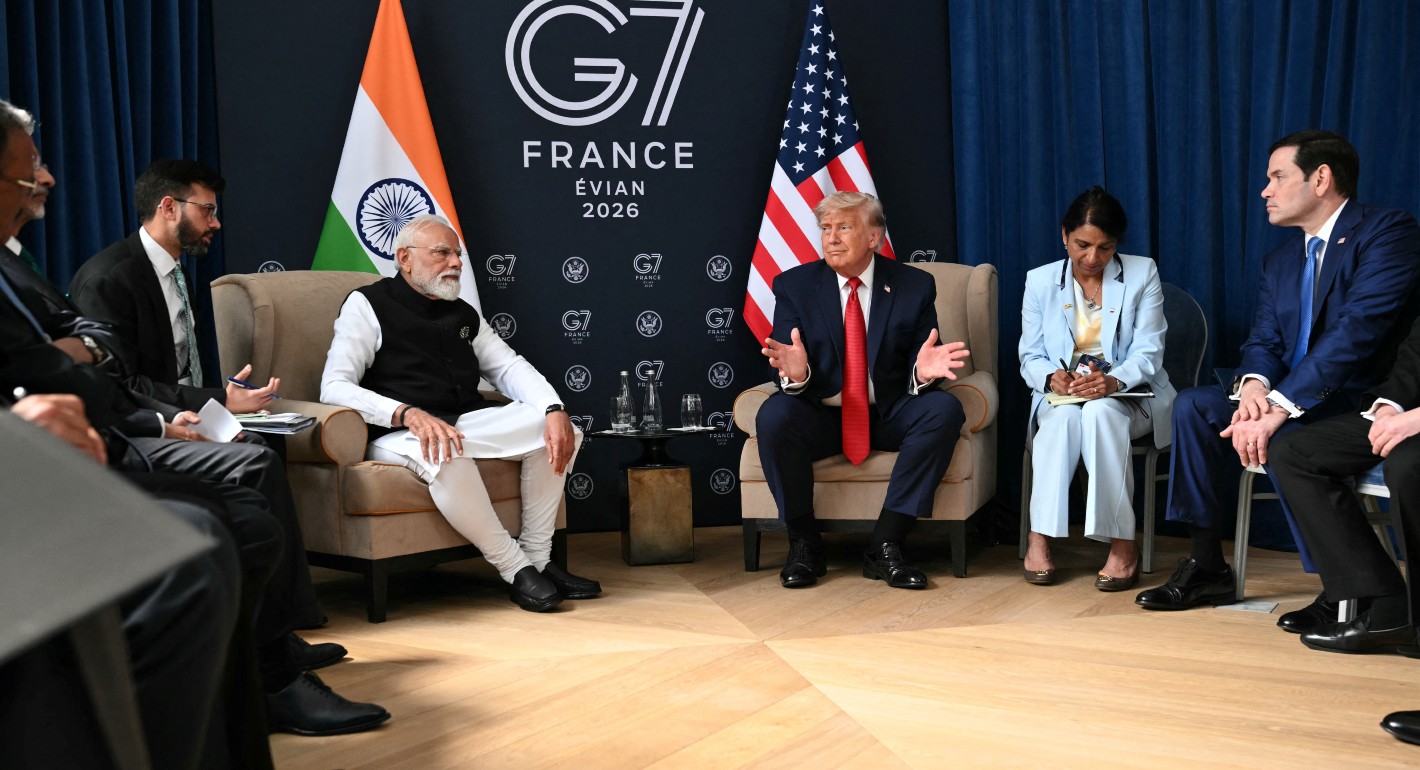
Despite public disputes over trade and immigration, the strategic partnership’s foundations remain sturdy.
Sameer Lalwani
{
  "authors": [
    "Kevin Jianjun Tu",
    "David Livingston"
  ],
  "type": "legacyinthemedia",
  "centerAffiliationAll": "dc",
  "centers": [
    "Carnegie Endowment for International Peace",
    "Carnegie China"
  ],
  "collections": [
    "China’s Foreign Relations"
  ],
  "englishNewsletterAll": "ctw",
  "nonEnglishNewsletterAll": "",
  "primaryCenter": "Carnegie Endowment for International Peace",
  "programAffiliation": "SCP",
  "programs": [
    "Sustainability, Climate, and Geopolitics"
  ],
  "projects": [],
  "regions": [
    "North America",
    "United States",
    "East Asia",
    "China"
  ],
  "topics": [
    "Climate Change",
    "Economy"
  ]
}
Source: Getty
Domestic politics have stifled how the United States and China handle energy investment from one another. As the dynamics of the U.S. and Chinese energy sectors change, new opportunities for cooperation will arise.
Source: Energy Tribune

China’s upstream energy sector has long been monopolized by state-owned enterprises, with the window of investment opportunity largely closed to American enterprises. Similarly, the United States is far from a politically friendly environment for Chinese investors. Chinese offshore oil company CNOOC’s attempted acquisition of California-based Unocal in 2005 suffered a humiliating defeat amidst a politically-charged bidding war.
Against this backdrop, Chinese national oil companies (NOCs) have spent a good part of the past decade seeking out petroleum resources in politically risky countries. However, events including the break-up of Sudan in 2011 and new U.S. sanctions against Iran in 2012 were a wake-up call for the increasingly market-oriented Chinese NOCs. These companies are again eyeing more investment in politically stable countries, as evidenced by CNOOC’s recent acquisition of Canada’s Nexen.This time around, fundamental changes in both countries’ energy outlooks are now making more fiducial energy ties plausible. The United States is facing a decidedly different future than it was at the time of the Unocal deal. Back in 2005, the country’s dependency rate on foreign oil was 60 percent, and the “peak oil” narrative was in the ascendancy. Since then, technological breakthroughs on horizontal drilling and fracking as well as higher prices have rapidly unlocked the country’s huge unconventional oil and gas potential. As a result of rising U.S. petroleum production, BP has secured permission to ship U.S. crude oil to Canada, and Shell has applied for a similar export license. The U.S. Energy Information Administration (EIA) estimates that the United States might both surpass Saudi Arabia as the world’s largest oil producer, as well as becoming a net exporter of natural gas, by 2020.
Meanwhile, according to the International Energy Agency (IEA), coal’s share of the global energy mix continues to rise and by 2017 might even surpass oil as the world’s top energy source. China’s coal-fired carbon emissions alone were 17 percent higher than all U.S. carbon emissions in 2010, and the Middle Kingdom is expected to account for more than 70 percent of global coal demand growth by 2017. China also faces both mounting international pressure to retard its spiking greenhouse gas emissions and soaring domestic concern over its deteriorating environment.
Fortunately, China possesses more technologically recoverable shale gas than any other country in the world. The IEA concluded in 2012 that only fierce competition from low-priced gas can effectively reduce coal demand in the absence of a tax on carbon at a high enough level. An enhanced role for gas could also help China to accommodate more renewable generation into its energy system. Beijing is clearly keen to replicate the U.S. shale gas revolution, but it is also the international community that has a vested stake in seeing China’s natural gas sector develop rapidly and responsibly.
Napoleon Bonaparte once surmised that “a revolution is an idea which has found its bayonets.” China’s potential shale revolution is still searching for the twin bayonets of technology and expertise. Given the benefits that development of Chinese shale gas could bring to global energy markets and climate change goals, the United States should do what it can to export the shale revolution across the Pacific. The most effective way it can do this is through fostering cross-border energy investment.
Particularly with the U.S. more in control of its own energy future, the likelihood of conflict with China over access to precious hydrocarbon resources in the international market is lower than has been often assumed. Washington is therefore in a stronger position than at any time in recent past to embrace Chinese investments in American energy assets—particularly joint ventures, minority shares, and similar structures that avoid the political consternation that comes with state-owned companies acquiring a controlling stake.
In return, China should gradually open its upstream sector to international participation. In the country’s second shale-block auction, completed in early December 2012, major Chinese energy companies including CNPC, Sinopec and CNOOC were conspicuously absent and international majors with the requisite technological expertise were hampered in their ability to bid. China’s dependence on foreign oil could reach 60 percent in 2013 and it is expected to keep rising. Yet its upstream oil sector is still monopolized to a similar degree as major energy exporters such as Russia or Saudi Arabia.
History suggests that, over time, China will seek more competitive and transparent domestic and international energy markets like other major energy importers. However, this process could and should be accelerated through cooperation between the United States and China— which would not only help both countries economically, but also do the world’s climate a favor in the process.
This article was originally published in the Energy Tribune.

Former Senior Associate , Energy and Climate Program
Tu was a senior associate in Carnegie’s Energy and Climate Program, where he led the organization’s work on China’s energy and climate policies.
Former Associate Fellow, Energy and Climate Program
Livingston was an associate fellow in Carnegie’s Energy and Climate Program, where his research focuses on emerging markets, technologies, and risks.
Carnegie does not take institutional positions on public policy issues; the views represented herein are those of the author(s) and do not necessarily reflect the views of Carnegie, its staff, or its trustees.
Despite public disputes over trade and immigration, the strategic partnership’s foundations remain sturdy.

Sameer Lalwani

It signals a new era of tech diffusion and warfare.

Steve Feldstein

With its public finances in shambles, the far right polling at 35 percent ahead of the 2027 presidential election, and a growing protest movement, is France’s crisis a threat to the EU’s geopolitical awakening?

Rym Momtaz, ed.

Ahead of a tough winter for Ukraine, Donald Trump’s swing back toward Russia bodes ill. But instead of panicking, Kyiv’s European allies are focusing on action.
Rym Momtaz

Without a ceasefire with Ukraine on attacking each other’s energy infrastructure—to which the Kremlin is unlikely to agree—the diesel agreement between Putin and Trump is largely for show, rather than representing a genuine increase in the volumes of Russian diesel on the global market.

Sergey Vakulenko