

Commentary
Uri Dadush
{
  "authors": [
    "Uri Dadush"
  ],
  "type": "legacyinthemedia",
  "centerAffiliationAll": "",
  "centers": [
    "Carnegie Endowment for International Peace"
  ],
  "collections": [],
  "englishNewsletterAll": "",
  "nonEnglishNewsletterAll": "",
  "primaryCenter": "Carnegie Endowment for International Peace",
  "programAffiliation": "",
  "programs": [],
  "projects": [],
  "regions": [
    "North America",
    "United States"
  ],
  "topics": [
    "Economy"
  ]
}
Source: Getty
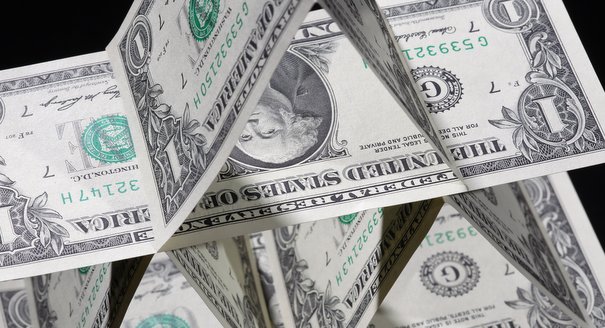
The 300 billion dollars Americans give every year to philanthropic causes provide a channel for important social change. So why are academics and even President Obama in favor of limiting tax deductions that can be claimed for charitable contributions?
Source: L'Espresso
What do Mark Zuckerberg, inventor of Facebook; Ted Turner, founder of CNN; and George Lucas, Director of Star Wars, have in common? All three are billionaires who have signed “The Giving Pledge”.
This is a promise that they will give at least half of their fortune to philanthropic causes. So far, 92 American billionaires, including the original sponsors, Bill Gates and Warren Buffett, America’s two richest men, have signed the pledge. If they all live up to the promise, they will probably give away over 200 billion dollars in total.
Even so, the pledge will provide only a small part of what private citizens give, which is 300 billion dollars every year, or about 2 percent of U.S. GDP. Ordinary Americans are not only big spenders, they are also big givers – donating more than twice as much as the British, over eight times as much as the Germans, and over eleven times as much as the French, as a share of their income. In 2012, according to the Charities Aid Foundation, nearly half of all Americans gave money to charitable causes.Now, 300 billion dollars a year is a lot of money, about as large, for example, as the GDP of Greece and about one third of the total sum all 27 EU member states spend on education. The money goes to fund everything from churches and synagogues to great universities, magnificent art galleries and concert halls, some of the world’s most advanced hospitals, food banks, think tanks (where I work), cancer research, and the fight against infectious diseases around the world, though it also can and does fund ideologues and radicals of many stripes. Still, philanthropy has also been a source not only of some major scientific and economic innovations (such as help for the green revolution that multiplied agricultural production in developing countries) but also of social innovation, such as the education of disadvantaged groups and sponsoring of civil rights in the South of the United States during much of the twentieth century.
The philanthropy of Americans fills many needs left unattended by government and is unquestionably an act of great generosity and civil commitment repeated by millions every year.
So, why is philanthropy under perennial scrutiny by academics and journalists? And why, for example, is President Obama arguing for limits on tax deductions that can be claimed for charitable contributions?
The main objection to philanthropy as practiced in America is that it is unaccountable, and the result of an unbalanced, not to say broken, social system.
Philanthropies great and small provide a public service and effectively make policy choices that have considerable bearing on society, but while subject to minimal regulation and being accountable to nobody except themselves. This leaves plenty of space for eccentricity, inefficiency, and abuse.
Moreover, even if the notion that people can spend money on their favorite social causes as they please seems reasonable, why should ordinary taxpayers subsidize those activities by allowing them to be tax exempt—in the U.S. case, both in the act of giving (i.e. tax deductions for charitable contributions) and in the operation of philanthropies? For example, the personal tax deduction on charitable giving alone is estimated to cost the U.S. Treasury $50 billion a year.
Does it make sense for citizens to subsidize through tax exemptions both clinics practicing abortions and pro-life advocacy groups? Should such subsidies support churches, mosques, synagogues and Buddhist temples, as well as ecumenical groups and non-believers?
But the most fundamental objection to American philanthropy is that it is a result of a system that fosters enormous wealth and income disparities: by under taxing the affluent and under investing in social services the system creates both the capacity for philanthropy and the need for it. Thus, while the United States has the most unequal income distribution in advanced countries—the top 1 percent of American tax payers receives 20 percent of the income and pay a small share in taxes compared to other countries—its government’s social spending amounts to about 20 percent of GDP while European nations spend on average about 27 percent of GDP. This is a gap that philanthropy comes nowhere near being able to fill.
One notable consequence is that while the U.S. has some of the world’s greatest and richest universities, art galleries, and most advanced medical research centers (often the pet projects of the wealthiest givers), but it also has 45 million people in poverty, dismal average health outcomes and sub-par average education outcomes.
American philanthropy plays an important social role and is immensely laudable. But citizens should not be obliged to subsidize philanthropic institutions so heavily through the tax system while leaving them free to do pretty much as they wish.
This article was originally published in L'Espresso.

Former Senior Associate, International Economics Program
Dadush was a senior associate at the Carnegie Endowment for International Peace. He focuses on trends in the global economy and is currently tracking developments in the eurozone crisis.
Recent Work
Uri Dadush
Uri Dadush
Carnegie does not take institutional positions on public policy issues; the views represented herein are those of the author(s) and do not necessarily reflect the views of Carnegie, its staff, or its trustees.
Despite its flop at the box office, the film raises important questions for the climate community to answer.
Leonardo Martinez-Diaz

Russian strikes are weakening the economy sustaining Ukraine’s war effort. Closing the growing funding gap will require more European support and politically contentious reforms in Kyiv.

Balázs Jarábik

In an interview, Rozina Ali discusses her new book on the rise and manifestations of Islamophobia in the United States.

Michael Young

While the EU and European governments are embracing the much-lauded middle-power moment, this entails three difficult conundrums.

Richard Youngs

Europe is facing rising populism internally as well as external pressures from Russia, China, Turkey, and the United States.

Dimitar Bechev