

In The Media
David Rothkopf
{
  "authors": [
    "David Rothkopf"
  ],
  "type": "legacyinthemedia",
  "centerAffiliationAll": "",
  "centers": [
    "Carnegie Endowment for International Peace"
  ],
  "collections": [],
  "englishNewsletterAll": "",
  "nonEnglishNewsletterAll": "",
  "primaryCenter": "Carnegie Endowment for International Peace",
  "programAffiliation": "",
  "programs": [],
  "projects": [],
  "regions": [
    "United States",
    "Syria",
    "Russia"
  ],
  "topics": [
    "Security",
    "Foreign Policy"
  ]
}
Source: Getty
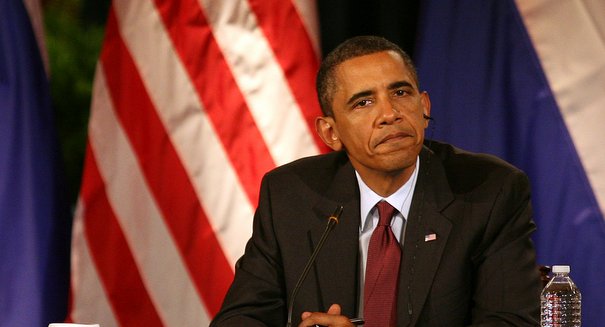
There should be no debate about the fact that the use of weapons of mass destruction is an especially heinous threat warranting a strong response.
Source: Foreign Policy
There is so much wrong with the current "red-line" mess with Syria that a little sorting out is in order. It has gotten to the point that you can't tell which fiasco you are talking about without a scorecard.
In the first instance, of course, there is the self-inflicted wound element of the problem, as reported in Sunday's New York Times. Apparently, according to the paper, the president's initial use of the term "red line" was an ill-considered bit of rhetorical muscle-flexing on his part. Since the president is the font from which all policy flows, it can hardly be called freelancing, but it was something close, making policy with a slip of the lip and less reflection on consequences than is truly desirable.Of course, the word "consequences" cuts to another dimension of the problem that goes beyond the process misstep involved. Declaring a red line without figuring out the consequences you are willing to impose in advance is asking for trouble. It is the equivalent of a parent threatening an unruly child by counting to three: It works fine if the child doesn't have the courage, curiosity, or recklessness to find out what happens after you get to three. Typically, however, the approach doesn't work if the one you are seeking to talk back into line is a proven mass-murderer.
Another problem associated with the red line that Sen. John McCain quipped was written in "disappearing" ink has to do with the various ways United States has hemmed and hawed about the issue in the days since evidence appeared that suggested the red line might have been crossed. Admittedly, some of this was soundly cautious, a "let's be sure" reaction that was a hard-learned lesson from Iraq. But some of it -- notably the mixed signals that included Defense Secretary Chuck Hagel's suggesting that the line might have been passed (a little, somehow, but not too much, but still worrisomely) while also saying the United States was considering tougher measures while also not actually taking any -- was a classic illustration of a rudderless reaction.
Also unsettling was the press spinning in the past 24 hours in the wake of the Israeli strikes on Syria. While the Israeli action was, as the president has indicated, wholly justifiable, the United States seems to be playing both sides on this one. On the one hand, there were assertions to the press in the wake of the first attacks that the United States was not notified of them until after the fact. On the other, on Monday morning NBC reported that U.S. national security sources had indicated the Israelis had used U.S. intelligence in their preparations.
None of the dimensions of this muddle is nearly as ugly as the whole notion that it is appropriate to have declared the use of chemical weapons to be a red line in the first place. There should be no debate about the fact that the use of weapons of mass destruction is an especially heinous threat warranting strong response. But events have underscored just how arbitrary and morally questionable the distinction is. According to the United Nations, as of last month, more than 70,000 people have been killed in Syria by conventional means in the past two years. And, as reported by CNN, citing comments from U.N. High Commissioner on Human Rights Navi Pillay, that may "actually be an underestimate." Not only is that more than twice the estimated death toll in the Libyan conflict but, as it happens, it is roughly the same as the immediate death toll in the wake of the nuclear attack on Nagasaki at the end of World War II (60,000-80,000).
So we're really splitting hairs here when it comes to red lines, aren't we? Are we more concerned by the means of attack than we are by the ends achieved? Surely to those who are victims, the losses are just as grievous.
Secretary of State John Kerry is visiting Moscow this week to try to encourage Russia to assist in the bringing of this conflict to an end. While cajoling or pressuring the Russians has not worked to date, this is the right move at the moment. Frankly, there is no way to further pressure Syrian President Bashar al-Assad -- he has no Plan B. The day after he ceases being Syria's ruler (and its executioner-in-chief), he will become a prisoner or be one of its casualties. Similarly, his backers in Tehran have embraced their pariah status. They are flaunting global rules regarding nuclear proliferation and remain the world's leading state sponsor of terror. Expecting them to change their stripes anytime soon is foolish.
That leaves Russia's Vladimir Putin, who perversely is enabling a mass-murderer as part of a campaign to remain globally relevant. The Russians have a big event coming up next year in Sochi -- the Olympics -- that will have all eyes of the world upon them. To date, their support of Syria has had no real cost. It is time for Kerry to indicate that the United States has both carrots and sticks and the will to use them to move the Russians to a position more consistent with international law and basic human decency. Now that Washington has become more engaged, post-Boston, in its awareness of the problem of fundamentalism in Russia's near abroad, it can more effectively partner with the Kremlin in a way that will be increasingly important in the run up to the Games. Alternatively, the United States can and should privately send a message that should the Russians refuse to play a more constructive role, America will have to reconsider its involvement in their big party.
Admittedly, evoking a Jimmy Carter-era policy is hardly a sure-fire winner in terms of public opinion. And there are certainly other ways to pressure the Russians (how aggressively and quickly we go into the business of offering Europe a cheaper, more dependable alternative to Russian natural gas is just one example). But because Russia is the one key player in this equation that is vulnerable to international pressure and because its behavior to date on this has been so egregious, Kerry must be clear that the United States will use all the tools in its toolbox to get the Kremlin to move on Syria. If then, he can also find a way to work with others in the region -- not just the Israelis but the moderate Arab states of the Middle East -- to turn up the military heat on Assad, then perhaps the Obama team can use the confusion and reflection associated with these red-line follies to help move us toward a more constructive approach in that ravaged country.

Former Visiting Scholar
David Rothkopf was a visiting scholar at the Carnegie Endowment as well as the former CEO and editor in chief of the FP Group.
Recent Work
David Rothkopf
David Rothkopf
Carnegie does not take institutional positions on public policy issues; the views represented herein are those of the author(s) and do not necessarily reflect the views of Carnegie, its staff, or its trustees.

The current U.S. indifference to human rights means Astana no longer has any incentive to refuse extradition requests from its authoritarian neighbors—including Russia.

Temur Umarov

The conflict is threatening stability in Armenia and Azerbaijan.

Zaur Shiriyev
In an interview, Kheder Khaddour explains that Damascus is trying to stabilize its borders, but avoiding war isn’t guaranteed.

Michael Young
The country’s strategy is no longer focused on deterrence and diplomacy, it’s about dominance and degradation.

Nathan J. Brown

The conflict is exposing the deep energy vulnerabilities of Korea’s chip industry.


Darcie Draudt-Véjares, Tim Sahay