

Article
Frederic Wehrey, Charles H. Johnson
{
  "authors": [
    "Frederic Wehrey"
  ],
  "type": "legacyinthemedia",
  "centerAffiliationAll": "dc",
  "centers": [
    "Carnegie Endowment for International Peace"
  ],
  "collections": [
    "Arab Awakening"
  ],
  "englishNewsletterAll": "menaTransitions",
  "nonEnglishNewsletterAll": "",
  "primaryCenter": "Carnegie Endowment for International Peace",
  "programAffiliation": "MEP",
  "programs": [
    "Middle East"
  ],
  "projects": [],
  "regions": [
    "Middle East",
    "North Africa",
    "Libya",
    "Saudi Arabia"
  ],
  "topics": [
    "Political Reform",
    "Security",
    "Military",
    "Civil Society"
  ]
}
Source: Getty
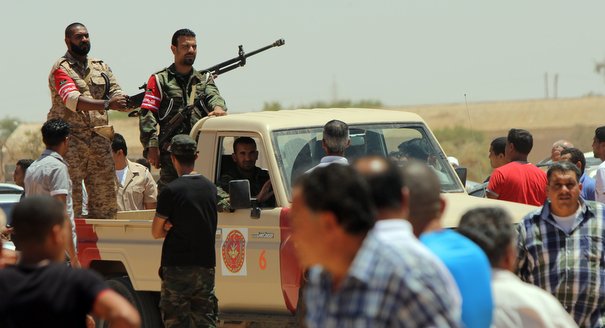
Post-Qaddafi Libya faces a number of significant challenges as it struggles to rein in militias and build political, economic, and security institutions.
Source: VOA Press Conference
Voice of America's Carol Castiel sat down with Carnegie's Frederic Wehrey to discuss the political challenges facing Libya and Saudi Arabia respectively. Wehrey highlighted the obstacles Libya faces in reining in militias and building political, economic, and security institutions in the post-Qaddafi era. He also described the persistent challenges of sectarianism in the Gulf as well as the Saudi regime's attempts to play fractious opposition groups off of one another.
Senior Fellow, Middle East Program
Frederic Wehrey is a senior fellow in the Middle East Program at the Carnegie Endowment for International Peace, where his research focuses on governance, conflict, and security in Libya, North Africa, and the Persian Gulf.
Recent Work
Frederic Wehrey, Charles H. Johnson
Frederic Wehrey, Charles H. Johnson
Carnegie does not take institutional positions on public policy issues; the views represented herein are those of the author(s) and do not necessarily reflect the views of Carnegie, its staff, or its trustees.

The books, podcasts, and films that explain the world it made.

Andrew Leber

In the tenth year of his presidency, President Mirziyoyev’s system is becoming even more personalized than that of his predecessor Karimov.

Galiya Ibragimova
Congress should ask tough questions about the agreement’s more unique features and whether they advance U.S. interests or compromise them.

Jane Darby Menton

To remain effective, organizations need to master new media and legitimacy markers to make a once-in-a-century shift.
Renée DiResta, Rachel Kleinfeld, Margot Treadwell

With the growth in points of friction between the great powers, organizations like the SCO will continue to play a role in the strategic adaptation of the smaller powers caught between them.

Temur Umarov