

Commentary
Uri Dadush
{
  "authors": [
    "Uri Dadush"
  ],
  "type": "legacyinthemedia",
  "centerAffiliationAll": "",
  "centers": [
    "Carnegie Endowment for International Peace"
  ],
  "collections": [],
  "englishNewsletterAll": "",
  "nonEnglishNewsletterAll": "",
  "primaryCenter": "Carnegie Endowment for International Peace",
  "programAffiliation": "",
  "programs": [],
  "projects": [],
  "regions": [
    "North America"
  ],
  "topics": [
    "Economy",
    "Global Governance"
  ]
}
Source: Getty
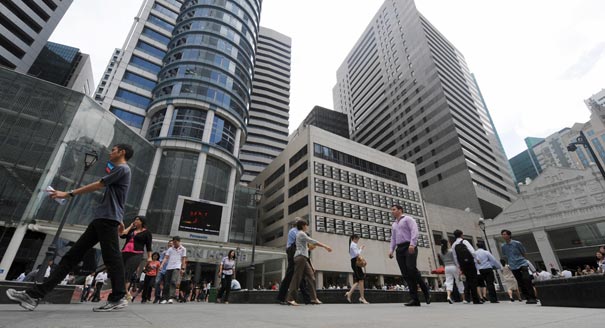
The protests observed throughout the developing world demonstrate that even when governments are democratically elected, they still face direct challenges to their legitimacy.
Source: L'Espresso
Why have protests engulfed so many countries that until recently were considered some of the world’s most successful economies? Why such widespread protests in Brazil, Turkey, Chile, Egypt, and Tunisia, and not in the poorest states of Africa, or in wealthy but struggling countries such as France and Italy?
In a Carnegie analysis last year, Shimelse Ali and I argued that those seeking an answer need to look beyond the immediate politics of dissent to two commonly available economic indicators: the number of cars in circulation, and government spending per person.
The car measure, adjusted for household size, provides a pretty good indicator of the size and growth of the middle class, traditionally the most vocal segment of the population. In developing countries, owning a car is the irrefutable symbol of having entered the middle class. Using the car indicator, it appears that in the countries where protests are most prevalent, the middle class is already significant , ranging from 14 percent in Egypt to 38 percent in Brazil, and growing extremely rapidly, at a rate not far from 10 percent a year.The share of government spending in GDP is the most general measure of the government’s financial capacity to deliver the services that every middle-class household covets: higher education, quality health care, usable roads, functioning airports, reliable telecommunications, public safety, and garbage disposal. In the protest economies, government spending as a share of GDP is about half that of advanced countries. Per person, government spending is typically a seventh or less that of advanced countries. These public resources are simply not enough to satisfy the needs of the new middle class.
In very poor countries, such as Bangladesh or Ethiopia, the vocal middle class is tiny, and the large mass of the poor has little voice. Meanwhile, the elites can shape the state to their own ends, or bypass it by hiring their own security guards and patronizing private schools. Politically, very poor countries can get away with having disastrously weak public services. In the rich countries, on the other hand, that is not possible: the middle class became large and established long ago, and, to survive, governments have learned to provide quality public services. Visit Boston, Tokyo, or Torino, and you will see a functioning state at work.
But if you visit, instead, Sao Paolo, Istanbul, or Cairo, you will see a large number of new cars and modern shopping malls—and public services that do not work. The unbreathable air, power brownouts, and infamous traffic jams in many megacities of the emerging nations are just some of the manifestations of a burgeoning middle class knocking at the door of an underdeveloped state.
The discontent of the middle class in the rapidly emerging economies is palpable around the dining table wherever you go, from Moscow to Delhi, or to Beijing. Discontent usually just simmers. But it can become mass protest or even revolution, when the middle class feels it is not being heard. True, this is more likely to happen in dictatorial regimes as in pre-Arab Spring Egypt or Tunisia. But, what Brazil, Turkey, and Chile, all three relatively recent democracies, show is that elected governments that behave capriciously or are captured by self-serving elites are not immune from direct challenges to their legitimacy.
We have not seen the end of this story. First, because the provision of high quality public services requires the building of institutions over many years—it cannot be legislated at the stroke of a pen, like raising the value added tax. Second, because there are about 70 rapidly growing developing countries that are near an income per capita level of $3,500 (purchasing power adjusted), which we know from market studies is where car ownership—i.e. the size of the middle class—takes off. Per capita car ownership in the emerging markets—rapid as recent growth has been—still remains between five and fifteen times lower than in the advanced economies.
What should the rich countries learn from these troubling protests? An obvious point is that the eurozone periphery countries can only cut funding for schools and hospitals up to a point. In the advanced countries, too, there is a limit to what the middle class will take.
But perhaps the more important lesson is that the newly affluent Brazilians and Turks are pushing for what Americans and Germans take for granted: voice and higher standards in governance, and public services, including the goods that go with them, pharmaceuticals, machinery, and, yes, cars—all of which the advanced countries can help provide. In a nutshell, the middle class of the emerging nations wants to be more like us.
Just like us, the new middle classes demand democracy, and history tells us democracies that remain democracies tend to avoid going to war with each other. So the rise of the middle classes may also herald a more peaceful world. To that, I say, “Amen.”
This article was originally published in L'Espresso.

Former Senior Associate, International Economics Program
Dadush was a senior associate at the Carnegie Endowment for International Peace. He focuses on trends in the global economy and is currently tracking developments in the eurozone crisis.
Recent Work
Uri Dadush
Uri Dadush
Carnegie does not take institutional positions on public policy issues; the views represented herein are those of the author(s) and do not necessarily reflect the views of Carnegie, its staff, or its trustees.

The Bureau of Industry and Security needs to adjust its focus and practices to maintain its position as the U.S. government’s primary champion of international technological competition.

Geoffrey Irving

Depleted financial reserves and a shrinking tax base mean it is no longer possible to simultaneously deliver high defense spending, price stability, and economic growth.

Alexandra Prokopenko
U.S. trading partners in Asia are closely watching the dispute for signs of how it may affect their own interests.

Barbara Weisel

With the growth in points of friction between the great powers, organizations like the SCO will continue to play a role in the strategic adaptation of the smaller powers caught between them.

Temur Umarov
Amid celebrations of bilateral ties was a deeper focus on stability in the Middle East.

Amr Hamzawy