

Paper
Smaller powers cannot go it alone, but Canadian history shows that integration with the United States will not always be benign.
Paul Samson

Source: Getty
Networks—from international payments platforms to key economic sectors—underlie many aspects of U.S. power. But they are suffering under an extractive approach to foreign policy.
Power is the central concept in the field of international relations—but scholars and practitioners disagree on how to define or measure it. Robert Gilpin noted in 1981 that, “the concept of power is one of the most troublesome in the field of international relations and, more generally, political science”—and the number of definitions of power has only increased in the forty-five years since Gilpin wrote those words.1 The range of adjectives that often precede the noun speaks to the degree of conceptual variance: There is social power, soft power, smart power, sharp power, symbolic power, and structural power—and those are merely the categories that start with the letter “s.” The adjectival list is endless.
This paper focuses on one slice of power in particular: the kind that emanates from networks integral to international society. These networks range from financial entities like the Society for Worldwide Interbank Financial Telecommunication (SWIFT) to the global supply chains for producing top-of-the-line semiconductors, from energy pipelines for hydrocarbons to technological stacks, from undersea telecommunication cables to social media networks and consular networks. A key feature of these networks is that once they are erected and attract enough users, the costs of creating alternative networks rise while their appeal declines. Another key feature is that actors that control vital nodes within such networks can weaponize them through a variety of techniques—though the potency of any weaponization varies widely.
There is a sweet spot in the exercise of network power. For it to persist, other actors need to believe that the benefits of belonging to such a network outweigh the costs and risks of being vulnerable to hegemonic pressure. Actors that possess network power therefore need to make those structures enticing to others. If those networks are used to coerce, hegemons who control the networks also need to reassure other countries that any weaponization of such networks will be limited to exceptional circumstances.
As this paper demonstrates, the United States has spent the past few decades weaponizing its network power to advance its interests in world politics. This has enabled successive administrations to pressure allies and adversaries alike into policy concessions—and, more importantly, deter adverse policy shifts before they occur. The United States does not possess a monopoly on network power. Iran’s chokehold over the Strait of Hormuz shows its capacity to block a vital shipping route. China’s dominance in the processing of critical minerals suggests that it could exercise network power in global supply chains. Nonetheless, at the current moment the United States possesses the largest fraction of network power in the world.
As the U.S. government has shifted from an inclusive to an extractive approach toward its structural power, however, the future is less promising. This is for four interrelated reasons:
Power can be parsed in many ways in world politics. For the purposes of this essay, power can be thought of as a function of capabilities or structures.
A capabilities approach is, in essence, a form of geopolitical accounting: An actor’s military and economic resources are calculated, weighted, and compared. Rising powers are identified by whether they are amassing a relatively greater share of such capabilities, while declining powers are those with an eroding relative share of these same resources. There can be qualitative dimensions to a capabilities approach, such as technological dynamism or nationalist sentiment.2 A capabilities approach, however, is primarily a counting exercise. A key trait of the capabilities approach is that the actor in question can deploy these power resources immediately. Troops can be mobilized; aid can be dispersed. In other words, these kinds of capabilities are kinetic. These assets are also rival in nature, meaning they can only be used in one place at one time. To put it another way, troops deployed in one area cannot be deployed elsewhere; aid spent in one country cannot also be spent somewhere else.
A structural approach prioritizes the relationships between actors and the degree to which one actor has apparent power over another in the networks they share. There are clear and obvious ways in which asymmetric dependence can advantage one power over another, whether through the employment of economic sanctions or military force. Beyond asymmetric dependence, however, networked structures can greatly enhance the power of the nations that control central network nodes, through panopticon and chokepoint effects.3 The panopticon effect is the informational advantage gleaned from network centrality—such as when Google can infer the emergence of epidemics from search data. The chokepoint effect is the coercive leverage that comes from possibly severing another actor from the network.
The power that results offers material advantages as well as nonmaterial advantages. Many elements of network power augment the coercive use of capabilities for material gain. The networked structures of weaponized interdependence, for example, can greatly enhance economic coercion.4 The command of the commons in military affairs makes it far easier for forces to be deployed and then used across the globe.5 At the same time, the creation of global governance structures empowers the nations that played the most significant role in their creation.6 Similarly, the development of norms, principled ideas, and deeper worldviews can cause actors to view their preferences and/or identities differently, thereby altering the state of geopolitical play in favor of the progenitors of the norm.7
Network power possesses attributes that make it more structural than the kinetic forms of power that fall under the capabilities approach. Many of these networked structures possess nonrival qualities; isolating one actor from a network does not lessen the ability to threaten other actors in the same way.8 Existing forms of network power function as background constraints for the day-to-day practices of international politics. Once erected, structures exert considerable disciplining power, limiting actor choices in a manner that favors the powerful nation or nations that manage the institutions. The essence of network power is it constricts exit options and constrains preferences and strategies within the system. Even NATO countries wary of the United States are loath to diversify away from U.S. military systems, for example. Networks shape or even impose behavior by conditioning thought at a remove from the immediacy of action by agents at any given point in time.9 As more countries have found themselves relying on Chinese components, products, and aid, for example, they have been less likely to criticize China’s human rights record or meet with the Dalai Lama.
There is an all-or-nothing quality to networks. To put it another way, most forms of network power do not exist—until they do. However, once an institution becomes the dominant forum in an issue area, it can acquire significant and recursive forms of power. A recursive form of power is one that is strengthened from its use. Institutions create path dependency; past decisions can greatly constrain the range of options that participants have if they want to continue to participate in the institution. The transaction costs of maintaining existing networks are typically far smaller than those of creating new structures, because the network’s existence generates increasing returns for their ongoing use. This is particularly true if institutions generate assets that are useful for purposes beyond their initial motivation.
This can work in reverse as well: Long-standing structures and networks can look irreplaceable—right up to the moment that they are displaced. In terms of global governance, discrete shocks to the system can cause one focal point in the network to be replaced by another—as was the case in 2008 when the G20 supplanted the G7 as the primary locus of global economic governance during the Great Recession.10 In the private sector, the essence of creative destruction and disruptive innovation is that even seemingly dominant monopolies can lose their status if a radical innovation obviates the need for an existing network they control.11 This is how Netflix displaced Blockbuster, or how Apple’s iPhone degraded Microsoft’s hold on operating software.
That said, as attractive as building structural power might seem in the abstract, the high risk involved in creating it and the near certainty that any payoffs will be delayed can dissuade nations from trying to build new networks in the first place. The problem is exacerbated because of the anarchical environment in which nations exist. Investing in durable structures is a risky enterprise during the best of times; actors concerned about imminent threats will be unlikely to make such investments. The tendency to study what has survived—so-called survivor bias— can obscure the myriad failed efforts to create durable structures, such as the Latin Monetary Union of the nineteenth century, the Greater East Asia Co-Prosperity Sphere of the interwar era, and the Council for Mutual Economic Assistance during the Cold War, all of which failed to pan out.
It is worth explaining why other actors in world politics would voluntarily agree to enmesh themselves in networks ripe for weaponization in the first place. This would seem to pose obvious national security risks—as America’s recent weaponization of its network power demonstrates. Clearly, there is considerable value added from participating in such structures and networks. Access to U.S. capital markets and U.S. technological stacks, for example, greatly facilitates economic growth. For many networks, utility is an increasing function of the number of participants. As more actors join, the benefits of joining increase, as do the costs of exit.
Beyond the utility of the network, other actors need to be reassured that weaponization is either inconceivable or rare. For example, a key reason why U.S.-created structures and networks were initially attractive to other actors was because they were not viewed as instruments that could be weaponized. In many instances, the U.S. government was in fact unaware of the weaponization possibilities, because the network was created by the private sector.12 Alternatively, hegemons can reassure other actors that weaponization will not happen through acts of credible commitment and self-binding.13 In other words, through self-imposed rules or multilateral strictures, the hegemon can pledge to act in a constrained manner in order to reassure other actors that it will not weaponize the network. The attractiveness of such networks is also enhanced when they are linked with other attractive networks.
When thinking about the current distribution of network power in the world, the hegemonic role of the United States becomes readily apparent. If one looks at financial networks, cyber networks, and even traditional diplomatic networks, the United States remains at the center of a complex web of network relationships.14 As other papers in this series argue, the recursive power of U.S. technological dynamism means that as artificial intelligence becomes more important, many other economies could grow hugely dependent on the U.S. technological stack—or risk impeding their own economic growth. Despite its more overt and wide-ranging efforts at weaponizing interdependence, the centrality of the United States holds strong in many global networks. Consider, for example, that despite two decades of steadily increasing weaponization of the dollar, de-dollarization remains marginal and slow-motion.15 Even innovations ostensibly created as digital alternatives to the dollar—such as cryptocurrencies—have actually reinforced the dollar’s pivotal role in the international financial system.16 The U.S. technological stack continues to attract dependents despite U.S. weaponization of other analogous networks. And the U.S. military-industrial complex continues to inculcate dependency from allies and partners around the world for U.S. weapons and spare parts.
At the same time, other networked structures that were believed to be irreplaceable have proven to be less robust than previously expected. Prior to the 2022 Russia-Ukraine War, for example, American, European, and Russian policymakers all believed that Russian control over energy pipelines was an example of Russian structural power over Europe. Once the war broke out, however, Europe began diversifying its energy imports away from Russia. While this cost Europe some economic hardship, it hurt Russia’s economy as well. The Russian Federation cannot simply redirect its natural gas to China or other buyers without building the requisite pipelines, which will take at least a decade. Less than a year after the war started, the International Energy Agency concluded,
Russia’s invasion of Ukraine is prompting a wholesale reorientation of global energy trade, leaving Russia with a much-diminished position. . . . The rupture has come with a speed that few imagined possible. . . . Russia is unsuccessful in finding markets for all of the flows that previously went to Europe.17
Russia had clearly overestimated its ability to use its control over energy pipelines as a tool of coercive power—and hence overestimated the strength of its network power. For the United States, Russia’s failure to sustainably weaponize its pipeline network is a cautionary tale; not all networks are equally or effectively weaponizable.
Furthermore, in contrast to previous generations, the current U.S. use of network power has been fully operationalized. The history of U.S. financial statecraft is one in which U.S. officials were initially reluctant to weaponize financial or online networks, either due to domestic laws and norms or an aversion to the coercion of allies. In the quarter-century since the September 11, 2001, terrorist attacks, however, the federal government has sharpened its ability to exploit both the panopticon and chokepoint effects from weaponized networks.18 The combination of state institutions like the U.S. Office of Foreign Assets Control paired with U.S. influence over private sector actors like SWIFT and Amazon Web Services has been honed due to the recurrent use of these instruments of power.
If the current moment were preserved in amber, the United States would continue to be the hegemonic actor for most dimensions of structural power. There are four significant trend lines, however, that cut against continued U.S. hegemony in structural power.
First, the United States is overestimating the recursive elements of its network power. The beauty of network power is that it generates positive feedback mechanisms over time that reinforce the initial power structures. As previously noted, many networks grow in attractiveness as the number of users increases, rendering these structures ripe for weaponized interdependence. In these situations, it may actually be beneficial for a hegemonic power who controls a network to occasionally demonstrate its power by using it coercively. A restrained use of coercion can persuade many network users to not cross foreign policy redlines in the first place, thereby converting the difficult act of compliance into easier exercises of deterrence. Such demonstrations of hegemonic power lessen the need for repeated demonstrations, hitting the sweet spot of optimal weaponization. One danger of weaponizing such structures, however, is that it causes other actors in world politics to become acutely conscious of future vulnerabilities to hegemonic structures.
In this century, the United States has shifted from an inclusive to an extractive strategy when it comes to network power. Rather than trying to maximize the participation of the rest of the world—as was the case during the Cold War and the post–Cold War eras—successive administrations have weaponized these networks to advance U.S. interests. Over time these weaponizations have relied less and less on allied support, decreasing their legitimacy and increasing their difficulty.19 Relatedly, the degree of self-binding by the United States has mostly dissolved. As Oona Hathaway and Scott Shapiro have argued, the United States is creating a world in which “not only would the rules be unpredictable, [but also] they would depend entirely on the impulses of whoever happens to command the most coercive power at a given moment.”20
The logic of network power is that once a network becomes the dominant one in any particular sector, other actors will find it difficult or impossible to resist an extractive approach. But this elides multiple issues. The most obvious is that the networks that the United States promulgates might not be as attractive—or as encapsulating—as policymakers believe. For example, one reason the United States has remained the epicenter of critical science and technology innovation networks is to affirm the preeminence of U.S. higher education in the research ecosystem. The current administration’s immigration and research policies, however, are sapping that strength. In the fall of 2025, international student enrollment had declined by 17 percent; the decline in international graduate students was even higher, estimated to be 24 percent. At the same time, international enrollments in European and East Asian universities have increased.21 If critical masses of global talent establish bases of operation in other countries, the structural power of the United States in this area risks collapse.
Overestimating the power derived from weaponized interdependence has been a recurring problem within policy circles.22 In some instances, such as payments and settlement systems, the United States has misperceived how much other actors are reliant on U.S.-created networks. In other instances, such as the U.S. technological stack, the positive network externalities of membership remain a subject of intense policy debate. It is possible that Washington may overestimate its own network power.
Finally, an extractive approach to current networks will make it exceedingly difficult to create successful new networks, because it will make it hard to attract adherents to those networks. The prior U.S. strategy of inclusion and self-binding helped to reassure others to join American networks. The shift to an extraction strategy vitiates that approach. Hegemons with predatory reputations have a more difficult time attracting partners in the creation of new networks, and this is a problem for the United States going forward.
Second, the growing use of network power against allies will incur long-term degradation costs. In recent years, the most successful instances of U.S. network weaponization have been against long-standing allies, but this trend is likely to yield diminishing marginal returns. Washington has successfully extracted trade concessions from close allies (as coercive bargaining literature would suggest),23 but continuing to do so is likely to cause U.S. allies to reconsider their relationships with Washington and pursue balancing and hedging strategies.
It could be argued that the very point of possessing structural power is that targeted actors will acquiesce in the end anyway. Allied hedging, however, generates multiple bargaining costs for the United States. First, public opposition degrades any normative or soft power attraction that such networks possess. For example, Canadian Prime Minister Mark Carney’s January 2026 Davos speech blasted U.S. President Donald Trump’s administration for “using economic integration as weapons, tariffs as leverage, financial infrastructure as coercion, [and] supply chains as vulnerabilities to be exploited.”24 In highlighting the discontent of even close U.S. allies, Carney emboldened others into speaking out, diminishing the luster of U.S. networks.
U.S. networks are also enhanced when U.S. allies are on board, buttressing American power and legitimacy. U.S. sanctions against Russia in 2022 mattered far more because European and Pacific Rim allies cooperated in freezing Russian assets; the U.S. defense of Israel from Iranian missile attacks in 2024 was successful in part because of allied support from the United Kingdom, France, and Jordan. If allies choose to engage in buck-passing or soft balancing strategies instead of supporting the United States, that will make it more difficult for Washington to achieve its foreign policy aims by exercising network power.
Beyond noncooperation, U.S. allies are now contemplating means of reducing reliance on U.S. networks and structures.25 Such efforts may not move past the contemplation phase—but if they do, they will erode the value of those networks for everyone, including the United States.
Finally, the best way for the United States to reduce its own vulnerability to the structural power of adversaries such as China and Russia is to work with U.S. allies. Allies fear that working with the United States will expose them to the risk of multiple forms of entrapment. Allies could be pressured to join in unwanted, unilateral U.S. escalations—such as when the Trump administration demanded NATO allies help police the Persian Gulf during Operation Epic Fury.26 More generally, allies will be concerned that the costs of diversifying away from U.S. networks will be prohibitive. If U.S. allies start to hedge against the United States, then joint defense efforts are inherently compromised.
Third, in ratcheting up demands associated with the coercive use of structural power, the United States has weakened its success rate, undermining perceptions of its power. While the United States has ratcheted up its weaponization of structural power, its success rate at extracting concessions from other countries remains relatively unchanged.27 It is coercing more yet getting no more in return. Given the inherent U.S. advantages in structural power—and the reduced need for multilateral cooperation—this failure is notable.
The most obvious explanation is that as the United States has attempted to exploit its structural power, it has made more ambitious demands on targeted actors. Compare, for example, the demands made of Iran during the 2012–2015 nuclear negotiations to those made by the Trump administration in 2018 after the United States withdrew from the Joint Comprehensive Plan of Action (JCPOA, also known as the Iran deal) and employed a maximum pressure campaign. A key element of the JCPOA negotiations was the decision to limit the negotiations to Iran’s nuclear program. By contrast, the first Trump administration made twelve demands on Iran’s regime—eight of which were unrelated to the nuclear issue.28 They included the withdrawal of support for myriad violent nonstate actors, a cessation of Iranian influence activities in Iraq and Syria, and the end of all cyberattacks. It is telling that the terms the second Trump administration reached in the June 2026 Islamabad Memorandum of Understand fell well short of not only those goals but also the terms of the original JCPOA.29
Whatever the advantages of U.S. network power, targeted nations will not acquiesce if Washington’s demands are simply too great. North Korea and Iran have thus been willing to absorb successive waves of U.S. punishments rather than relinquish their nuclear programs. The failure of coercion in such cases erodes the utility of U.S. network power by demonstrating its limits. Even if noncompliance is costly for countries like Iran and North Korea, the rest of the world notes that their ability to resist is real. The more instances in which targets resist, the less efficient the exercise of structural power will be. This is because its real value is latent—the United States gains leverage simply from the knowledge that it has network power without having to exercise it coercively. But when the underlying coercive capability is challenged, the latent value of the power also erodes.
Finally, and most importantly, rival states, above all China, are developing alternative networks, and measuring their comparative attractiveness is an inherently uncertain enterprise. Smaller states have limited autonomy in situations in which structural power is present—but middle powers and great powers have the capacity to either resist or disrupt powerful structures.30 Iran’s closure of the Strait of Hormuz during Operation Epic Fury is one example of a U.S. adversary exposing U.S. dependence on a network not entirely in its control. The failure of economic deterrence against Russia prior to its 2022 invasion of Ukraine is another example in which a resisting actor was willing to pay the perceived price of being targeted.
It is China, however, that looms as the largest threat to U.S. structural power now and in the future. In part this has been due to the country’s ability to resist U.S. pressure. China has responded to publicized examples of U.S. weaponized interdependence by reducing its reliance on U.S. networks and creating its own alternatives.31 After the Edward Snowden revelations about U.S. intelligence collection capabilities, China doubled down on its own technological stack to decrease reliance on U.S. networks. China invested more in financial autonomy after the Trump administration sanctioned Hong Kong’s leaders in 2020.32 There are still areas, like civil aviation, where China remains dependent on U.S.-centered structures. In many other areas, however, China has created the capacity to resist in a way that no other jurisdiction possesses.
Beyond strengthening its self-defenses by developing its autonomy, China has also managed to develop networks and structures that inculcate dependence by others. On critical minerals, for example, China currently possesses monopoly or near-monopoly status on the processing of rare earths. In a variety of other sectors, like active pharmaceutical ingredients, magnets, or batteries, China is the dominant actor. Because the profit margins in many of these sectors are so thin,33 preexisting Chinese dominance in these areas disincentivizes the private sector in other countries from competing. Absent active industrial policies, China’s dominance will persist into the future—and even then, it will take time for substitutes to develop. This dominance explains why the Trump administration radically reversed course in its 2025 trade war with China.
China is also creating substitute structures for U.S.-dominated systems. In the financial realm, these structures range from the Asian Infrastructure Investment Bank to the Belt and Road Initiative to the Cross-border Interbank Payment System (CIPS). These structures could displace U.S.-led networks if the need arises. In many instances, these networks remain tiny compared to American-led networks.34 For example, CIPS currently has only 194 direct participants, whereas SWIFT exceeds 11,500 member institutions.
Over time these networks may come to challenge U.S. network power more directly. Although it could take time to erect and reinforce sustainable networks, and even longer for nonmaterial factors like norms, identities, and institutions to change,35 the dynamic properties of networks are subject to discontinuous shocks—including tipping points, cascade effects, and disruptive innovation phenomena, among others. It is therefore impossible in the short term to assess the long-term viability of rival networks.
U.S. hegemony in a variety of networks and structures remains a fact of life—but the question is how long this fact of life will continue. As the past decade has demonstrated, the United States has been willing to act as an extractive hegemon, applying economic pressure on allies as much if not more so than great power rivals.36 It has also jettisoned many of the norms and principles that generated American soft power and smoothed over frictions when the United States engaged in prior acts of weaponization. China’s hard authoritarian turn under President Xi Jinping makes it a less attractive substitute for many U.S. allies and partners—particularly when paired with its wolf warrior diplomacy. In recent years, however, China’s relative constancy in its foreign policy has made it appear as an oasis of stability compared to America.
In 2022 Canadian-British journalist and blogger Cory Doctorow coined the term “enshittification” to describe how platform providers in Silicon Valley would turn from an inclusive to an extractive strategy in managing their networks:
It’s a three-stage process: first, platforms are good to their users. Then they abuse their users to make things better for their business customers. Finally, they abuse those business customers to claw back all the value for themselves. Then, there is a fourth stage: they die.37
More recently, political scientists Henry Farrell and Abraham Newman warned that the U.S. government was pursuing a similar approach with its networks. They write,
For decades, America’s allies accepted U.S. control of these systems, because they believed in the American commitment to a ‘rules-based international order.’ They can’t persuade themselves of that any longer. . . . Rapid enshittification has become the organizing principle of U.S. statecraft.38
Farrell and Newman also cautioned that U.S. allies and partners would be reluctant to diversify from U.S. networks, despite the risks of greater vulnerability. That is because the short-term switching costs are undeniably high.39 The more the enshittification trend accelerates, however, the more incentivized pivotal third-party actors will be to adopt Chinese structures as a hedging strategy.
The key question to ask about the future of U.S. structural power, therefore, is how much the rest of the world believes that the U.S. grand strategy of extraction will persist. Even if the next administration proves to be less extractive than the current one, the question is one of perception. Other countries may well believe that the probability of future administrations pursuing an extractive strategy is high. If the costs of network membership continue to rise and the benefits continue to decline, at some point the rest of the world will decide that the benefits of independence outweigh the short-term costs of disruption, and American power will suffer—potentially catastrophically.
What is the future of American power? The United States commands extraordinary resources across every dimension of national power, yet in recent years it has struggled to achieve many important foreign policy aims. This paradox raises a key question for Americans and the world: What can the United States actually do with the power it has? Our project examines not just the quantity but the qualities of American power, assesses the degree to which it is eroding, and asks how the United States might use the power it has to better effect.
Daniel W. Drezner
Academic Dean and Distinguished Professor of International Politics,The Fletcher School, Tufts University
Daniel W. Drezner is academic dean and distinguished professor of international politics at The Fletcher School at Tufts University. His research focuses on economic statecraft, United States foreign policy, global political economy, and power in world politics. Drezner is also a nonresident senior fellow at the Chicago Council on Global Affairs, an academic partner at State Street, and the co-director of Fletcher’s Russia and Eurasia Program.
Carnegie does not take institutional positions on public policy issues; the views represented herein are those of the author(s) and do not necessarily reflect the views of Carnegie, its staff, or its trustees.

Smaller powers cannot go it alone, but Canadian history shows that integration with the United States will not always be benign.
Paul Samson

Soft power on its own is insufficient to meet U.S. national security needs, but hard power also has its limits. Soft power allows for more effective and efficient use of hard power than hard power alone, as it encourages cooperation and compliance which deters the need for hard power.

Sarah Yerkes

Washington needs to recognize that influence in the Western Hemisphere comes from presence, delivery, and reliability. It also must recognize that while the United States remains the key external actor, it no longer operates in a permissive environment and cannot presume deference from regional players who have other options, namely China.
Juan S. Gonzalez
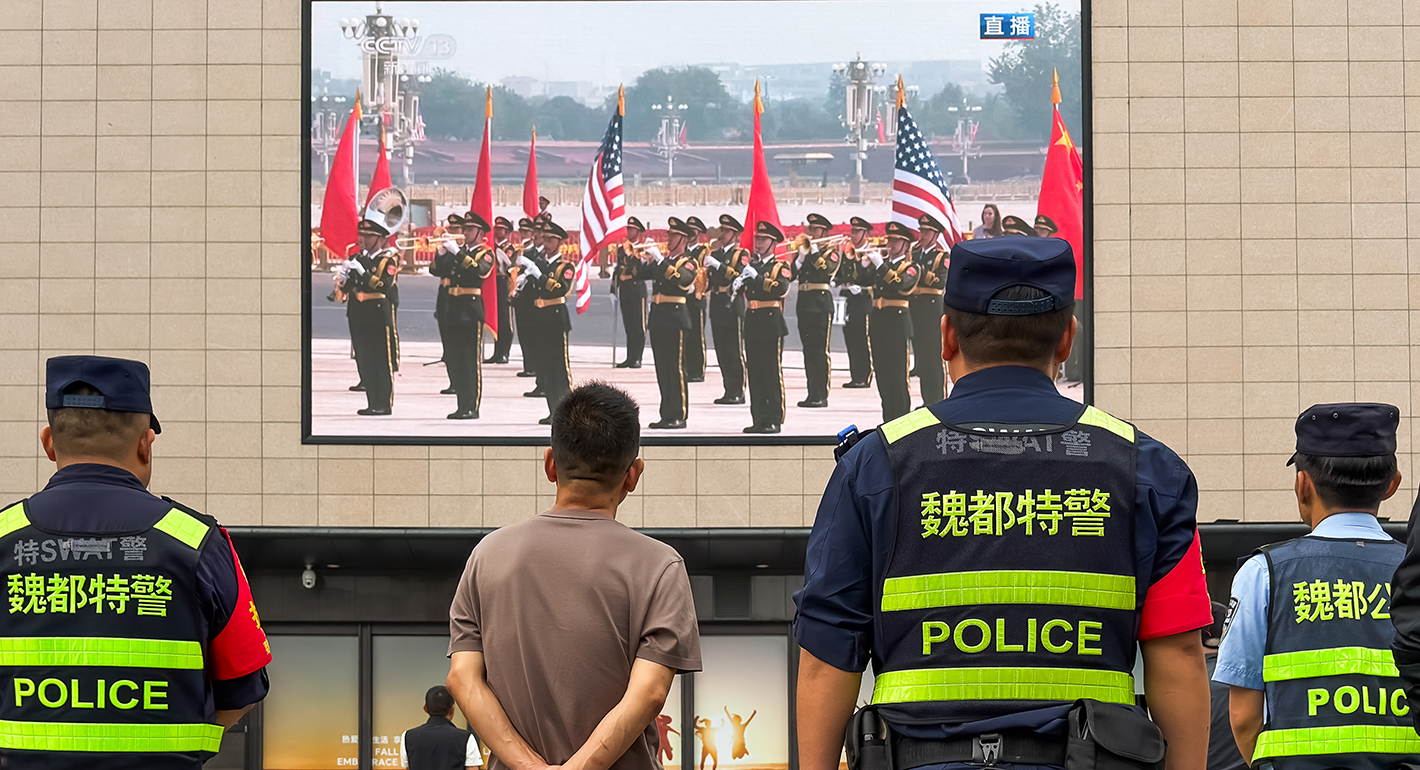
Chinese strategists are once again debating whether American power is declining and whether U.S. hegemony is experiencing irreversible decay.
Wu Xinbo

American power is entrenched in Europe. Yet the depth of this relationship has become a source of unease in Europe and Europeans are working to reduce their exposure to the vicissitudes of U.S. politics wherever they can.


Sophia Besch, Tara Varma