

Paper
The conventional narrative of the second Trump administration simply repudiating multilateralism is incomplete. The record to date is far more mixed and varies across issue areas and institutions.
{
  "authors": [
    "Stewart Patrick"
  ],
  "type": "questionAnswer",
  "blog": "Emissary",
  "centerAffiliationAll": "dc",
  "centers": [
    "Carnegie Endowment for International Peace"
  ],
  "englishNewsletterAll": "ctw",
  "nonEnglishNewsletterAll": "",
  "programAffiliation": "GOI",
  "programs": [
    "Global Order and Institutions"
  ],
  "regions": [
    "United States"
  ],
  "topics": [
    "Global Governance",
    "Foreign Policy"
  ]
}

The ICC in March 2026.
The move is an escalation of its war on multilateralism.
The United States never joined the International Criminal Court (ICC) but is now pushing to dismantle it. Why?
The United States signed the Rome Statute to create the ICC, but President Bill Clinton never submitted it to the Senate for ratification, in part because of widespread unease that joining the court could expose U.S. servicemembers and government leaders to politically motivated prosecutions.
A particular point of concern has been the authority of the ICC prosecutor to step in to investigate grave international crimes—including genocide, war crimes, crimes against humanity, and “aggression”—when the party state is “unwilling or unable” to carry out these obligations. The Rome Statute mandates that states that are party to the treaty comply fully, including arresting and surrendering suspects and providing evidence. U.S. political leaders have worried about servicemembers being prosecuted for actions on the territories of other ICC member states. Given the global deployment of U.S. troops and the frequency of the U.S. use of force, the fear has been that the United States faces acute vulnerability and that the ICC could reduce its freedom of action to conduct military operations.
What’s behind this new anti-ICC push?
From the moment Donald Trump returned to the White House, the ICC has been in his sights. His administration has already placed the court’s chief prosecutor and eight of its judges under U.S. sanctions, including financial restrictions and travel bans.
This week has constituted a marked escalation in the U.S. attack on the ICC, however, accompanied by hyperventilating language from senior U.S. officials. According to Secretary of State Marco Rubio, the ICC “threatens every aspect of our political and legal system.” To address this alleged threat, the administration will launch a “diplomatic campaign” that will not only double down on its coercion of the ICC but also impose penalties on countries that continue to cooperate with it, including by withdrawing foreign assistance.
Is Rubio’s concern valid?
Defense of U.S. sovereignty from “smug globalists,” as Rubio describes one category of ICC defenders, is a recurring theme in Trump administration policy, and this full-throated campaign against the ICC is a primary example of that—as well as red meat for the president’s base.
The accusation that international law and organizations threaten America’s constitutional independence is a long-standing narrative of conservative nationalists dating back to the League of Nations. This discourse is often overwrought, because the multilateral institutions and treaties that the United States has voluntarily joined are horizontal arrangements among sovereign governments, not relations of subordination. The Rome Statute of the ICC is a bit different in this respect, however, because it does include a hierarchical dimension—in principle allowing the ICC prosecutor to stand in judgment of the credibility of judicial proceedings of states party to the treaty related to crimes falling under its purview. And this is why the United States has never ratified it.
If the United States is not a party, what is the Trump administration worried about?
The ICC retains the authority to investigate and potentially prosecute U.S. citizens for atrocity crimes that occurred in the territories of countries that are members—a claim of territorial jurisdiction the administration rejects. Indeed, the ICC has launched investigations of alleged crimes by U.S. soldiers in Afghanistan.
The United States has previously taken steps to insulate itself from this risk. It has signed more than 100 bilateral agreements with ICC member states not to surrender U.S. nationals to the court. In 2002, President George W. Bush signed into law the American Servicemembers’ Protection Act—dubbed the Hague Invasion Act—declaring that the United States will take “all means necessary” to protect U.S. military personnel and elected officials from ICC jurisdiction.
Despite these ample protections—and the quiet support previous U.S. administrations have offered the ICC to pursue and prosecute U.S. adversaries such as former Syrian president Bashar al-Assad and Russian President Vladimir Putin—the Trump administration is now determined to eliminate the court entirely.
How does the Trump administration’s policy relate to its broader attack on multilateralism?
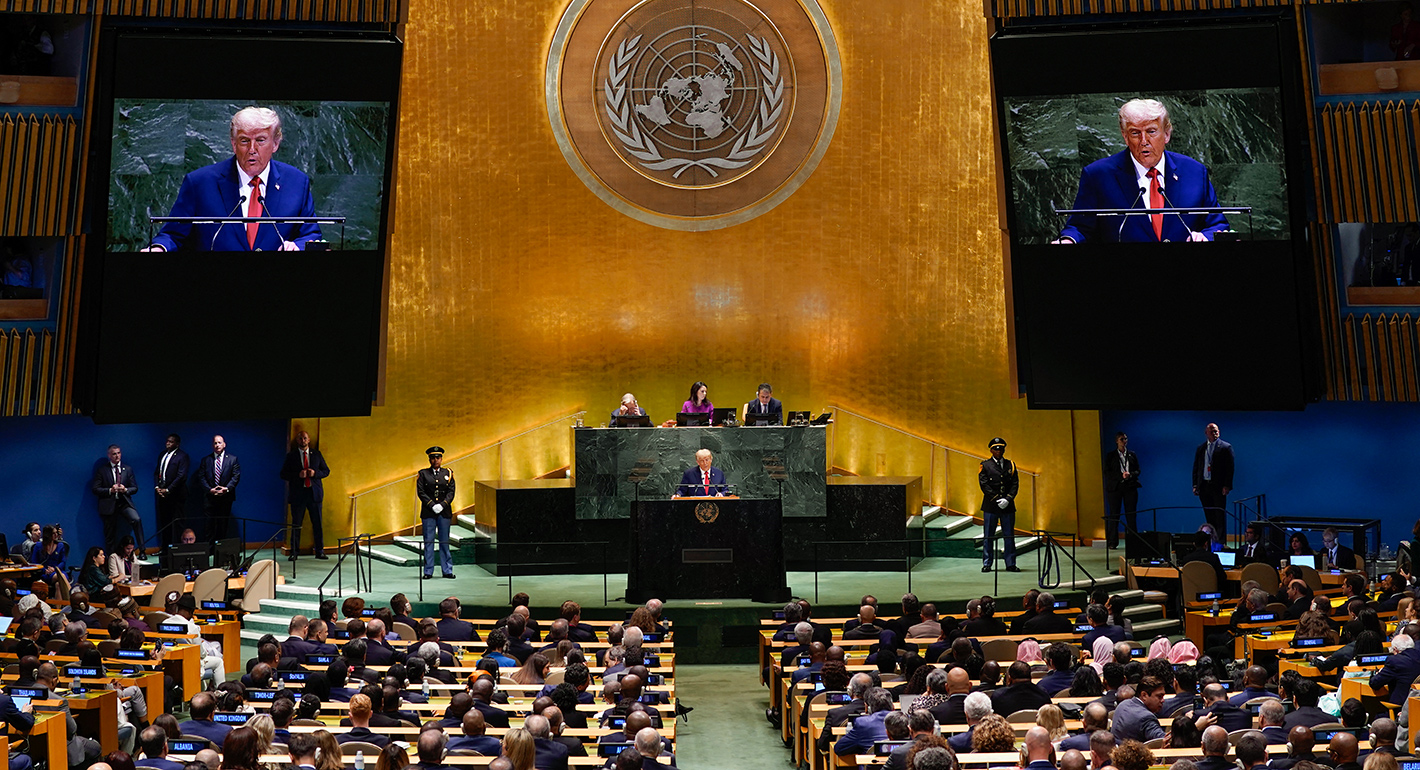
This new campaign against the ICC represents an intensification of its war on multilateralism—the first real effort to destroy an existing multilateral institution. As I pointed out in a recent Carnegie paper with Gustavo Romero, the administration’s posture toward multilateralism has included four basic behaviors: defection, rebellion, substitution, and conditional cooperation. In some cases—such as the Paris Agreement and the World Health Organization—it has quit existing treaties and organizations. In others, as in many UN agencies and settings, it has adopted a stance of disruption, trying to coerce the institution and member states to adopt its preferences. In still others, it has sought to create new entities, such as the Board of Peace or the Shield of the Americas, that it can dominate. Finally, and quietly, it has conditionally reengaged with bodies such as the World Bank and the G20—provided they adopt a reformist, “back to basics” agenda. By contrast, the administration’s campaign to dismantle the ICC is a campaign of pure destruction, a coercive attempt to impose the United States’s will on the rest of the world.
The conventional narrative of the second Trump administration simply repudiating multilateralism is incomplete. The record to date is far more mixed and varies across issue areas and institutions.
What has been the response to the U.S. campaign? What does this bode for the future?
International condemnation has been swift and severe. The European Union, whose member states remain deeply committed to the Rome Statute, has vociferously rejected the U.S. campaign, disputing U.S. claims that the ICC threatens U.S. sovereignty and characterizing “attacks or threats against the court, elected officials, personnel or those cooperating with the court” as “simply not acceptable.”
Given the voluble reaction from America’s closest allies, the full-bore attempt by the administration to destroy the ICC would seem to be both imprudent and futile, an effort in symbolic politics that will further cement the reputation of the United States as an unhinged, domineering hegemon, rather than a benevolent and farsighted global leader. Given that the court is not in fact seeking jurisdiction within the United States, one is also left with the suspicion that the real aim of the administration’s campaign to dismantle the ICC entirely is to insulate U.S. political leaders and servicemembers from being held accountable for the commission of atrocity crimes in countries that are party to it, but where the administration has waged—or seeks to wage—war.
The latest from Carnegie scholars on the world’s most pressing challenges, delivered to your inbox.

Senior Fellow and Director, Global Order and Institutions Program
Stewart Patrick is a senior fellow and director of the Global Order and Institutions Program at the Carnegie Endowment for International Peace. His primary areas of research focus are the shifting foundations of world order, the future of American internationalism, and the requirements for effective multilateral cooperation on transnational challenges.
Recent Work


Federica Du Pasquier, Oona A. Hathaway, Stewart Patrick

Ian Klaus, Stewart Patrick
Carnegie does not take institutional positions on public policy issues; the views represented herein are those of the author(s) and do not necessarily reflect the views of Carnegie, its staff, or its trustees.

Rubio’s recent visit brought welcome attention, but more capital requires governance changes that may be a hard sell for regional governments.

Jennifer B. Murtazashvili
Why Pakistan, Saudi Arabia, and Turkey are joining forces on regional security.


Alper Coşkun, Amr Hamzawy

Despite public disputes over trade and immigration, the strategic partnership’s foundations remain sturdy.

Sameer Lalwani

The acknowledgment has sparked fears of a new arms race with China and Russia.

Chris O’Meara
The summit may be remembered as a fatal blunder, when Washington, Beijing, and the AI industry collectively chose ceremony over action.

Jeffrey Prescott