

Q&A
Matt Ferchen
{
  "authors": [
    "Matt Ferchen"
  ],
  "type": "legacyinthemedia",
  "centerAffiliationAll": "",
  "centers": [
    "Carnegie Endowment for International Peace",
    "Carnegie China"
  ],
  "collections": [
    "China and the Developing World",
    "China’s Foreign Relations"
  ],
  "englishNewsletterAll": "",
  "nonEnglishNewsletterAll": "",
  "primaryCenter": "Carnegie China",
  "programAffiliation": "",
  "programs": [],
  "projects": [],
  "regions": [
    "North America",
    "South America",
    "East Asia",
    "China"
  ],
  "topics": [
    "Economy"
  ]
}
Source: Getty
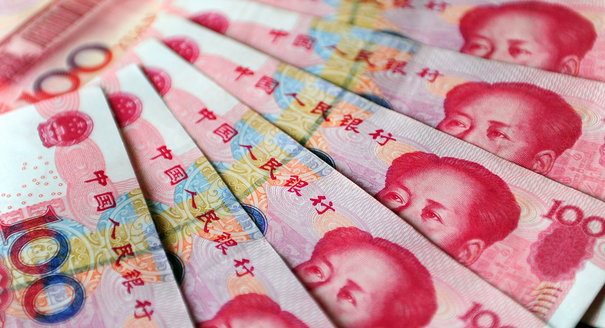
Recent political and economic instability has led China to curb its loan commitment to Venezuela with future lending to the region now expected to be directly tied to the projects involved.
Source: Latin America Advisor
Inter-American Dialogue: Chinese lending to Latin America and the Caribbean hit an all-time high of $37 billion in 2010. But China’s lending to the region has plummeted since then, to approximately $6.8 billion in 2012, according to data recently compiled by the Inter-American Dialogue. The drop-off was attributed mainly to a decline in Chinese lending to Venezuela. How important is Chinese lending to the region today? What does the decline in funding from China mean for Venezuela and the region as a whole? What will the future hold for Chinese lending to Latin America and the Caribbean?
Matt Ferchen: For some years now, Venezuela has been the most obvious outlier in China’s lending to Latin America. The Dialogue’s 2012 “New Banks in Town” report clearly demonstrated that since 2005 Venezuela was the main recipient of Chinese loans, most of which were provided by the China Development Bank (CBD) as part of the CDB’s loans-for-oil strategy. Such an outsized commitment by China to the region’s riskiest, if most oil-rich, country raised questions from many observers even before Hugo Chávez’s health concerns became public. The combination of Chávez’s deteriorating health beginning in 2011 and culminating in his death in March of this year, along with China’s 2012-13 leadership transition, are the likeliest causes of China’s reappraisal of, and subsequent slowdown in, the country’s loans to Venezuela in particular. Unless and until Venezuela’s political and economic meltdown, including the operations of state-run oil company PDVSA, can be arrested and placed on a healthier trajectory, it is unlikely that we will see loan commitments from CDB or other Chinese lenders of the size and scale that we saw when Chávez was still alive. As for the rest of the region, lending will likely take place on a country-by-country and case-by-case basis, and as long as there are viable projects that fit Chinese lenders and other firms’ investment criteria, there is no reason to think that significant lending won’t be forthcoming in the years ahead.

Former Nonresident Scholar, Carnegie-Tsinghua Center for Global Policy
Ferchen specializes in China’s political-economic relations with emerging economies. At the Carnegie–Tsinghua Center for Global Policy, he ran a program on China’s economic and political relations with the developing world, including Latin America.
Recent Work
Matt Ferchen
Matt Ferchen, Anarkalee Perera
Carnegie does not take institutional positions on public policy issues; the views represented herein are those of the author(s) and do not necessarily reflect the views of Carnegie, its staff, or its trustees.

Huawei pushed hard to enter the Egyptian data centers market, until the Americans made a better offer.

Angie Omar

U.S. trading partners in Asia are closely watching the dispute for signs of how it may affect their own interests.

Barbara Weisel
Chinese strategists are once again debating whether American power is declining and whether U.S. hegemony is experiencing irreversible decay.
Wu Xinbo

With the growth in points of friction between the great powers, organizations like the SCO will continue to play a role in the strategic adaptation of the smaller powers caught between them.

Temur Umarov
Amid celebrations of bilateral ties was a deeper focus on stability in the Middle East.

Amr Hamzawy