

In The Media
David Rothkopf
{
  "authors": [
    "David Rothkopf"
  ],
  "type": "legacyinthemedia",
  "centerAffiliationAll": "",
  "centers": [
    "Carnegie Endowment for International Peace",
    "Carnegie China"
  ],
  "collections": [
    "China’s Foreign Relations"
  ],
  "englishNewsletterAll": "",
  "nonEnglishNewsletterAll": "",
  "primaryCenter": "Carnegie Endowment for International Peace",
  "programAffiliation": "",
  "programs": [],
  "projects": [],
  "regions": [
    "North America",
    "United States",
    "East Asia"
  ],
  "topics": [
    "Political Reform",
    "Foreign Policy"
  ]
}
Source: Getty
Allies and rivals alike still consider the U.S. role in international affairs to be a special one. But both are concerned about the political dysfunction and distraction in Washington and question whether or not it’s still possible for the United States to lead as it once did.
Source: Foreign Policy
There is nothing like a trip to Asia to put Washington's lack of perspective on the great global issues of our time into perspective. I'm not saying this in that typical snarky self-hating American abroad tone often found in media commentaries. I say it because every place I've visited on this trip still actively and respectfully looks to the U.S. government for leadership. Allies and rivals alike still consider our role in international affairs to be a special one. Rather, the concern I've heard mentioned repeatedly during this past week (in Australia, Singapore, and in talking here to friends from both China and Japan) is about the political dysfunction and distraction in Washington and whether or not it's still possible for us to lead as we once did.
That is not to say that unease about structural problems and slow growth in the U.S. economy doesn't also factor into concerns about the United States. Nor does it minimize the shift in momentum that continues, even amid a regional slowdown in Asia, as this part of the world sees mounting evidence that it, rather than America, will lead global growth for decades to come. The television commercial I saw this morning in my Singapore hotel room -- a slickly produced promotional ad for the city of Chengdu, China, boldly touting the fact that half the world's Fortune 500 companies have operations there -- was starkly illustrative of this. So too have been the other data points, factoids, anecdotes, and insights that have punctuated virtually every conversation I've had here on this trip. That most leaders in Washington still have never even heard of Chengdu, the Szechuan capital that is considerably larger than New York, is, of course, unsettling. But this trip has made it clear to me that pervasive ignorance of the great realities of our time is only one of the problems we face.It is just as striking to see how America's policymakers are falling behind in terms of creativity and vision compared to their counterparts. Our gaze is too firmly locked on our political navels and our energies too devoted to impeding our domestic political opponents' success for us to thoughtfully consider the challenges ahead. In Washington, it seems, "tomorrow" is the day that will never come, a place to which problems are punted and where we assume solutions will magically present themselves. Here however there is a daily sense that "tomorrow" has already arrived. It's a mindset that has even the blandest of bureaucrats thinking ahead. "Say what you will about the Chinese," said one senior official from a close U.S. ally in the region, "they are always grappling with the implications of tomorrow, of growth, of demographic change. They have yet to undertake many reforms that are needed. But they are at least having an ongoing conversation about strategy. You don't get that sense from the U.S." A senior Southeast Asian diplomat offered this: "The concern isn't about a shifting balance of power at the moment. The U.S. remains militarily strong. It is about a shifting balance of influence." Hillary Clinton's "pivot" of the first Obama term sent encouraging signals in that regard. There are, however, widespread concerns that the resolve to keep that momentum going has noticeably faded in recent months.
It's not that other countries don't have political distractions or dysfunction. In Australia, last Sunday's political debate between party leaders seemed dedicated to the proposition that what their country needs now is a robot prime minister. Nonetheless, there was plentiful evidence at a conference I attended that, in their day-to-day work, political leaders from both parties recognized Australia was at a turning point and that greater open-mindedness and creativity were called for.
It was, to choose one example, particularly striking as an American to hear leaders from both parties accuse one another of moving too slowly to advance an Australia-China free trade deal. Now the mere mention of such a thing between the United States and China would cause seasoned Washington heads to burst into flame, but China is now Australia's primary trading partner and, clearly, trade with Asia is its future. They see the Chinese as being as challenging to deal with as we do. But they also recognize that deal with them they must and there is an openness to anything that enhances their competitive chances in that market.
While one of the uglier elements of the current campaign is over how Australia should handle the influx of boat-borne illegal immigrants coming in from the rest of Asia, there is an apparent bi-partisan sense that the country's future lies in its ability to make the transition from being not just in Asia but actually of it. (Mandarin is already the second most widely spoken language in Australia.)
Singapore, while earning brickbats over the years for the authoritarian dimensions of its evolution as an independent city-state, has always led the region in terms of policy creativity. As a small island economy it feels the constant need to reassess and reinvent itself in ways that more self-sufficient economies do not. And some of its recent innovations are particularly striking. For example, the country has just concluded an unprecedented "national conversation," a series of some 6,000 local meetings in which politicians did something very uncharacteristic for their professional counterparts in the United States -- they listened. These were not staged town-hall meetings but workshops in which local citizens not only grappled with complex policy issues but worked to find solutions the government might actually put to use. (And later this week some of the resulting conclusions from that conversation will translate into new policy approaches.) Senior local officials give credit for the initiative to younger members of the government who were seeking a new way to generate ideas and interact with citizens. Politics also played a role, of course, as the ruling party is trying to revitalize its support among voters. Still, it's hard to imagine taking this kind of approach in a country like the United States and not just because of our size. How many Americans know or care enough about core issues of public policy to come together to tackle the big questions we face? How many politicians and executive branch officials would take the time to really hear what they were saying? We often talk about participatory democracy, but can we really envision such innovative participatory policymaking happening in America today?
One of the current American political imbroglios occupying the attention of senior officials in Asia is that surrounding the selection of the next Fed chairman. "How could the process have come to this?" asked one with genuine concern and bewilderment. "It has dragged on and become so political. It seems it will lessen the position... and it is too important for that, not just to the U.S. but to the world." Everyone I spoke with said they felt that regardless of whether it was Lawrence Summers or Janet Yellen -- the two leading candidates for the post -- the monetary policy consequences would inevitably be the same.
But one smart finance official from the region added, "One issue I don't think has been raised is who will better be able to deal with [the other tough members] of the Fed board and bureaucracy. My sense is only someone as strong as Larry could keep them in line." He went on to argue that Summers would probably add greater value as both an independent and potentially creative voice in an American economic policy landscape -- one that lacks stand-out, strong voices save that of outgoing Fed chairman Bernanke. In particular, this official argued that America has failed to address the core reforms needed for fiscal policy, tax policy, underfunded public pension liabilities, underfunded healthcare liabilities, and bigger issues like the growing income gap in the country and the disconnect between corporate growth and job creation.
Adding a more global perspective, the same official noted that recent Fed policy -- such as quantitative easing, coupled with Chinese growth -- has produced conditions that have made it easy for countries around the world to avoid reforms they too needed to make. Ten trillion dollars of added liquidity and a global commodity price boom made it possible for countries like Brazil, India, Russia, Turkey, and Indonesia to think they were succeeding on their merits. But really, he argued, it was the tailwinds created elsewhere that were providing momentum.
Now, at the critical moment that the United States must manage the tapering process it has its "weakest international economic team in years" and that consequently it is suffering from a "leadership vacuum." (China was cited as being sui generis because it -- unlike some of the other big emerging economies -- was actually enjoying growth fueled by genuine and consistent productivity gains. That said, and as noted earlier, the country is also widely seen as in need of major reform.)
But leading the world in the failure to make the reforms that circumstances require is not exactly what people were hoping for from the United States. So we face a choice. Either look to Asia (and wherever else we might find it) to discover inspiration for the kind of creativity and open-mindedness our own policy process needs for us to lead again ... or learn to look to this part of the world for the leadership we once provided.
Former Visiting Scholar
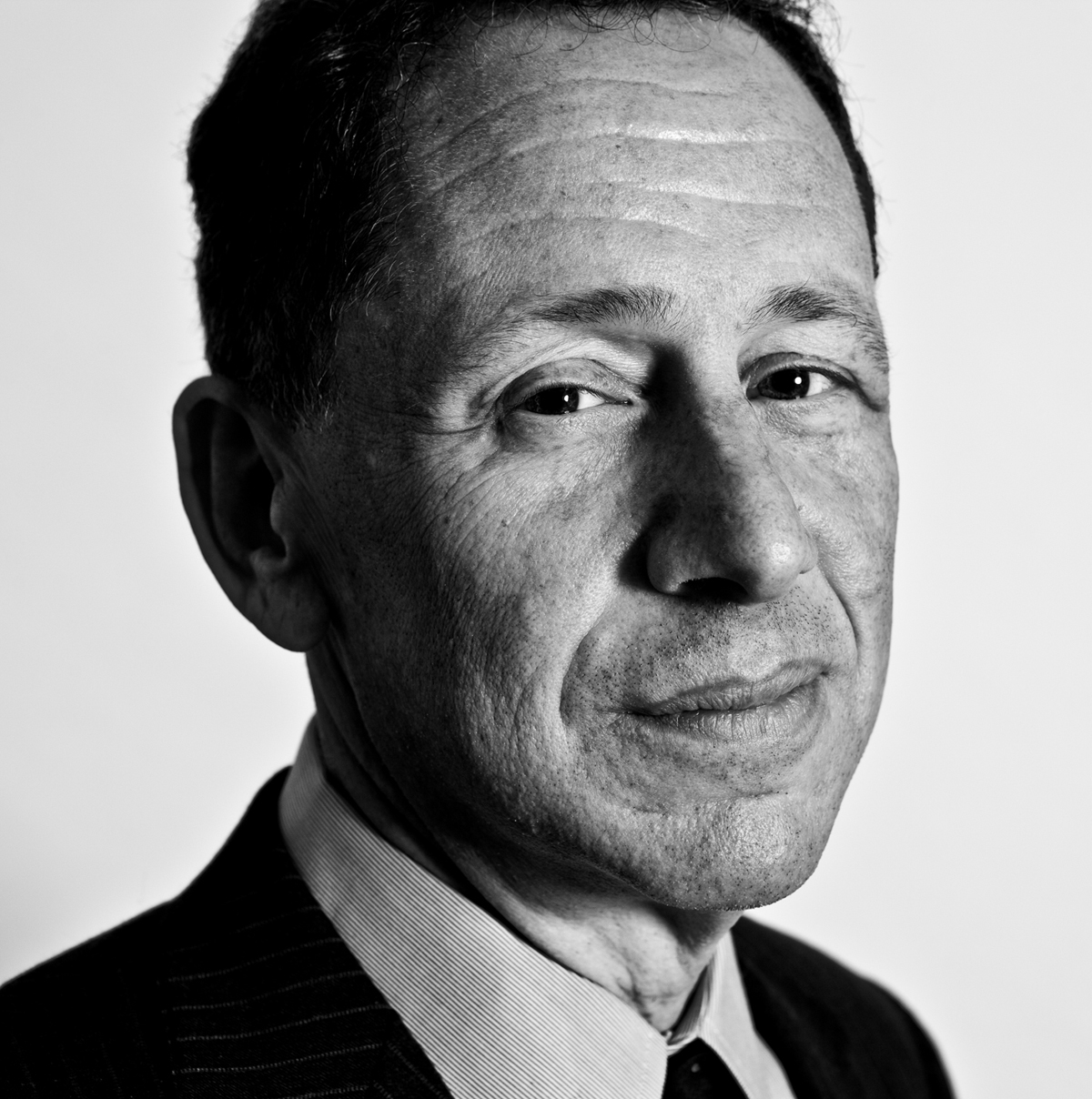
David Rothkopf was a visiting scholar at the Carnegie Endowment as well as the former CEO and editor in chief of the FP Group.
Recent Work
David Rothkopf
David Rothkopf
Carnegie does not take institutional positions on public policy issues; the views represented herein are those of the author(s) and do not necessarily reflect the views of Carnegie, its staff, or its trustees.

Despite public disputes over trade and immigration, the strategic partnership’s foundations remain sturdy.

Sameer Lalwani

It signals a new era of tech diffusion and warfare.

Steve Feldstein

With its public finances in shambles, the far right polling at 35 percent ahead of the 2027 presidential election, and a growing protest movement, is France’s crisis a threat to the EU’s geopolitical awakening?

Rym Momtaz, ed.

Putin’s conservative staffing policies and search for ever greater control have cemented parliament’s transformation into a bureaucratic appendage of the executive branch.

Andrey Pertsev

Ahead of a tough winter for Ukraine, Donald Trump’s swing back toward Russia bodes ill. But instead of panicking, Kyiv’s European allies are focusing on action.
Rym Momtaz