

In The Media
David Rothkopf
{
  "authors": [
    "David Rothkopf"
  ],
  "type": "legacyinthemedia",
  "centerAffiliationAll": "",
  "centers": [
    "Carnegie Endowment for International Peace"
  ],
  "collections": [],
  "englishNewsletterAll": "",
  "nonEnglishNewsletterAll": "",
  "primaryCenter": "Carnegie Endowment for International Peace",
  "programAffiliation": "",
  "programs": [],
  "projects": [],
  "regions": [
    "North America",
    "United States"
  ],
  "topics": [
    "Economy",
    "Security",
    "Foreign Policy",
    "Democracy",
    "Military"
  ]
}
Source: Getty
Somehow three very different presidents worked in accidental harmony to diminish a U.S. global leadership role that was unrivaled by any nation or empire in history.
Source: Washington Post
What if three very different U.S. presidents were to succeed each other in office, each focused like a laser on undoing what he saw as the gravely damaging policies of his predecessor? And what if, in so doing, the three actually compounded the damage done by the others? And what if, thanks to the handiwork of the all-powerful God of Irony, the three would someday be seen by history as the central collaborators in writing the closing chapter on Pax Americana, the more-than-70-year period that may someday be seen as the pinnacle of U.S. global influence?
This is, of course, the story of the first three American presidents of the 21st century. They were as different as any three presidents in American history. In temperament, professional experience, ideology, character and the advisers with which they surrounded themselves, they couldn’t have been less alike. One was a Republican traditionalist, one was a liberal Democrat, one was a pathological narcissist. Each had a different idea of what America’s role in the world should be. And yet in the end, each took steps that alienated American allies, strengthened our enemies, undercut institutions and alliances on which we have depended for three-quarters of a century, and mismanaged American foreign policy in ways that left America demonstrably weaker. You probably couldn’t get the three of them to agree on what to have for dinner, but somehow they worked in accidental harmony to diminish an American global leadership role that was unrivaled by any nation or empire in history.
George W. Bush’s overreach and unilateralism produced alienation among our allies and strengthened our enemies. Barack Obama’s desire to undo Bush’s policies and avoid making the same mistakes led him to retreat too far and to be too indecisive in the face of challenges. And then came Donald Trump. Thanks to his special breed of ignorance, incompetence, incoherence and bluster, he is seen not just as furthering American decline but as a symbol of it.
World leaders have reacted. German Chancellor Angela Merkel asserted, “The times when we could completely rely on others are to an extent, over.” Chrystia Freeland, Canada’s foreign minister said earlier this month in a speech, that the United States “has come to question the very worth of its mantle of global leadership.” Even before Trump took office, just based on his campaign rhetoric, China’s leader Xi Jinping told the World Economic Forum in Davos, Switzerland, that China was ready to lead the international system if the United States would not.
Other leaders have begun to tweak the United States. From French President Emmanuel Macron’s video making the case to “make our planet great again” to former Mexican president Vicente Fox’s hilarious video that asserted to Trump, “Amigo, you have a ton of flaws,” the mockery is unprecedented. And of course, the ultimate Trump tweaker — who was also known for testing the limits of Bush and Obama — is Vladimir Putin. But, of course, this is where the story goes from bad to worse. Putin & Co. didn’t just tweak. They hacked — both testing American limits and betting that we did not have the will to get tough in a meaningful way. And the Russian president’s wager was not based purely on Trump’s actions. Putin bet he could tamper with U.S. democracy and that the cost to Russia would be low in part because he had previously successfully calculated he could invade Georgia and Crimea without paying a real price.
Marietje Schaake, a European Union parliamentarian, observed with regard to the phenomenon of United States’s retreat, “The vacuum may encourage people all over the world to seize the moment of an absent United States.” Certainly, Russia and China are seeking to do just that. Elsewhere, to choose a prominent current example, we have seen Saudi Arabia and allied states in the Gulf begin to take a more assertive role in shaping Middle East affairs.
While some in the United States and around the world might have long been hoping for a changed — less onerous or less dominant, respectively — U.S. role in the world, we are swiftly discovering the downsides of such a shift. For example, America for years has said the countries of the Middle East should play a greater role in determining the region’s future. But now we are coming to see (as we should have expected) that how they do this might not dovetail with U.S. interests, practices or priorities. And as we have also seen, some of those who are filling the U.S. void are just bad actors — from Russia to North Korea to Iran.
Combine that with weakened international institutions, emerging top powers with less experience and clout than the United States and — barring a deliberate change of direction by America’s people and presidents — two things are certain. One is that, thanks to the inadvertent collaboration of Bush, Obama and Trump, we are in for a messy, dangerous period in global affairs. And the second is that the period most likely to follow Pax Americana is one that will likely be defined by nostalgia for Pax Americana.
This article was originally published in the Washington Post.
Former Visiting Scholar
David Rothkopf was a visiting scholar at the Carnegie Endowment as well as the former CEO and editor in chief of the FP Group.
Recent Work
David Rothkopf
David Rothkopf
Carnegie does not take institutional positions on public policy issues; the views represented herein are those of the author(s) and do not necessarily reflect the views of Carnegie, its staff, or its trustees.

It would provide a golden opportunity to reconsider what success looks like.

Michael Mazarr

Excitement is in the air following Aleksandar Vučić’s defeat in Serbia. To build a truly democratic state, the movement that unseated the former president must learn from the mistakes of the past.
Ivan Vejvoda
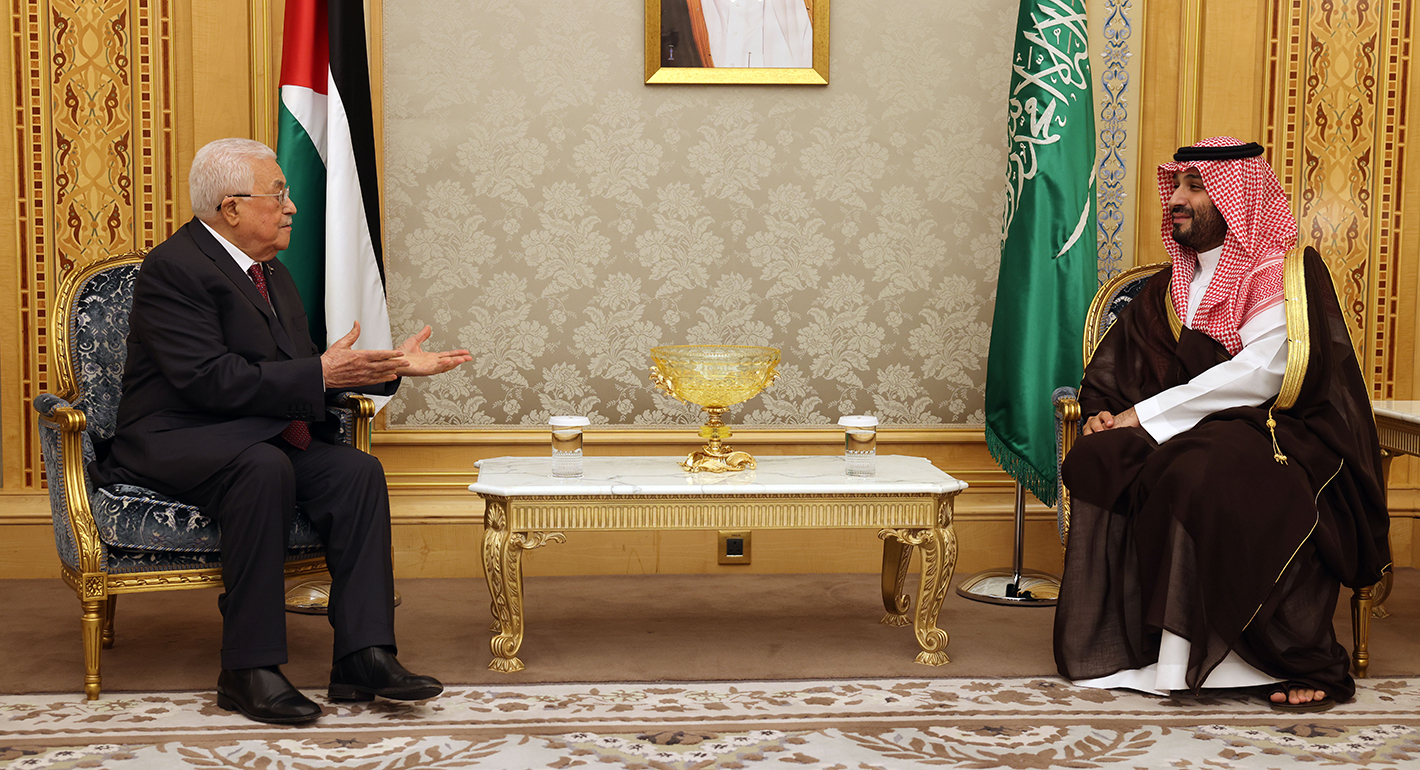
The U.S. midterm elections signal the opening of a narrow window for bold Saudi diplomacy on Palestine.

Andrew Leber, Zaha Hassan

The EU can impose sanctions but struggles to enforce them without the United States. With Washington increasingly disinterested in backing European interests, the bloc must now fend for itself.


Nicu Popescu, Tiago Antunes
Global and rising powers will need to engage with Africa’s priorities and agency in order to secure the continent’s increasingly attractive partnerships.
Fonteh Akum