

Commentary
An overwhelming victory by a far-right-wing party in a small state in eastern Germany will have major repercussions for Chancellor Friedrich Merz’s coalition.
Judy Dempsey
{
  "authors": [
    "Hannes Adomeit"
  ],
  "type": "commentary",
  "centerAffiliationAll": "",
  "centers": [
    "Carnegie Endowment for International Peace",
    "Carnegie Russia Eurasia Center"
  ],
  "collections": [],
  "englishNewsletterAll": "",
  "nonEnglishNewsletterAll": "",
  "primaryCenter": "Carnegie Endowment for International Peace",
  "programAffiliation": "",
  "programs": [],
  "projects": [],
  "regions": [
    "Russia",
    "Western Europe",
    "Germany"
  ],
  "topics": [
    "Political Reform",
    "Foreign Policy"
  ]
}
Source: Getty
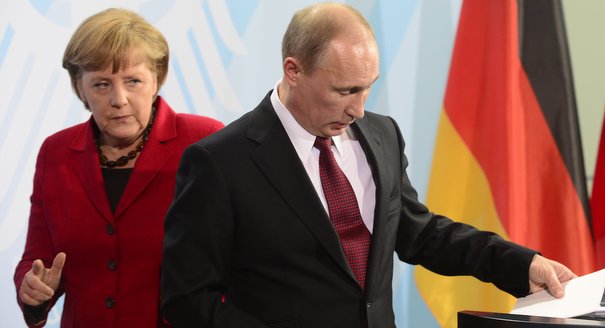
Since Vladimir Putin’s image has deteriorated in Germany, that of Russia has as well. What would help would be serious changes of policy.
Russia’s image in Germany has fallen precipitously. Since the foundation of the “new” Russia, it has fallen to an all-time low. Every year, pollsters at public German television are asking the same question: “Do you consider Russia to be a trustworthy partner?” In November 2009, almost 40 percent of respondents said that they did. Since then, year by year, that figure has gone downhill. In February 2014, it reached a disastrous 18 percent. In another poll conducted in the same month, still prior to the winter Olympics, Germans were asked whether they thought that Russia was the right place to hold the games. A stunning 60 percent of the respondents said “No.” Only 22 percent responded with “Yes.”
The collapse of Russia’s image in German public opinion is an astounding development. It raises questions as to what accounts for it, what likely domestic and international political consequences, if any, it may have and what can be done to remedy this sad state of affairs.
Before trying to come to grips with such questions, a clarification is needed first as to what is meant here by “Russia.” Evidently, when Germans answer the question as to whether they consider Russia a trustworthy partner, they are not thinking about Russian friends or acquaintances but the Russian government and its most prominent exponent(s).
So, then, let’s think about German perceptions of Russian leaders, and since Vladimir Putin is on record as having stated that the Soviet Union is Russia only under a different name, one may begin with then Soviet President and party chief Mikhail Gorbachev. In June 1989, Gorbachev received enthusiastic welcomes by huge crowds wherever he went, be it Bonn, Stuttgart or Dortmund. It was just the same in East Berlin, in October of the same year.
That general enthusiasm and goodwill carried over into the Boris Yeltsin era, Germans observing with admiration him standing on a tank in August 1991, bringing down the coup, setting Russia on a path to democracy and a market economy, and meeting the commitment, even ahead of time, of withdrawing the Russian forces from German soil.
In September 2001, President Putin was awarded the rare honor to address the German parliament in Berlin. He received not just warm applause but several standing ovations from members of the government—then a coalition of the Social Democratic Party (SPD) and the Green Party—and deputies from all of the other parliamentary factions.
At that time, German public opinion and attitudes by government officials were by and large congruent. But already a gap was beginning to emerge. While the government was stubbornly treating the German-Russian “strategic partnership” not as a vision but as a fact, and Chancellor Gerhard Schröder was even going as far as calling Putin an “impeccable democrat,” societal perceptions became more attuned to the new realities of an emerging authoritarian and corrupt system. The mass violations of human rights in Chechnya, and the murder of journalists and human rights workers, played a role. Thus, when Putin, in October 2006, visited Dresden, his haunt as KGB operative in 1985-1990, the small crowds were mostly silent. With a view to the journalist Anna Politkovskaya, who had been killed some days before the visit, some even greeted him with shouts of “murderer.”
In the current, often acrimonious, controversies in Germany about how to deal with an increasingly difficult Russia, the adherents of a soft approach and quiet diplomacy put the blame for the deterioration of the Russian image squarely onto the media for having allegedly conducted a relentless “campaign” of, as Gernot Erler, the current German government coordinator of cooperation between German and Russian civil society has called it, “Russia bashing.” I wouldn’t call it that but rather responsible and accurate reporting. Furthermore, it has not only been the media that have been critical of developments in Russia under Putin but also academic specialists at the universities and reputable research institutes, as well as the political foundations operating in Russia.
It is evident that in an authoritarian system, the supreme leader becomes identified with the country. The German public, problematic as this may be, identifies Russia with Putin. Since Putin’s image has deteriorated, that of the country has as well. That may serve in part to explain the reason why the vast majority of Germans think that Russia was not a good choice for the winter Olympics. They see them literally, as Putin’s Spiele games that Putin plays to enhance his and the country’s prestige.
Such perceptions are not improved by public relations gimmicks such as posturing as macho stripped to the waist during Siberian fishing trips, discovering ancient Greek amphorae on the floor of the Black Sea and or hang gliding with the cranes on their migration route to wintering grounds. Such feats may, perhaps, go down well with parts of the Russian public, but among many Germans they are either seen as strange and silly or, worse, unbecoming of a head of state.
President Putin has deplored the deterioration of Russia’s image abroad and told his diplomats to redouble their efforts in order to change that. The state-controlled media, including the TV channel Russia Today (which, judging from its programs, should more accurately be called Evil America Today), are being enlisted for the very same purpose. It is doubtful, however, that more insistent public relations efforts will improve images. What would help would not be more gimmicks and games but serious changes of policy.
Hannes Adomeit was the first international visiting scholar at the Carnegie Moscow Center. He lives in Berlin.
Hannes Adomeit
Carnegie does not take institutional positions on public policy issues; the views represented herein are those of the author(s) and do not necessarily reflect the views of Carnegie, its staff, or its trustees.

An overwhelming victory by a far-right-wing party in a small state in eastern Germany will have major repercussions for Chancellor Friedrich Merz’s coalition.

Judy Dempsey
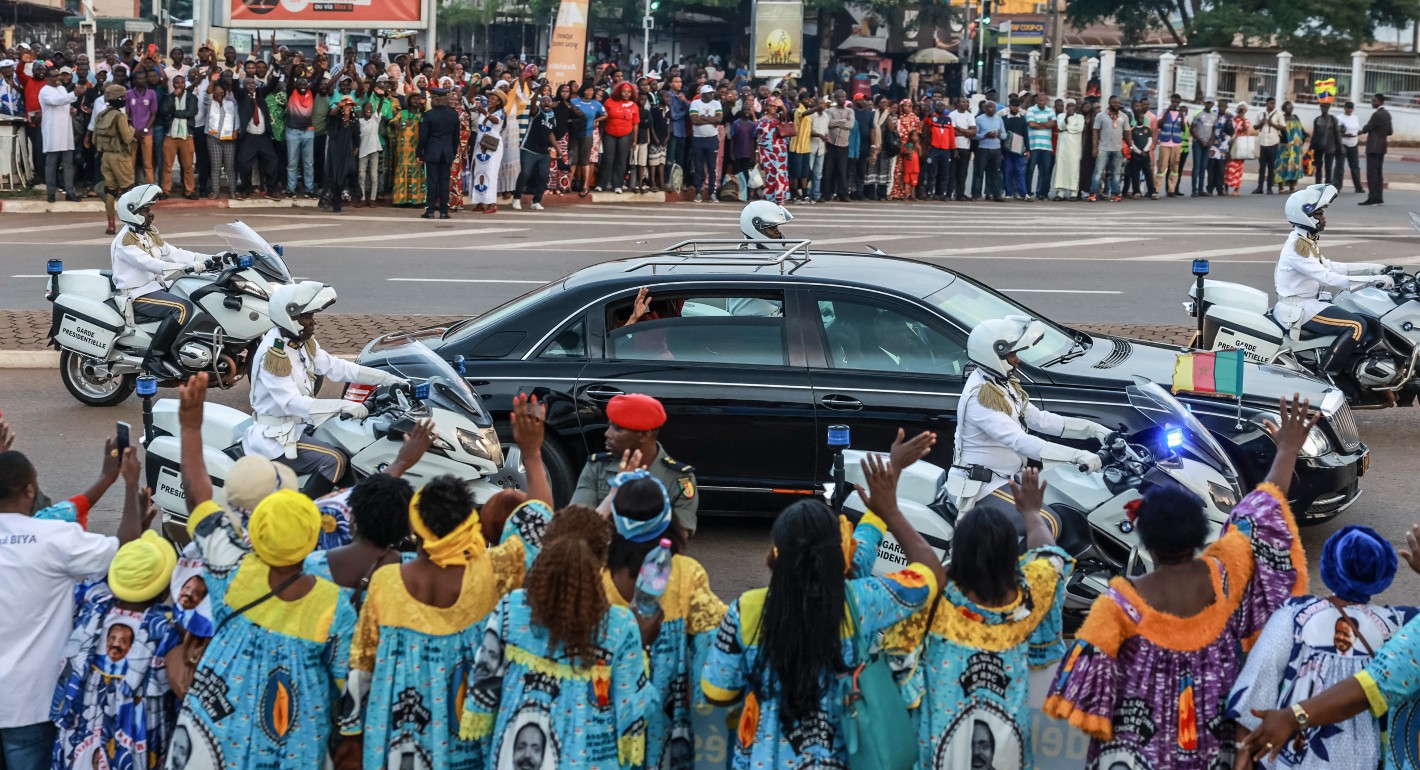
The ninety-three-year-old Biya’s absence and refusal to name a vice president threaten to upend domestic and regional stability.

Lesley Anne Warner
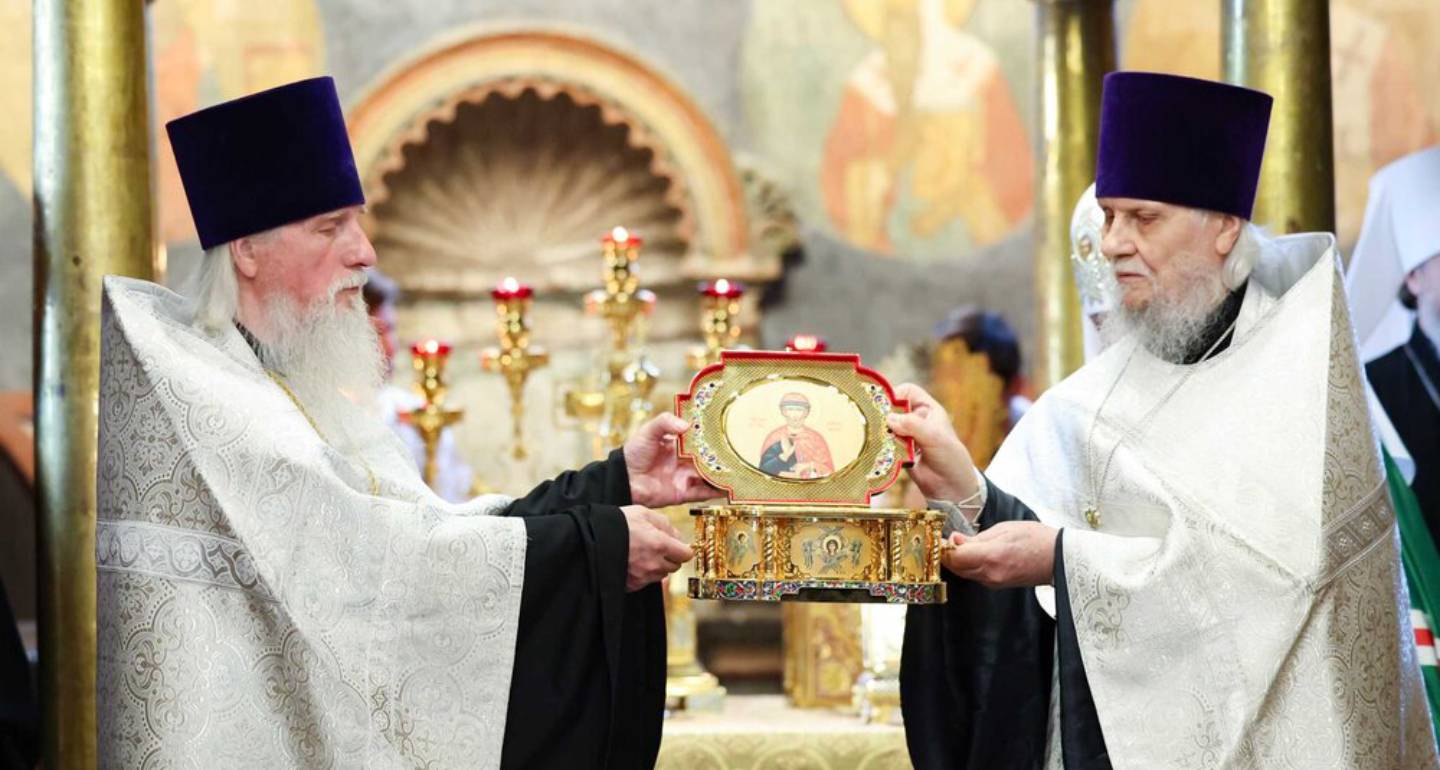
The recent uncovering of Dmitry Donskoy’s relics in the Cathedral of the Archangel is yet another attempt by the Russian Orthodox Church to help the state solve its problems. However, parroting the state’s version of Russian history leaves the Church with no message except “patriotism.”
Alexander Zanemonets

With the growth in points of friction between the great powers, organizations like the SCO will continue to play a role in the strategic adaptation of the smaller powers caught between them.

Temur Umarov
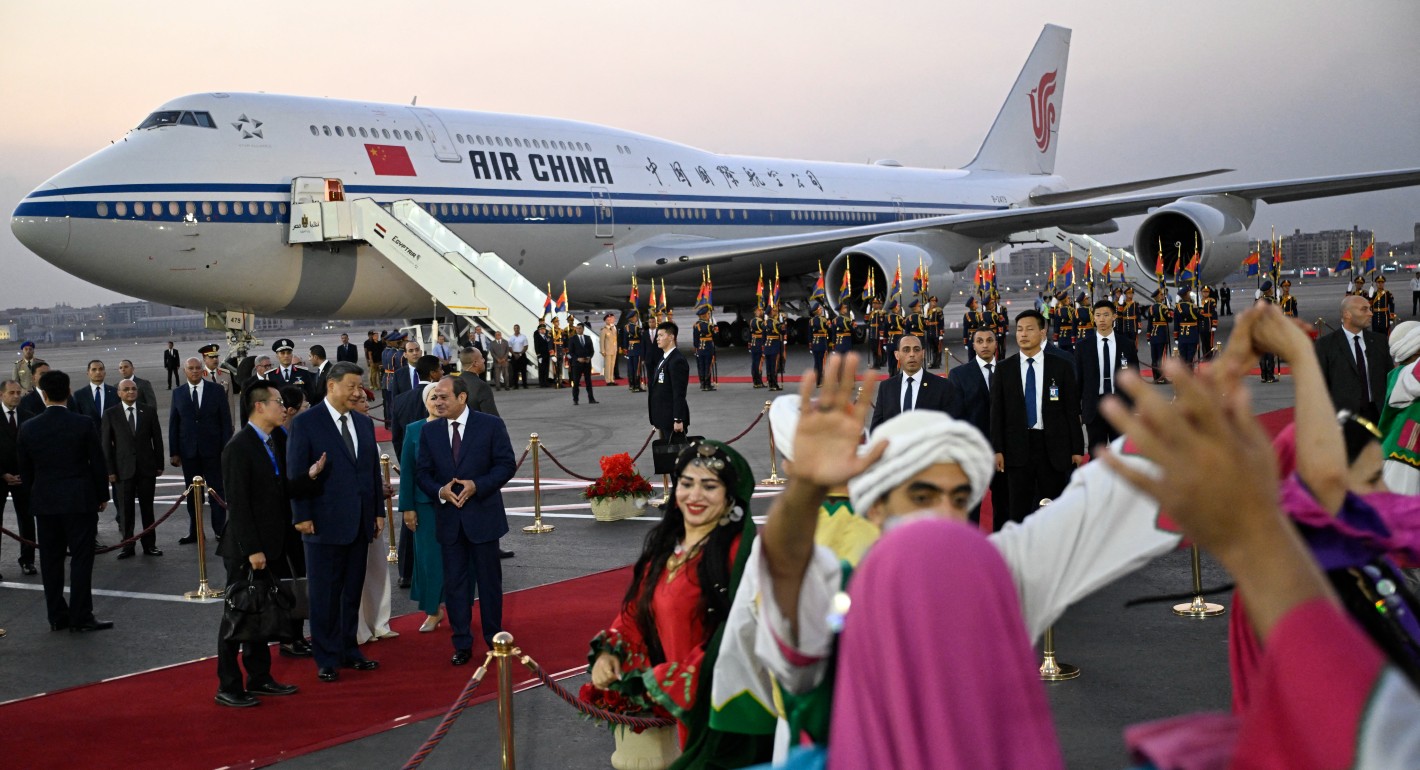
Amid celebrations of bilateral ties was a deeper focus on stability in the Middle East.

Amr Hamzawy