

In The Media
John Judis
{
  "authors": [
    "John Judis"
  ],
  "type": "legacyinthemedia",
  "centerAffiliationAll": "",
  "centers": [
    "Carnegie Endowment for International Peace"
  ],
  "collections": [],
  "englishNewsletterAll": "",
  "nonEnglishNewsletterAll": "",
  "primaryCenter": "Carnegie Endowment for International Peace",
  "programAffiliation": "",
  "programs": [],
  "projects": [],
  "regions": [
    "North America",
    "United States",
    "Israel"
  ],
  "topics": [
    "Foreign Policy"
  ]
}
Source: Getty
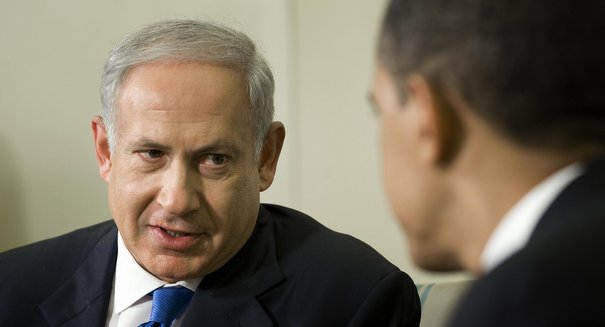
Ron Dermer, Israeli Prime Minister Benjamin Netanyahu’s pick for ambassador to the United States, has strong Republican ties.
Source: New Republic
Eyes rolled in Washington, especially among Democrats, when Israeli Prime Minister Benjamin Netanyahu appointed Ron Dermer to succeed Michael Oren as the Ambassador to the United States. Dermer, an American who migrated to Israel in 1997, was a protégé of Republican pollster Frank Luntz, with whom he worked on the 1994 “Contract with America.” As one of Netanyahu’s chief advisors – he is sometimes called “Bibi’s Brain” – he solidified Netanyahu’s ties to American Republicans. In the 2012 election, while working for Netanyahu, he helped arrange Republican candidate Mitt Romney’s campaign visit to Israel. He epitomized the Netanyahu government’s hostility to Barack Obama and his administration.
Between his appointment in July 2013 and his assumption of his post this December, Dermer kept a low profile and appeared to stay out of American party politics. But on February 14, the Republican Jewish Coalition, a group funded by Las Vegas gambling billionaire Sheldon Adelson, announced that Dermer would be a featured speaker at its leadership meeting at Adelson’s Venetian Hotel this weekend. The event was designed to allow Adelson and other Jewish high-rollers to gauge the appeal of four Republican potential presidential candidates, including former Florida Governor Jeb Bush and New Jersey Governor Chris Christie, who will attend the weekend.It’s about as political and partisan a get-together as you could imagine, and Dermer will be there—a prime draw—representing Israel and the Netanyahu government. J.J. Goldberg writes tongue-in-cheek in The Forward, “Amid mounting alarm that anti-Semitism is on the rise in key spots around the globe—and fears that Israel could be a prime target—a prominent Republican group has come up with a unique approach to fighting back: gather a bunch of Jewish zillionaires at a casino in Las Vegas, announce plans to buy the White House in 2016 and invite leading politicians to come, hat in hand, and beg for permission to be the candidate.”
American ambassadors abroad and ambassadors to the United States are expected to get to know not only the governments in charge, but also the members of opposition parties. That’s part of the job. The Israeli embassy sent people in 2012 to the Republican and Democratic conventions, where they gave presentations to interested delegates and the press. And Oren himself visited opposing party groups. But given his political background and the nature of the event, Dermer’s decision to grace the Las Vegas meeting—dubbed the “Adelson primary”—is easily seen as a blatant political move that puts the Netanyahu government in the middle of American partisan politics.
Former Ambassador to Finland Derek Shearer, now a political science professor at Occidental, says, “The general assumption is that you are the ambassador from your country not from your party and an ambassador to everybody in the county, and you present your credentials to the highest official. You are supposed to meet and interact with everybody. You certainly meet with the opposition. But it is considered bad form to pick sides and certainly going to a fundraising event or something like this is clearly picking sides.” Some people in the White House were unhappy about Israel’s choice of Dermer, but while eyes rolled, heads did not. The Obama administration stopped short of formally declaring its unhappiness with Dermer—which would have forced Netanyahu to choose someone else. Maybe it should have done so.

Former Visiting Scholar
As a visiting scholar at Carnegie, Judis wrote The Folly of Empire: What George W. Bush Could Learn from Theodore Roosevelt and Woodrow Wilson.
Recent Work
John Judis
John Judis
Carnegie does not take institutional positions on public policy issues; the views represented herein are those of the author(s) and do not necessarily reflect the views of Carnegie, its staff, or its trustees.

The real test may come after the leaders leave the room.



Sheena Chestnut Greitens, Oriana Skylar Mastro, Yukon Huang, …

The Horn of Africa countries are among those facing a new security calculus.


Andrew Leber, Lesley Anne Warner

The European far right might fail to steer EU policy in the direction Russia wants, but they will create enough chaos inside Europe to benefit the Kremlin.

Dimitar Bechev

The new U.S.–Denmark–Greenland agreement will help Washington exert political, economic, and financial dominance under the guise of security. Yet, it acknowledged Copenhagen’s and Nuuk’s sovereignty on the island.

Marc Pierini

The nuclear relationship between China and the United States is increasingly shaped by widening perception gaps rather than deliberate strategic design.

Tong Zhao