

Commentary
Bayram Balci
{
  "authors": [
    "Bayram Balci"
  ],
  "type": "legacyinthemedia",
  "centerAffiliationAll": "dc",
  "centers": [
    "Carnegie Endowment for International Peace"
  ],
  "collections": [],
  "englishNewsletterAll": "menaTransitions",
  "nonEnglishNewsletterAll": "",
  "primaryCenter": "Carnegie Endowment for International Peace",
  "programAffiliation": "MEP",
  "programs": [
    "Middle East"
  ],
  "projects": [],
  "regions": [
    "Middle East",
    "Türkiye"
  ],
  "topics": [
    "Political Reform"
  ]
}
Source: Getty
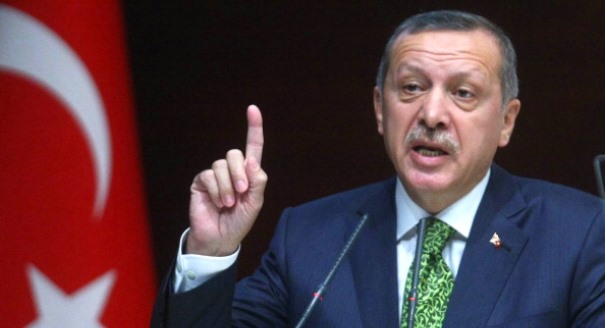
Erdogan will have enough political votes and support to win Turkey’s presidential elections, but not enough legitimacy to run an incredible dynamic and diverse Turkish society.
Source: World Policy Blog
Turkey’s presidential elections are to be held on August 10th and 24th. Although the current Prime Minister Recep Tayyip Erdoğan still has not officially declared his candidacy, he will certainly run. Despite his growing unpopularity, Erdoğan has a real chance at becoming the next president. A charismatic leader, he is respected by many Turks for his contribution to the impressive transformations of Turkey—chief among them is Erdoğan’s strengthening of the middle class. In a quite ironic twist, however, this middle class he helped create—along with his pivot towards authoritarianism—may bring about his demise as a Turkey’s preeminent leader.
While Erdoğan made significant social and economic gains for Turkey, he is no longer capable of acting positively for his country. The more he stays in power, the more he risks harming his country.
As Turkey’s August 10th presidential election approaches, one crucial question remains: who will run? As of yet, no political leader has officially declared his or her intention to run. Political strategists and voters alike are wondering who will represent the AKP (The Justice and Development Party) in these elections: will it be Prime Minister Erdoğan or the current president, Abdullah Gül?
These two major political figures have been the main architects of the AKP since its creation, and they know each other very well. In fact, they’re best friends. They share the same ideology, but differ drastically in how they rule.Erdoğan’s leadership style is more abrupt and authoritarian, and he is impulsive, while Gül’s style is more calm, moderate, and consensus-driven. While no official announcements have been made, nearly every Turkish citizen thinks Erdoğan will run.
A popular and powerful leader, Erdoğan probably wants to continue the reforms he has made in Turkey and perhaps to run for another term in 2019. It is no secret that Erdoğan wants to show the Turkish people that he stayed in power longer than Ataturk, the founder of the republic, and did so, unlike Ataturk, through democratic elections.
Several media outlets have speculated that the incumbent president will renounce to his candidacy. With this, I have to agree. Gül will renounce his candidacy for many reasons. First of all, he needs the support of the AKP to be named its candidate. Although Gül is a founding member of this party, the real “boss” is Erdoğan. As in many other countries, the prime minister holds more power than the president.
Admittedly this election is different, as it employs a popular vote, contrary to the previous elections where the parliament used to pick the president. A strong grassroots party, like one Gül could launch, would have the power to defy projected election results. But, for political reasons, Gül won’t dare challenge Erdoğan. Gül wouldn’t confront his old friend firstly because he is loyal to him. Secondly, he wouldn’t challenge Erdoğan because he knows that a titanic political showdown between him and Erdoğan could harm the country. Wiser and more conscious than Erdoğan when it comes to the national interest, he will certainly avoid any new conflict and renounce competing in the elections.
After all, would Gül jeopardize amicable relations with Erdoğan, his potential successor?
Would Gül and Erdoğan consider a swap in a “Russian scenario” (in which Russia’s Vladimir Putin and Dmitry Medvedev switched roles)? While it may seem like a viable solution, a swap scenario is highly unlikely simply because it implies that Gül would accept being Erdoğan’s puppet. The Prime Minister has a strong political personality, and would probably not fare well in such a position. Instead, it is likely that another prestigious position will be proposed to Gül in Turkey or in an international organization.
The new presidential system in Turkey is comparable to the French system, at least in the process of designating the president. In the first round, a candidate needs the absolute majority to be elected, and a second round is organized among two candidates if this percentage is not reached. In previous local elections, Erdoğan’s AKP got almost 45 percent of the vote.
Favorable poll results for Erdoğan, the division of the opposition, and solid relations between the AKP and the pro-Kurdish party of BDP, (which had 6 percent of the vote) give Erdoğan a serious chance of winning. But does this likely victory mean that he will run the country calmly and successfully? The Prime minister has done impressive, positive things for his country since he came to power in 2002, but today, he divides more than he unites the country.
First of all, if we want to be fair, we should mention Erdoğan’s most important achievements since he came to power. Under his rule, the military has been sent to its barracks and no longer has a prominent role in Turkish politics (a previously damaging influence on the country’s governance).
Additionally, under Erdoğan’s AKP, the voice of the historically marginalized Kurdish population has been amplified. In 2002, the AKP gave dignity and political representation to a large part of the conservative Anatolian Turkish population, a group historically marginalized by Kemalist elites.
Also a credit to Erdoğan are the recent improvements to Turkey’s economy. Under the AKP, Turkey has become the 17th most powerful economy in the world. With the growth of Turkey’s economy came the growth of the middle class. If we want to understand the current political crisis in Turkey, we need to focus on the fact that a real middle class emerged under the AKP.
To a large extent, the AKP is a victim of this success. The youth population, which has been challenging the government since last year, is the core representative of this middle class.
This new generation is not very politicized, nor does it have real affiliation to any political party. But it does in fact demand more democracy and pluralism. This is where the clash is inevitable. Erdoğan’s authoritarian ways were revealed last June when he brutally repressed the peaceful Gezi Park protests.
Erdoğan has built a strong political career on democratic victories. But for him, democracy has automatically been a majoritarian democracy, with the majority of power residing in the hands of his close political allies.
Erdoğan seems incapable of understanding that the majoritarian democracy he has helped create is no longer capable of satisfying Turkish citizens. Turkish society has considerably changed, becoming more diverse and multifaceted. Turkey now desperately needs a more plural and liberal democracy.
Unfortunately, Erdoğan is worn out after more than ten years of power. He is likely very shaken by the major political crisis in the Middle East, specifically the military coup against his ally Morsy in Egypt. Erdoğan is also weighed down by his failure to adequately respond to the huge refugee crisis spilling into his country from Syria. On top of this, the leader seems wed to his majoritarian democracy, when this system may in fact be failing the country.
Erdoğan will have enough political votes and support to win elections, but not enough legitimacy to run an incredible dynamic and diverse Turkish society. A victim of perhaps its greatest achievement, the AKP must radically redefine itself if it is to avoid massive political conflict.
This article was originally published on the World Policy Blog.
Former Nonresident Scholar, Russia and Eurasia Program
Balci was a nonresident scholar in Carnegie’s Russia and Eurasia Program, where his research focuses on Turkey and Turkish foreign policy in Central Asia and the Caucasus.
Recent Work
Bayram Balci
Bayram Balci, Daniyar Kosnazarov
Carnegie does not take institutional positions on public policy issues; the views represented herein are those of the author(s) and do not necessarily reflect the views of Carnegie, its staff, or its trustees.

Sergei Kiriyenko used Russia’s parliamentary vote to further hone his strategy of corporate mobilization that is designed to maximize votes for United Russia.

Andrey Pertsev

Before the next wave of EU enlargement takes place, the union needs to grapple with thorny questions of how power is distributed among its members.


Emil Sondaj Hansen, Ditte Brasso Sørensen

The Horn of Africa countries are among those facing a new security calculus.


Andrew Leber, Lesley Anne Warner

The European far right might fail to steer EU policy in the direction Russia wants, but they will create enough chaos inside Europe to benefit the Kremlin.

Dimitar Bechev

A summer of escalation in the Black Sea has hurt Ukraine economically and is exacerbating world food security. A truce is needed—as is a broader reframing of Europe’s Ukraine strategy.

Thomas de Waal