

Commentary
Bayram Balci
{
  "authors": [
    "Bayram Balci"
  ],
  "type": "legacyinthemedia",
  "centerAffiliationAll": "dc",
  "centers": [
    "Carnegie Endowment for International Peace",
    "Malcolm H. Kerr Carnegie Middle East Center"
  ],
  "collections": [],
  "englishNewsletterAll": "menaTransitions",
  "nonEnglishNewsletterAll": "",
  "primaryCenter": "Carnegie Endowment for International Peace",
  "programAffiliation": "MEP",
  "programs": [
    "Middle East"
  ],
  "projects": [],
  "regions": [
    "Middle East",
    "Türkiye"
  ],
  "topics": [
    "Political Reform"
  ]
}
Source: Getty
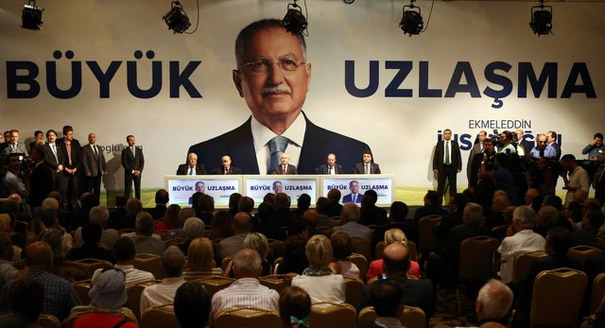
By choosing Ekmeleddin Ihsanoglu as its joint presidential candidate, the Turkish opposition has shown that it can offer hope and appeal to the broader Turkish population.
Source: World Policy Blog
The main Turkish opposition parties, the Republican People’s Party (CHP) and the Nationalist Movement Party (MHP), have unexpectedly decided to jointly support Ekmeleddin İhsanoğlu as a candidate for the upcoming presidential election on August 10. This strategic move gives the opposition its best chance to defeat the expected Justice and Development Party (AKP) candidate, the seemingly unbeatable Prime Minister Recep Tayyip Erdoğan. But when the underdog is facing a seemingly invincible Goliath, it is important to analyze İhsanoğlu’s realistic chances of taking the presidency.
Born and raised in Cairo in a Turkish immigrant family, İhsanoğlu is first and foremost a distinguished academic who spent years researching Ottoman and Islamic sciences.
He is also a world-renowned diplomat who has considerably modernized the Organization for Islamic Cooperation (OIC), the second largest intergovernmental organization after the United Nations. He headed the organization from 2005 to 2014, the first Turkish Secretary General to do so.The Turkish opposition’s unified decision to nominate Ihsanoğlu surprised many politicians and analysts, including even Prime Minister Erdoğan who is expected to soon announce his candidacy. By choosing İhsanoğlu as its joint presidential candidate, the Turkish opposition has shown that it can offer hope and appeal to the broader Turkish population, which was left frustrated when Erdoğan started his third term.
Admittedly, Ihsanoğlu does not fully embody all the opposition’s values and ideals. Nonetheless, this political move to support him is the best thing the opposition leaders could do to demonstrate they are capable of overcoming their own ideological divisions in favor of unity against Erdoğan. A conservative and devout Muslim, Ihsanoğlu has nothing in common with CHP's archaic views on secularism and Turkish national identity. Fluent in four languages with a diplomatic background, Ihsanoğlu is also far from the chauvinistic and nationalistic positions of the MHP.
Ironically, Ihsanoğlu’s preeminent international profile should align him with Erdoğan’s ruling Justice and Development Party (AKP). In fact, there are more similarities than differences between him and the current president, Abdullah Gül, a founding member of the AKP.
Ihsanoğlu’s AKP-like profile is exactly the type of candidate the opposition needed in order to defeat Erdoğan. According to the Turkish newspaper Taraf, Erdoğan is having second thoughts about running for president since Ihsanoğlu has made public his candidacy. Moreover, Ihsanoğlu’s appeal to the AKP could help turn longstanding support from conservative Anatolian Turks away from Erdoğan. By choosing Ihsanoğlu, the Turkish opposition could defeat Erdoğan by drawing support away from his traditional voters.
A victory of İhsanoğlu would be almost a divine gift for Turkey and its future. One would be hard-pressed to deny that Erdoğan has historically served his country well during his first and second terms from 2002 to 2011. He has improved Turkish democracy and modernized the Turkish economy. More importantly, he was among the rare Turkish leaders to have understood the urgency of resolving the Kurdish issue.
But, since Erdoğan began his disastrous third term, his political regime has been divisive and polarizing for Turkey’s citizens. His foreign policy for the Middle East is at a stalemate, but he refuses to modify it for fear of losing face. Particularly regarding Syria, Erdoğan has demonstrated tacit support for jihadist, exposing Turkey to numerous threats.
With a more inclusive approach, Ihsanoğlu could be the perfect leader to reduce the prevailing tensions in Turkey and with its neighbors. Ihsanoğlu is not sectarian with his policy, unlike Erdoğan. With his exceptional experience on Arab issues especially with the OIC, Ihsanoğlu can help Turkey create a new, all-embracing policy towards its Middle Eastern neighbors. At very least, given his personal background, he could create a diplomatic bridge between Egypt and Turkey.
On paper, Ihsanoğlu may seem like the most qualified and broadly appealing candidate to take on Erdoğan’s political machine, but Ihsanoğlu faces a tough task. While Erdoğan is a battle-hardened and experienced politician, Ihsanoğlu is a complete novice. He is a diplomat, not a dynamic, grassroots and politically mobilizing force who can connect to ordinary citizens.
But the most difficult challenge for him will be to garner support from all of the CHP voters. Although designated by the CHP leadership, his nomination was not accepted by some stubborn Kemalist members of the party. Some secularists see no reason to vote for another conservative that they deem just “another Erdogan.” If this opposition within the CHP evolves and presents its own candidate, that would be a certain end to Ihsanoğlu’s presidential aspirations.
Another important obstacle for Ihsanoğlu will be working to win the Kurdish support. Obtaining their backing will be key to Ihsanoğlu’s political ascendance and effectiveness. Turning the pro-Erdoğan Kurds will be tough, but not impossible since Ihsanoğlu has held a favorable relationship with the Kurds.
Completely unexpected, Ihsanoglu’s candidacy is facing many challenges. The man is not the natural representative of the political parties and forces that support him in the race for the presidency, and more worrying, he has very less experience in electoral competition than his rival who is a political machine. An Ihsanoglu victory seems highly likely but not totally impossible. His profile of Anatolian devout Muslim, the great unpopularity of Erdogan since June 2013, and the Middle Eastern turmoil that affects Turkey could give him to change positively Turkey’s destiny.
This article was originally published by the World Policy Blog.
Former Nonresident Scholar, Russia and Eurasia Program
Balci was a nonresident scholar in Carnegie’s Russia and Eurasia Program, where his research focuses on Turkey and Turkish foreign policy in Central Asia and the Caucasus.
Recent Work
Bayram Balci
Bayram Balci, Daniyar Kosnazarov
Carnegie does not take institutional positions on public policy issues; the views represented herein are those of the author(s) and do not necessarily reflect the views of Carnegie, its staff, or its trustees.

The books, podcasts, and films that explain the world it made.

Andrew Leber

In the tenth year of his presidency, President Mirziyoyev’s system is becoming even more personalized than that of his predecessor Karimov.

Galiya Ibragimova
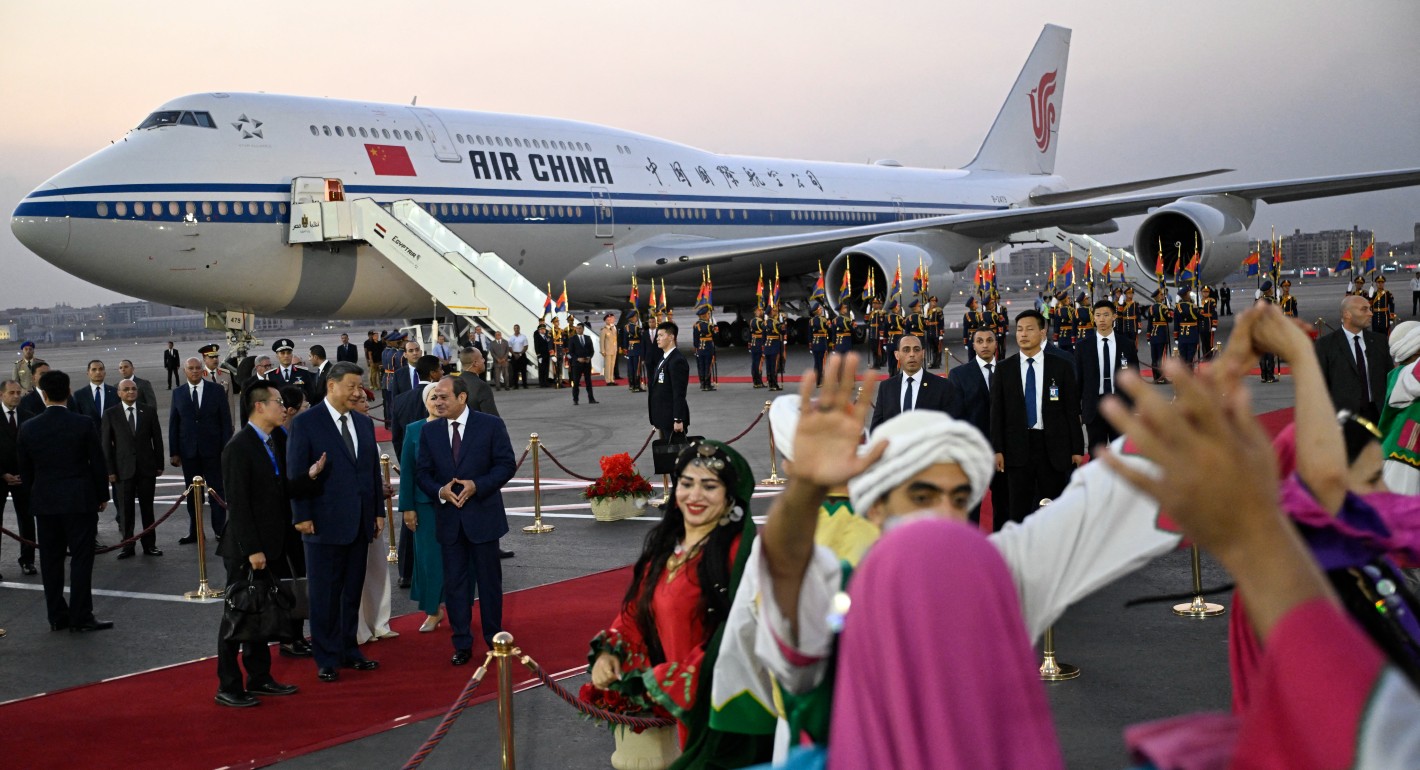
Amid celebrations of bilateral ties was a deeper focus on stability in the Middle East.

Amr Hamzawy
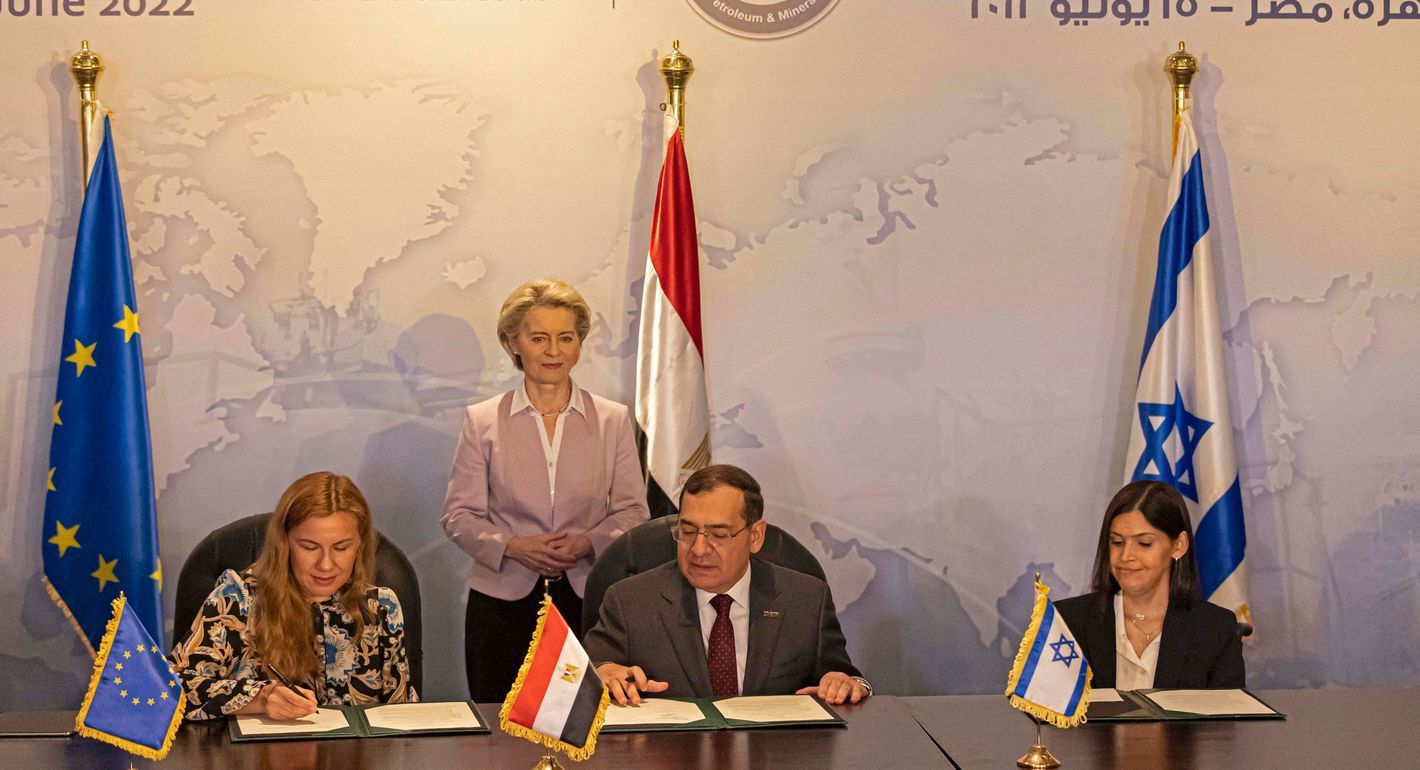
Can economic ties help contain conflict between Egypt and Israel, or do they simply postpone confrontation? Drawing on the German-Russian experience, the article examines how the gas deal creates mutual dependence, keeps channels of cooperation open, and raises the cost of conflict, without necessarily delivering lasting peace.
Nourhan Hefzy

The greater threat to Zelensky comes not from Fedorov alone, but from the convergence between the former defense minister’s political campaign and the anti-corruption investigations moving ever closer to the presidential administration.

Balázs Jarábik