

Article
C. Raja Mohan, Darshana M. Baruah
{
  "authors": [
    "C. Raja Mohan"
  ],
  "type": "legacyinthemedia",
  "centerAffiliationAll": "dc",
  "centers": [
    "Carnegie Endowment for International Peace",
    "Carnegie India"
  ],
  "collections": [],
  "englishNewsletterAll": "ctw",
  "nonEnglishNewsletterAll": "",
  "primaryCenter": "Carnegie India",
  "programAffiliation": "SAP",
  "programs": [
    "South Asia"
  ],
  "projects": [],
  "regions": [
    "South Asia",
    "India"
  ],
  "topics": [
    "Security",
    "Foreign Policy"
  ]
}
Source: Getty
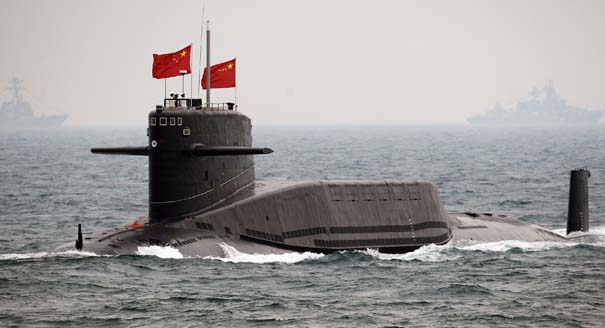
Statements from Colombo and Beijing on the frequent appearance of Chinese submarines and ships at Sri Lankan ports are likely to worsen New Delhi’s concerns rather than blunt them.
Source: Indian Express
An explanation often is worse than the presumed offence. Statements from Colombo and Beijing this week on the frequent appearance of Chinese submarines and ships at Sri Lankan ports are likely to worsen New Delhi’s concerns rather than blunt them. Both Colombo and Beijing have countered India’s concerns by stating that there is nothing unusual about Chinese naval visits to Lankan ports.
“It is an international common practice for a navy submarine to stop for refuelling and crew refreshment at an overseas port,” an official from China’s defence ministry told China’s news agency Xinhua. A Sri Lankan navy spokesperson did acknowledge the Chinese vessels’ arrival at the Colombo port last week. He said “a submarine and a warship have docked at Colombo harbour” and added that this is “nothing unusual”. “Since 2010, 230 warships have called at Colombo port from various countries on goodwill visits and for refuelling and crew refreshment,” the spokesman said.
Delhi’s issue is not with the practice of international port calls in Lanka. The problem for India is that China is not just another country. Given India’s security problems with China on its northern frontiers, it is extremely sensitive to potential Chinese naval presence on its maritime frontiers to the south. Equally important is the nature of India’s own security partnership with Sri Lanka. Delhi and Colombo have had a longstanding understanding that Lanka will not allow foreign military presence on its territory that could be inimical to Indian interests.What Colombo and Beijing are telling Delhi is that Chinese naval presence in Sri Lanka is now routine and India should get used to it. Delhi quite clearly will find it hard to digest.
That China’s naval profile in the Indian Ocean will continue to grow is now beyond doubt. But the security establishment in Delhi has good reasons not to jump to the conclusion that Sri Lanka is about to give a naval “base” to China.
First, there is nothing to suggest that the PLA Navy is now looking at military bases of the traditional kind, where a major power stations military personnel, weapons and other equipment to allow combat operations from the territory of another country. The proposition that China is acquiring a “string of pearls”, or a series of military facilities, all across the Indian Ocean littoral has gained considerable traction in India. The story on the ground is a little more nuanced.
At this juncture, China has focused on gaining access to “pit-stops” all across the Indian Ocean littoral that will allow its navy to conduct “far sea operations”. Since the end of 2008, the Chinese navy has been conducting counter-piracy missions in the Gulf of Aden. Chinese naval squadrons on their way in and out of the Gulf of Aden have been calling at a number of ports, including Colombo and Karachi, in the subcontinent. China has recently acquired a resupply facility in the Seychelles, located astride the sea lines of communication in the western Indian Ocean.
Analysts say that the Chinese navy could, in the near term, move beyond commercial “pit-stops” and seek more reliable and durable access to dual-use facilities that will make its operations in the Indian Ocean more sustainable. The most likely place for such a dual-use facility could be Karachi in Pakistan. Shared strategic interests, longstanding bilateral military cooperation, the transfer of Chinese naval equipment and the availability of facilities for repair and maintenance in Karachi could make Pakistan the natural host nation for China’s first overseas naval facility.
How far Lanka might go in its naval collaboration with China is linked to the nature of Delhi’s relations with Colombo. If Lanka is playing the China card, Beijing is happy to take full advantage. What we don’t know is how Delhi might respond if Sri Lankan President Mahinda Rajapaksa overplayed his hand.
During his visit to Colombo last month, Chinese President Xi Jinping announced plans to deepen defence cooperation with Sri Lanka. Xi also declared that China will not interfere in the internal affairs of Sri Lanka and will not tolerate that by others (read India’s approach on the question of Tamil minority rights in the island republic). Rajapaksa, in turn, has enthusiastically endorsed China’s plans to build a Maritime Silk Road in the Indian Ocean. If Delhi wants to limit or reverse Colombo’s strategic tilt towards China, it should start with a comprehensive review of its policy towards Sri Lanka.
This article was originally published in the Indian Express.
Former Nonresident Senior Fellow, Carnegie India
A leading analyst of India’s foreign policy, Mohan is also an expert on South Asian security, great-power relations in Asia, and arms control.
Recent Work

C. Raja Mohan, Darshana M. Baruah


Alexander Gabuev, Paul Haenle, C. Raja Mohan, …
Carnegie does not take institutional positions on public policy issues; the views represented herein are those of the author(s) and do not necessarily reflect the views of Carnegie, its staff, or its trustees.

The real test may come after the leaders leave the room.



Sheena Chestnut Greitens, Oriana Skylar Mastro, Yukon Huang, …

The Horn of Africa countries are among those facing a new security calculus.


Andrew Leber, Lesley Anne Warner

The European far right might fail to steer EU policy in the direction Russia wants, but they will create enough chaos inside Europe to benefit the Kremlin.

Dimitar Bechev

The new U.S.–Denmark–Greenland agreement will help Washington exert political, economic, and financial dominance under the guise of security. Yet, it acknowledged Copenhagen’s and Nuuk’s sovereignty on the island.

Marc Pierini
Washington needs to recognize that influence in the Western Hemisphere comes from presence, delivery, and reliability. It also must recognize that while the United States remains the key external actor, it no longer operates in a permissive environment and cannot presume deference from regional players who have other options, namely China.
Juan S. Gonzalez