

Commentary
Russia’s maximalist demands are preventing any serious attempt at ending the war in Ukraine. To make peace a realistic prospect, Putin must recognize that diplomacy is a two-way street.
Kadri Liik
{
  "authors": [
    "Nikolay Kozhanov"
  ],
  "type": "commentary",
  "centerAffiliationAll": "",
  "centers": [
    "Carnegie Endowment for International Peace",
    "Carnegie Russia Eurasia Center"
  ],
  "collections": [
    "Iranian Proliferation"
  ],
  "englishNewsletterAll": "",
  "nonEnglishNewsletterAll": "",
  "primaryCenter": "Carnegie Endowment for International Peace",
  "programAffiliation": "",
  "programs": [],
  "projects": [],
  "regions": [
    "Middle East",
    "Iran",
    "Russia"
  ],
  "topics": [
    "Foreign Policy",
    "Nuclear Policy"
  ]
}
Source: Getty
An agreement between Iran and the P5+1 will not deal a significant blow to Moscow’s relationship with Tehran. While the nuclear issue remains the most important aspect of Western relations with Tehran, the Russian-Iranian agenda is much broader.
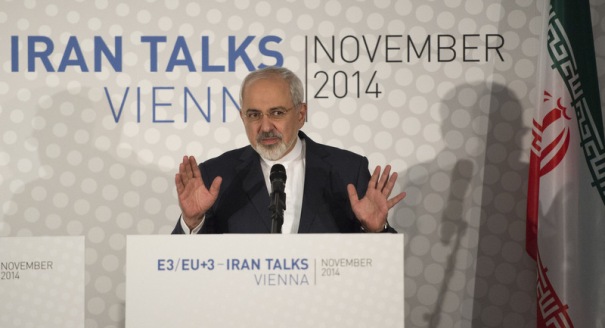
High-ranking Russian officials seem to be satisfied with the outcome of the nuclear negotiations between Iran and the P5+1 group that took place in Vienna from November 18 to 24. Following the conclusion of the talks, Russian Minister of Foreign Affairs Sergey Lavrov emphasized that the parties had made significant progress toward a deal. He also stressed the active role that Russia has played in the talks, arguing that Moscow’s efforts ensured that Iran and the P5+1 were able to move toward an agreement.
These statements do not appear to be another Kremlin PR maneuver. For the past two years, the Russians have indeed been actively working to secure an effective dialogue between authorities in Tehran and the West on the nuclear issue. Lavrov’s 2012 proposals set the stage for the current round of negotiations. From November 18 to 24, Russian diplomats were noticeably active: on the sidelines of the talks, Deputy Minister of Foreign Affairs Sergey Ryabkov held bilateral consultations with almost all sides involved.
These efforts did not go unnoticed, at least in Tehran. On November 25, Iranian President Hassan Rouhani personally called his Russian counterpart, Vladimir Putin, to discuss the results of the Vienna negotiations and assure him of Iran’s intentions to continue the dialogue with the P5+1.
But why is Moscow so interested in continuing the Iranian negotiations with the P5+1? At first glance, resolving the nuclear issue does not seem to be in Russia’s interests. A deal between Tehran and the West would entail the easing of sanctions against Iran and the return of Western companies to the Iranian market. This would, in turn, squeeze out Russian businesses in the Islamic Republic: in most areas, the Russians are ill-prepared to compete with European and American companies. Further, some analysts believe that the settlement of the nuclear issue will deprive the Kremlin of its status as a counterbalance to the United States and the EU in Iran. Consequently, authorities in the Islamic republic will lose interest in political dialogue with Russia. This analysis, however, is wrong.
An agreement between Iran and the P5+1 will not deal a significant blow to Moscow’s relationship with Tehran. From an economic point of view, Moscow has nothing to lose. Over the last eight years, Russian companies failed to make any substantial economic gains as European enterprises pulled out of Iran. Russian investment activity in the Islamic republic since 2006 has been unimpressive. The areas in which Russians have managed to achieve certain successes (nuclear energy) are traditional Russian strengths, and Western competition may only stimulate their activity in Iran. In terms of trade, apart from ferrous metals, wood, and petrochemical products, Russia has a very limited (and shrinking) range of goods to offer Tehran. International sanctions against the Islamic Republic have also severely limited Moscow’s cooperation with Iran. As a result, since 2011, the volume of trade between the countries has been constantly falling by more than 30 percent annually.
While the nuclear issue remains the most important aspect of Western relations with Tehran, the Russian-Iranian agenda is much broader. Both countries are deeply involved in talks about Afghanistan, the Caucasus, Iraq, Syria, and post-Soviet Central Asia. In many cases, they are interested in cooperation on regional issues. For example, Moscow and Tehran see each other as key players in the negotiation process over the legal status of the Caspian Sea. They also work together to battle drug- and human-trafficking, cross-border crimes, and terrorist organizations in Asia.
Thus, the settlement of the nuclear issue will not have a crucial negative effect on the Russian-Iranian dialogue; the sides will remain interested in cooperation on a wide array of issues. A nuclear agreement with Iran may even benefit Moscow: it will eliminate the sanctions that have hindered Russian economic activity in the Islamic republic, and guarantee that Iran will not become another “hot spot” on the CIS periphery.
Nikolay Kozhanov is a senior lecturer in political economy of the Middle East at the St.-Petersburg State University and an expert of the Institute of the Middle East (Moscow).
Nikolay Kozhanov
Former nonresident scholar, Foreign and Security Policy Program, Moscow Center
Kozhanov is a former nonresident scholar at the Carnegie Moscow Center and a contributing expert to the Moscow-based Institute of the Middle East.
Carnegie does not take institutional positions on public policy issues; the views represented herein are those of the author(s) and do not necessarily reflect the views of Carnegie, its staff, or its trustees.
Russia’s maximalist demands are preventing any serious attempt at ending the war in Ukraine. To make peace a realistic prospect, Putin must recognize that diplomacy is a two-way street.
Kadri Liik
An overreliance on coercive military action has moved the United States further from its goals in the Middle East and North Africa.
Amr Hamzawy, Kathryn Selfe
The concrete goal of an end to the hostilities in Ukraine has been replaced by a host of vague Russian demands concerning a range of issues and regions.
Alexander Baunov
In an increasingly competitive landscape, Seoul should expand its current partnership with Washington and deepen ties with Brussels and New Delhi.

Darcie Draudt-Véjares, Milo McBride
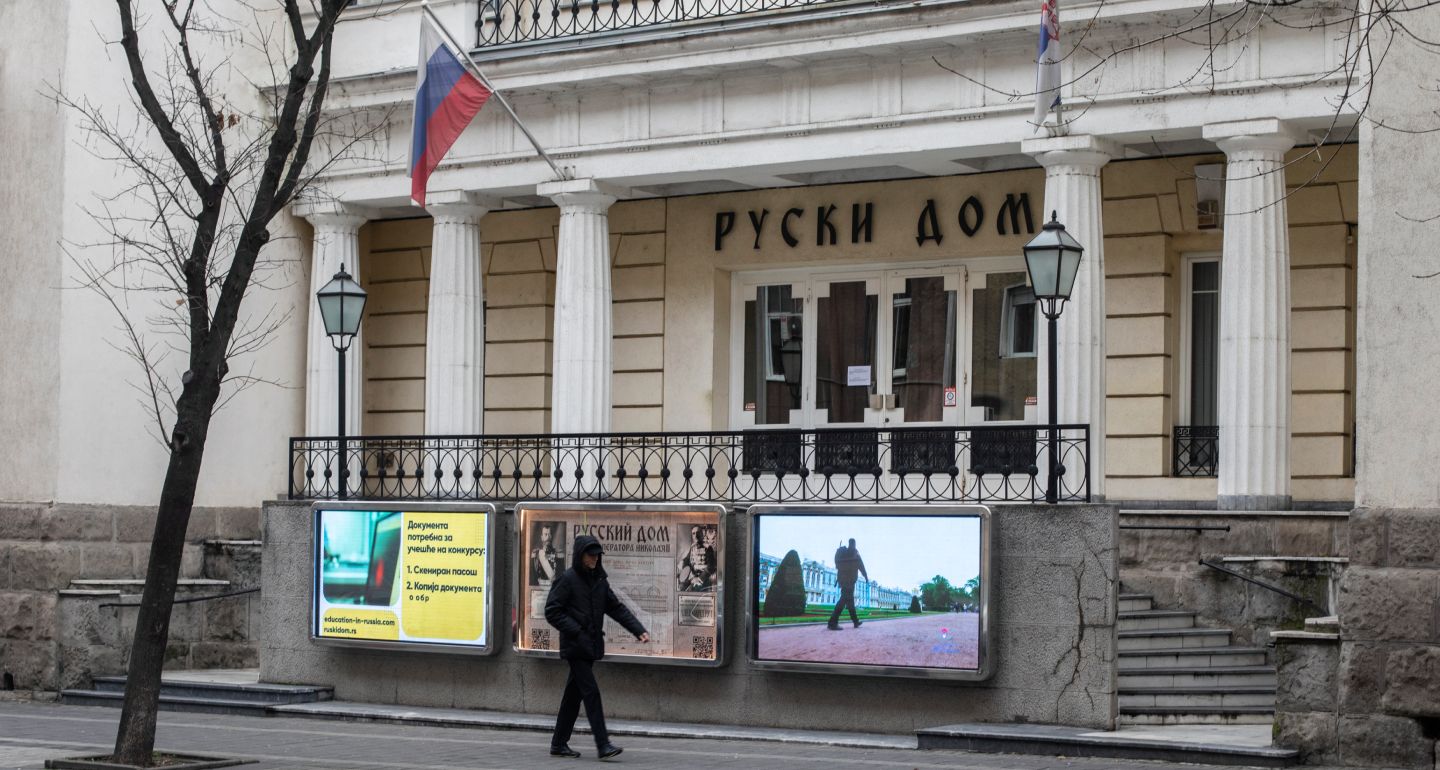
It’s a testing time for Russia’s policy in Serbia and the wider region, but it would be premature to conclude from one political setback that the days of Russian influence are over.

Dimitar Bechev