

Q&A
- +1
Sheena Chestnut Greitens, Oriana Skylar Mastro, Yukon Huang, …
{
  "authors": [
    "Yukon Huang"
  ],
  "type": "legacyinthemedia",
  "centerAffiliationAll": "dc",
  "centers": [
    "Carnegie Endowment for International Peace"
  ],
  "collections": [],
  "englishNewsletterAll": "asia",
  "nonEnglishNewsletterAll": "",
  "primaryCenter": "Carnegie Endowment for International Peace",
  "programAffiliation": "AP",
  "programs": [
    "Asia"
  ],
  "projects": [],
  "regions": [
    "East Asia",
    "China"
  ],
  "topics": [
    "Economy"
  ]
}
Source: Getty
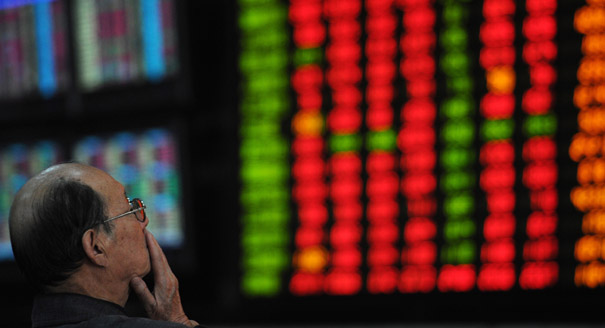
Those who doubt China’s prospects in the near term emphasize economic distortions. China bulls, on the other hand, assert that competent policies will help the economy rebound. Both groups are correct with respect to their own time horizon.
Source: Financial Times
Arguments about China’s growth prospects are often muddled by the divergent perspectives of optimists and pessimists. The two groups tend to use different time horizons, and to focus on different concepts, in evaluating China’s chances for success.
Those shorting China are fixated on what is happening today and what will happen six months from now. Thus, the steady decline in the monthly purchasing managers index — which measures changes in the manufacturing sector — as well as disappointing industrial production numbers have inevitably given rise to predictions that GDP growth will continue to sink. China’s GDP growth rate has fallen more-or-less steadily since the financial crisis, and bearish investors expect further declines from last year’s 7.4 per cent in the absence of additional stimulus and more aggressive actions. Such actions could include the recent cut in bank reserve requirements by half a percentage point or a likely decline in deposit rates.
But even these measures will not prevent growth rates from falling closer to six per cent over the coming year or two as excess industrial capacity and an over-built property market are brought in line with sustainable demand. Firms are not yet in the mood to invest and more expansionary monetary policies will not make an appreciable difference. For the moment, Beijing has little choice but to let the cyclical downturn play itself out.More hardened pessimists see China collapsing in the medium term on account of ever-rising debt levels. These views are exaggerated. While China’s debt problems are serious, they are manageable, and China has beaten similar financial challenges before. A decade and a half ago, China had to deal with a comparable debt build-up during the Asian financial crisis. At the time, the debt-to-GDP ratio surged by about 50 per cent over six years, similar to what has been happening since the 2008 global financial crisis. In the aftermath of the Asian financial crisis, non-performing loans amounted to some 40 per cent of the portfolios of the major banks. These ultimately had to be absorbed by the State through asset management companies. Today, one can foresee the possibility of a similar kind of clean-up of non-performing loans, but the magnitude would only be a fraction of the previous episode.
After the Asian financial crisis, however, a combination of economic reforms and expanding demand in the West led to the re-establishment of rapid growth as the norm for another decade. This time around, global conditions are less supportive, and many of the sources of the country’s easiest productivity gains have already been tapped. China also faces many self-imposed challenges, including barriers to labour mobility, an ageing population problem exacerbated by its one-child policy and rigid controls on information that inhibit innovation. Eminent prognosticators like Lawrence Summers have argued that China cannot continue to defy the law of averages, and that growth rates will converge to the global mean of three to four per cent by the end of this decade.
The pessimists may have the stronger argument in the short term. But one can still be bullish about the longer-term prospects of the Chinese economy. The flip side of China’s obvious but correctable distortions, and its large and persistent technological gap as compared to the West, is that there remains significant growth potential if conditions were to improve. With the right policies, China could continue to grow faster than the norm for some time.
Investors holding this more charitable view see a country that has consistently defied expectations. Despite its major price distortions and weak institutions, until recently China was able to grow at an unprecedented ten per cent annually, and to sustain similar rates, with a few set-backs, for three decades. Its success came from gradually introducing more market and competitive pressures into its socialist economic system.
Investors who doubt China’s prospects in the near term emphasise the remaining distortions and the difficulties Chinese authorities will face in removing them. In the longer term, China bulls are betting that competent policies and a government still fixated on headline growth numbers will help the economy rebound and eventually grow at more than seven per cent for another decade. Both groups are likely correct with respect to their own time horizon.
This article was originally published by the Financial Times.

Senior Fellow, Asia Program
Huang is a senior fellow in the Carnegie Asia Program where his research focuses on China’s economy and its regional and global impact.
Recent Work


Sheena Chestnut Greitens, Oriana Skylar Mastro, Yukon Huang, …


Yukon Huang, Isaac B. Kardon, Matt Sheehan

The domestic impacts of how long it is taking to end the war in Ukraine have pushed the French electorate to the political extremes and compromised the country’s diplomatic capacity.

Rym Momtaz

A deep dive into the policy ecosystems behind battery development in China, South Korea, Japan, the European Union (including some of its member states), the United States, Canada, and India.



Milo McBride, Herbert Crowther, Darcie Draudt-Véjares, …

The Plaza Accord was not an externally imposed punishment of Japan but part of a broader restructuring that Japanese economists and policymakers themselves recognized was necessary. Its effects were undermined, however, when Tokyo responded to the resulting slowdown with policies that exacerbated investment, credit expansion, and the very imbalances the adjustment was intended to resolve.

Michael Pettis
The real test may come after the leaders leave the room.
Sheena Chestnut Greitens, Oriana Skylar Mastro, Yukon Huang, …

The nuclear relationship between China and the United States is increasingly shaped by widening perception gaps rather than deliberate strategic design.

Tong Zhao