

Commentary
Gwendolyn Sasse
{
  "authors": [
    "Gwendolyn Sasse"
  ],
  "type": "legacyinthemedia",
  "centerAffiliationAll": "dc",
  "centers": [
    "Carnegie Endowment for International Peace",
    "Carnegie Europe"
  ],
  "collections": [
    "Europe’s Eastern Neighborhood"
  ],
  "englishNewsletterAll": "ctw",
  "nonEnglishNewsletterAll": "",
  "primaryCenter": "Carnegie Europe",
  "programAffiliation": "EP",
  "programs": [
    "Europe"
  ],
  "projects": [],
  "regions": [
    "Europe",
    "Eastern Europe",
    "Ukraine",
    "Iran"
  ],
  "topics": [
    "Foreign Policy"
  ]
}
Source: Getty
Ukraine’s latest ceasefire agreement will not make constitutional reform happen, but the deal can help refocus Ukrainian and Western attention on that process.
Source: The Conversation
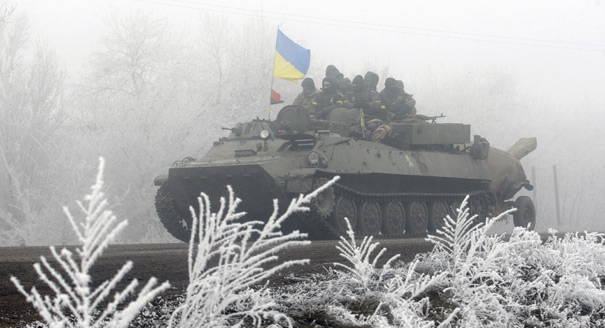
A week after the second Minsk agreement on a ceasefire in Ukraine, Kiev’s forces pulled out of Debaltseve, the strategic railway hub linking territories in Donetsk and Luhansk.
They had been stuck in a standoff with pro-Russian rebels since the agreement was struck, raising fears that the fight for the town could tear the fragile deal apart. But Minsk II did not include a specific agreement on Debaltseve, so it is not surprising that the fighting continued around this city beyond the agreed ceasefire.
The Ukrainian army withdrew from the area – seemingly on its own accord rather than following president Petro Poroshenko’s orders – both avoiding further bloodshed and affirming a new separation line which Poroshenko could not agree to at the negotiation table in Minsk. Their move shows how as Ukraine’s crisis rumbles on, new political realities are constantly being created on the ground.The key issue is whether these facts will help freeze the conflict – the best possible short-term outcome.
The debate about whether or not Minsk II is holding is futile. Under the current circumstances, the most a peace agreement can do is limit the death toll and create a breathing space for all the involved parties and those watching from outside. So far, Minsk II is doing exactly that.
It has temporarily broken through the vicious cycle of the US-led suggestions of arming Ukraine (President Obama has put that idea on hold for the moment) – and highlighted a number of issues related to the war that Ukrainian and Western politicians have started to forget about.
Ukraine badly needs to begin a constitutional reform process, start the work of decentralisation, and see humanitarian aid delivered to its war-torn regions. On its own, Minsk II will not make these things happen on its own – but it can help to refocus Ukrainian and Western attention on achieving them.
Given the West’s pre-Minsk drift into the most belligerent rhetoric yet over Ukraine, this opportunity comes not a moment too soon.
There is a lot of speculation about what exactly Vladimir Putin wants, but his so-called endgame is a moving target. Rather than pursuing a single concrete outcome, the Kremlin is constantly weighing a range of options and scenarios, and its preferences will be shaped as much by Ukrainian and Western actions as by forces in Russia.
What is clear is that a central part of Putin’s calculation is securing the means to destabilise Ukraine whenever it suits Moscow.
The logic of this war is different from wars in the Cold War era. It lacks the degree of certainty that came with a more symmetrical set-up, both in terms of arms and ideologies. Supplying Ukraine with military training and arms (whether defined as lethal or not) is the route to escalation.
If we take the lessons of history seriously, this risk should be too high for anybody in the West to contemplate. The idle talk about supplying arms has been drawing badly needed attention and resources away from other avenues of engagement, most notably political and economic aid for Ukraine.
It’s alarming to hear a military option advocated by senior officials in Washington and some (mainly eastern) European capitals, as well as in large parts of the Western media. Strong dissenting voices have been few and far between, at least in the American and British public debate.
The war in Ukraine teaches us as much about a “new” Russia as it does about deeply ingrained “old” Western thinking. The overwhelmingly negative Western rhetoric about “appeasing” Putin, and blunt comparisons with 1938 or the Balkan wars are testament to the fact that even in the the West the post-Cold War, anti-war, pro-diplomacy norms are built on much shakier foundations than we might have thought.
With Minsk II in place, the best option for Ukraine is to push ahead with desperately needed structural and constitutional reforms. This will at the very least make sure it retains its integrity as a state.
Hopefully, there will be a quick follow-up with a Minsk III and Minsk IV to address the poor capacity of European monitors and explore the possibility of deploying UN peacekeepers, as well as more concrete steps towards the political objectives of the agreement, among them local elections, a clearly defined special status for the Donbas, and constitutional reforms more generally.
A domestic commitment to reform would keep the Ukrainian population and Western donors on side. Successful reforms in Ukraine are the most compelling medium and long-term asset Ukraine has to signal to Russia that its attempts at destabilising the country will have their limits. Offering tangible benefits from the reforms might also offer the only way to entice Donetsk and Luhansk back into the Ukrainian polity.
Coinciding with Minsk II, the IMF and others committed more substantial amounts in loan and aid to Ukraine than ever before. This opportunity has to be taken regardless of the exact demarcation of the new separation line in the war zone.
Nonresident Senior Fellow, Carnegie Europe
Sasse is a nonresident senior fellow at Carnegie Europe. Her research focuses on Eastern Europe, with a particular focus on Ukrainian politics and society, EU enlargement, and comparative democratization.
Recent Work
Gwendolyn Sasse
Gwendolyn Sasse
Carnegie does not take institutional positions on public policy issues; the views represented herein are those of the author(s) and do not necessarily reflect the views of Carnegie, its staff, or its trustees.

Germany's sometimes ambiguous nuclear policy advocates nuclear weapons for deterrence purposes but at the same time adheres to non-proliferation. This dichotomy can turn into a formidable dilemma and increase proliferation pressures in Berlin once no nuclear protector is around anymore, a scenario that has become more realistic in recent years.
Ulrich Kühn

In an interview, Hassan Mneimneh discusses the ongoing conflict and the myriad miscalculations characterizing it.

Michael Young
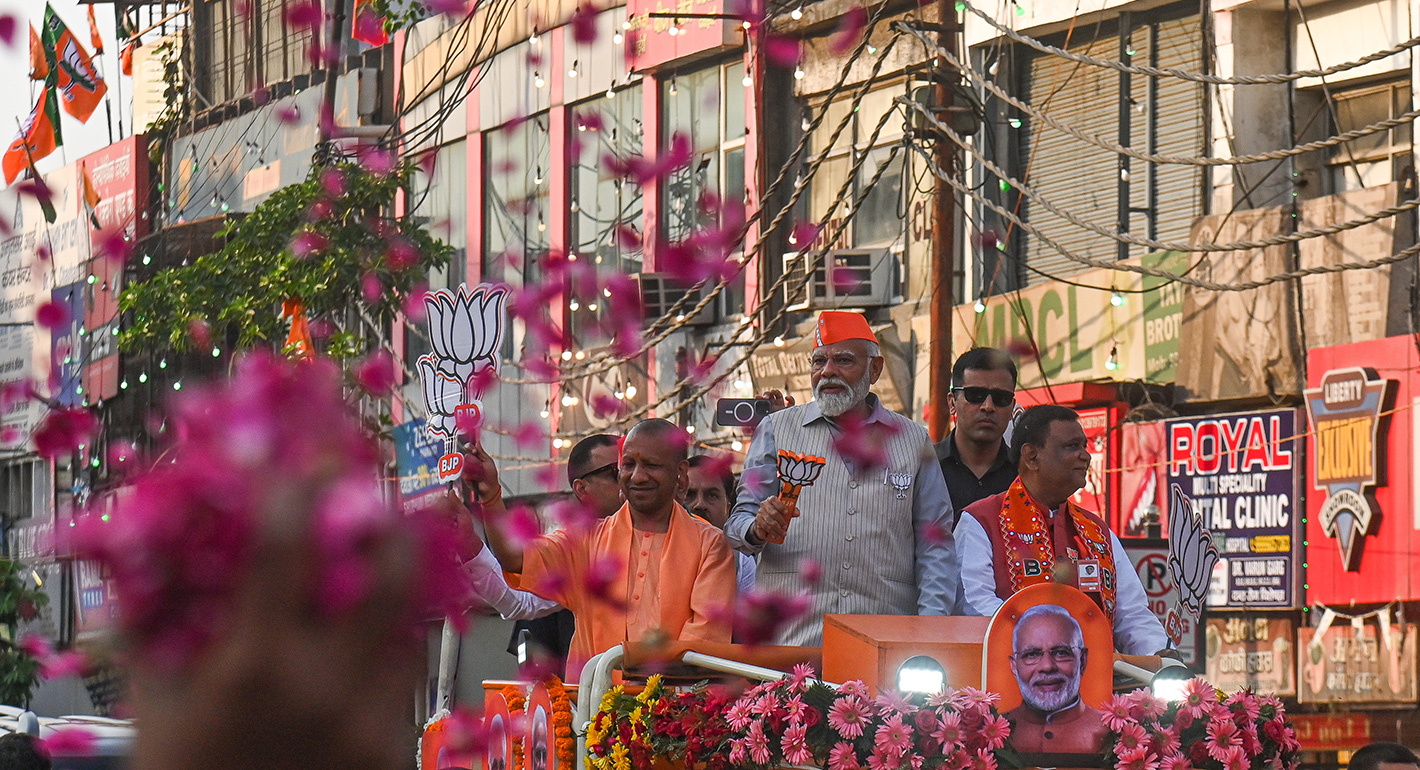
Domestic mobilization, personalized leadership, and nationalism have reshaped India’s global behavior.
Sandra Destradi
The recent record of citizen uprisings in autocracies spells caution for the hope that a new wave of Iranian protests may break the regime’s hold on power.


Thomas Carothers, McKenzie Carrier
In an interview, Nicole Grajewski discusses the military dimension of the U.S. and Israeli attacks on Iran.
Michael Young