

Article
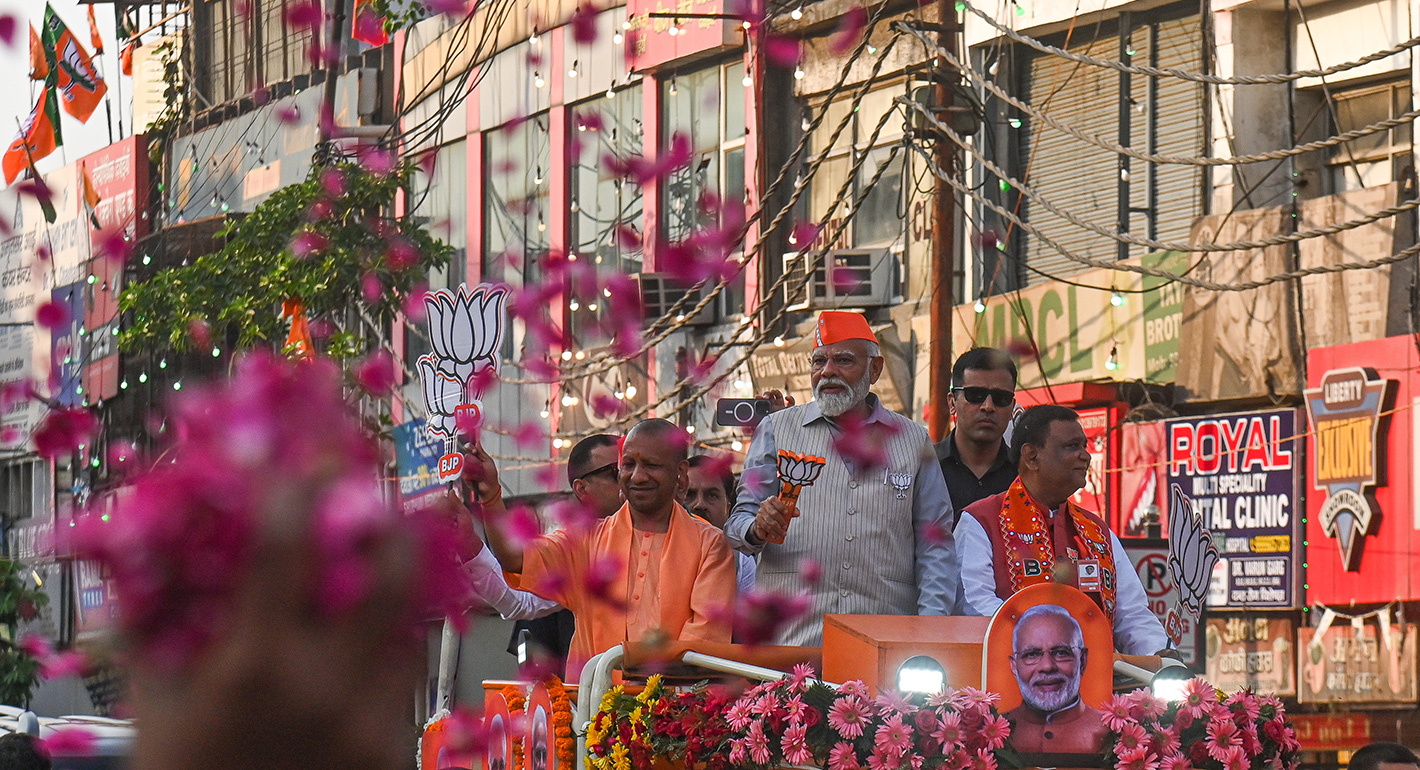
In the lead-up to the general elections, India’s rising status on the world stage is a big win for Modi in the eyes of many Indian voters.
Source: Getty
Domestic mobilization, personalized leadership, and nationalism have reshaped India’s global behavior.
This paper is part of “The Populist Turn in Middle-Power Diplomacy,” a Carnegie Endowment series on the international impacts of right-wing populism. Focusing on middle powers, the series explores how populist leaders reshape foreign policy, build transnational networks, and advance shared agendas across borders.
India’s populist, Hindu-nationalist Bharatiya Janata Party (BJP) has been in power for over a decade and won a third consecutive mandate in 2024 under the leadership of Prime Minister Narendra Modi.
In many ways, Modi is a prototypical populist leader. He has styled himself as a self-made man, an outsider to the corrupt political establishment, the son of a tea seller devoted to the service of his people. This self-presentation casts him as someone able not only to speak in the name of the people, but even to personally embody the popular will against established political elites.1
Populism is commonly understood as a “thin-centered” or “thin” ideology—that is, a limited set of ideas about what society should look like. Specifically, populism “considers society to be ultimately separated into two homogeneous and antagonistic groups, ‘the pure people’ versus ‘the corrupt elite’, and . . . argues that politics should be an expression of the volonté générale (general will) of the people.”2 Who exactly constitutes the people and the elite is mostly determined by a “thick,” more comprehensive ideology combined with populism—in the BJP-led government of Modi, the ethnonationalist ideology of Hindu nationalism, which focuses on the notion of Hindutva (Hinduness). This thick ideology is promoted by the BJP and by a family of related organizations, chief among them the paramilitary volunteer organization Rashtriya Swayamsevak Sangh (RSS).
In the BJP’s framing, India’s “true people” are defined primarily as consisting of the country’s Hindu majority, while religious and ethnic minorities—most notably the country’s sizable Muslim minority, which accounts for roughly 15 percent of the population—are excluded.3 The “elite,” in turn, is identified with the traditional, more cosmopolitan and liberal political establishment, and particularly associated with the Indian National Congress (INC), the party that ruled India with few interruptions from independence in 1947 until Modi’s ascent. Modi and his supporters have condemned the dynastic character of the INC, which has been dominated by the Nehru-Gandhi family for seven decades.4
Populist leaders often blur the boundaries between domestic politics and international affairs, reshaping how foreign policy is made and justified.
While populism is, in the first place, a domestic political phenomenon, it can also have important consequences for foreign policy. Populist leaders often blur the boundaries between domestic politics and international affairs, reshaping how foreign policy is made and justified. How, then, has the right-wing populism of Modi and his BJP-led government shaped India’s foreign policy over the past decade, as compared to previous non-populist governments? This paper argues that populism has reshaped the processes of Indian foreign policy—but its effects are contingent. Where foreign policy issues resonate with domestically powerful identity narratives, as in the case of Pakistan, mobilization and personalization have driven escalation. Where such narratives are weaker or power asymmetries are greater, as with China, populism has been restrained, producing far less dramatic change. At the same time, Modi’s populism has fostered selective transnational ties with like-minded actors abroad, even as these linkages remain pragmatic and limited.
While the ideology of populism is too “thin” to determine specific foreign policy outcomes, it nevertheless has an important impact on the processes through which foreign policy is made, in India and elsewhere.5 Two mechanisms are particularly important in this regard: domestic political mobilization and the personalization of decisionmaking.
Continuous domestic political mobilization—the ongoing effort to rally public support—is a key feature of populist politics, including in India. Populist politicians do not confine mobilization to election campaigns; instead, they seek to continually activate and enlarge their constituency even after assuming office. In effect, populists remain permanently on the campaign trail.6 This dynamic reflects a paradox at the heart of populist governance: once in power, populists themselves become part of the political establishment. To retain their anti-elitist credentials, they must therefore continue to mobilize supporters, and they often do so by focusing on foreign policy—an area in which it is typically easy to invoke crises and external threats to the people.
Under populist governments, foreign policy thus becomes more politicized, meaning that the boundary between domestic and international politics grows increasingly blurred. Foreign policy debates are frequently reframed in terms of national identity, popular will, and political loyalty, and foreign policy issues are used to discredit political opponents. Where populists are in power, foreign policy often becomes a “continuation of domestic politics by other means.”7
The case of India also illustrates how populists reshape foreign policy through its personalization. This reflects the central role of individual leaders in populist politics, where leaders claim to embody the will of the people.8 Modi, for example, proclaimed that his 2017 Independence Day address conveyed “the collective voice of 1.25 billion of my countrymen that resounds from the Red Fort.”9 Such claims elevate the leader as the primary—and sometimes only—legitimate interpreter of the national interest. In practice, this translates into a greater role for individual leaders in foreign policy making, but it also has institutional repercussions. A more personalized foreign policy usually leads to the marginalization of professional bureaucracies such as foreign ministries, and to the centralization of decisionmaking within a small inner circle around the populist leader.10 While both personalization and centralization of foreign policy making are broader trends in contemporary international politics, they are particularly pronounced under populist rule.
Different degrees of mobilization and personalization among different foreign policy issues help explain why populist governments like India’s produce varying degrees of foreign policy change. In an issue area or bilateral relationship where both mechanisms are pronounced, foreign policy departures from past practice are more likely. Populist leaders in such cases face strong incentives to fulfill the expectations they have cultivated among domestic audiences—particularly promises to break decisively with the policies of prior “elite” governments. At the same time, personalization reduces the constraining influence of professional advisers who might otherwise caution against abrupt or risky departures from established precedent.
Different degrees of mobilization and personalization among different foreign policy issues help explain why populist governments like India’s produce varying degrees of foreign policy change.
As the following sections show, this combination of high mobilization and personalization helps explain India’s increasingly confrontational approach toward Pakistan under Modi. It also sheds light on India’s greater engagement in international institutions and global governance. By contrast, lower levels of mobilization in India’s relationship with China help explain why populism has not driven equally dramatic changes in all areas of Indian foreign policy.
The sections that follow examine variations in India’s foreign policy under Modi’s BJP-led governments since 2014, comparing them with the approach of the previous INC-led governments under non-populist prime minister Manmohan Singh, who served two terms between 2004 and 2014.
The mechanisms of mobilization and personalization of foreign policy making have been particularly evident in India’s approach to Pakistan, which has seen a steady deterioration of relations under the BJP-led Modi governments.
While the non-populist, INC-led United Progressive Alliance (UPA)-II Singh government reacted with restraint to a devastating Pakistan-sponsored terrorist attack on Mumbai in 2008, which left over 150 people dead, India’s response pattern has changed markedly under Modi. When the Pakistan-based terrorist organization Jaish-e-Mohammad attacked an Indian airbase at Pathankot in January 2016 and killed nineteen Indian soldiers in another attack in Uri later that year, the Modi government carried out—and widely publicized—special forces operations targeting terrorist facilities in disputed territory controlled by Pakistan. Comparable operations had taken place before, but they were kept covert and not publicly instrumentalized.11 In February 2019, following another major attack on Indian security personnel in Pulwama that killed more than forty paramilitary troops, India retaliated with air strikes on suspected terrorist sites inside Pakistan proper, breaking with the long-standing precedent of avoiding strikes on Pakistan’s territory.12
More recently, a terrorist attack in Pahalgam against Indian civilians—mostly tourists from other parts of the country spending their honeymoons in Kashmir—perpetrated by Islamist terrorists on April 22, 2025, triggered the worst military escalation between India and Pakistan in three decades. On May 6, 2025, the Indian government responded by launching Operation Sindoor, targeting suspected terrorist infrastructure deep inside Pakistani territory. After the Pakistani army retaliated, a rapid escalation followed between the two nuclear-armed rivals, including air battles and missile and drone strikes on both sides. Several areas in Kashmir, Pakistan, and the Indian states of Punjab, Gujarat, and Rajasthan were affected.13 The confrontation subsided after four days, following a ceasefire announcement by U.S. President Donald Trump on May 10, 2025.14
The Modi government’s policies in crises involving Pakistan have marked a clear shift away from the more restrained approach adopted by previous non-populist governments. The mechanisms of mobilization and personalization, hallmarks of populist foreign policy, help explain this evolution.
The Modi government’s policies in crises involving Pakistan have marked a clear shift away from the more restrained approach adopted by previous non-populist governments.
First, foreign policy making under Modi has become increasingly personalized and centralized. While Indian prime ministers have traditionally played a prominent role in shaping foreign policy, personalization has reached unprecedented levels under Modi.15 Highly sensitive relations with Pakistan have been managed directly by the prime minister and a small circle of trusted advisors, chief among them National Security Advisor Ajit Doval.16 The Ministry of External Affairs has been marginalized over time, even though its minister, S. Jaishankar, remains close to Modi.17 Moreover, whereas previous, non-populist governments sought opposition consensus ahead of major Pakistan-related decisions, Modi dispensed with such consultations in 2016 and 2019.18 In 2025, he convened an all-party meeting only on May 8, after the military escalation was well under way.19
Second, Modi has repeatedly used relations with Pakistan as a tool for domestic political mobilization, drawing on both the BJP’s thin populist ideology and its thick ideology of Hindu nationalism. The BJP and the broader family of Hindu-nationalist organizations of which it is a part have long linked India’s Muslim minority discursively to Pakistan—a state founded as a homeland for South Asia’s Muslims at the end of British colonial rule. Under Modi, however, the intensity of this politicization has increased sharply. Muslims have regularly been depicted as a “fifth column,” while critics of the government or its Pakistan policy are often branded as “anti-national.”20 During the 2019 election campaign, Modi portrayed himself as the chowkidar—the watchman guarding the nation—explicitly invoking the threat of Pakistan-sponsored terrorism.21 In 2024, he went further, labeling India’s Muslim minority as the INC’s “Jihadi Vote Bank.”22 This sustained conflation of domestic identity politics and external security threats has ultimately constrained Modi’s room for maneuver. By personalizing national security and repeatedly signaling resolve toward Pakistan, the prime minister has created strong domestic expectations for forceful retaliation. Following the Pahalgam attack, these expectations left little political space for restraint, compelling Modi to respond decisively in line with the image he had cultivated among voters.
Interestingly, Modi’s right-wing populist government has not approached India’s relationship with its most powerful rival, China, in the same confrontational manner. The two countries share a long history of tensions dating back to the Chinese military offensive of 1962, with the primary point of contention being their disputed border. Among the disputed territories are the entirety of the Indian state of Arunachal Pradesh, which China refers to as South Tibet, and several zones along the Line of Actual Control (LAC) in the western sector, including Aksai Chin.
Over time, the de facto border has become a theater of direct confrontations between Indian and Chinese forces, particularly as China has expanded military infrastructure in disputed territory. These incidents include the 2017 standoff at Doklam, an area claimed by both China and Bhutan, and a major clash in Galwan Valley in eastern Ladakh in 2020. The latter resulted in at least twenty Indian fatalities and an unknown number of Chinese casualties, marking the deadliest encounter between the two sides in decades.23 Lower-intensity skirmishes have continued since, including one in Tawang in 2022.
Faced with repeated Chinese incursions, Modi’s approach to China has been less conciliatory than that of his predecessor, Singh, but the Modi government has consistently sought to avoid military escalation with China—in contrast with Pakistan.24 There is also evidence that India has quietly tolerated a resumption of Chinese infrastructure construction in disputed territories, despite ongoing tensions.25
Although decisionmaking on China has been highly personalized under Modi, reflecting the strategic salience of the relationship, the level of domestic political mobilization has been surprisingly limited. This restraint became particularly evident in 2020, when widespread public anger followed the Galwan clash. Indian citizens organized spontaneous protests, burned Chinese flags and goods, and called for a boycott of Chinese products.26 Yet the government largely refrained from amplifying these sentiments for domestic political gain.
The RSS and other right-wing organizations criticized China but downplayed India’s losses in Galwan and avoided calls for radical escalation.27 Modi himself remained notably cautious. In his 2020 Independence Day speech, he praised India’s resilience and military preparedness without explicitly naming China or mobilizing public opinion against it: “Notwithstanding the recent adversities, there have been misadventures along the border which threw a challenge to the country. But whoever tried to threaten the sovereignty of our country right from the LOC [Line of Control] to the LAC, the army of the country, our brave soldiers have given a befitting reply.”28
This limited mobilization marks a sharp contrast with Modi’s handling of Pakistan. As a former senior Indian official put it, while India’s approach to Pakistan was driven by the BJP’s thick ideology, “with China, it’s non-ideological.”29 The absence of an easily mobilizable identity narrative has made it possible for the government to downplay tensions with China. Most likely, this reflects a strategic calculation: mobilizing public opinion against a far stronger rival risked creating pressure for military action that India could ill afford.30
Rather than escalating militarily, the Modi government has chosen more indirect ways of countering China, including deepening ties with the West, strengthening engagement with Taiwan, expanding cooperation within the Quadrilateral Security Dialogue (Quad), and pursuing diplomatic initiatives aimed at constraining China’s influence in multilateral and minilateral forums.31
Rather than escalating militarily, the Modi government has chosen more indirect ways of countering China.
The contrast between Modi’s approaches to Pakistan and China highlights two broader dynamics linking domestic politics and foreign policy under populist governments. First, the impact of populism is contingent on the domestic resonance of identity narratives (Hindu vs. Muslim, India vs. Pakistan). Populism shapes foreign policy not only through leadership style or rhetoric, but also through thick ideological filters that enable (or constrain) domestic political mobilization. Where such narratives are weak or absent, populist leaders may deliberately avoid politicizing foreign policy across issue areas.
Second, populist governments remain sensitive to material power asymmetries, much like their non-populist counterparts. In the case of China, the Modi government chose not to fully exploit existing anti-China sentiment, recognizing that confrontation with a significantly more powerful adversary carried far greater risks than escalation with Pakistan.32
How does populism shape India’s foreign policy beyond international disputes? In the realm of international cooperation, specifically engagement in multilateral institutions and contributions to global governance, existing theories of populism would lead one to expect populist governments to be less willing to engage than their non-populist governments. This is because populists claim to put the people first, and are therefore often assumed to be unwilling to invest scarce resources in the provision of global public goods (which, by definition, also benefit outsiders). Similarly, populists frequently portray multilateral institutions as technocratic bodies far removed from the needs of the people, epitomizing the cosmopolitan elites they oppose.
While some populist leaders like Trump or former Brazilian president Jair Bolsonaro have followed this playbook of populist aversion to global governance and multilateralism, some research suggests that populist contestation of international institutions is often more nuanced.33 Populist governments may be willing to engage internationally when doing so can be aligned with domestic political goals or claims to national greatness.34
Rather than retreating from global governance, Modi’s populist government has, in some areas, shown an increased willingness to engage in the provision of global public goods. Climate change mitigation offers a particularly striking example. At the 2015 UN Climate Change Conference in Paris, Modi surprised many observers by launching the International Solar Alliance and by adopting a far less obstructionist negotiating stance than previous Indian governments. Despite India’s domestic mixed record on climate policy, Modi has consistently invested political capital in projecting India as a responsible global actor on climate issues, an interest he had already developed during his tenure as chief minister of Gujarat.35
Rather than retreating from global governance, Modi’s populist government has, in some areas, shown an increased willingness to engage in the provision of global public goods.
BJP governments have also harnessed climate diplomacy for domestic political mobilization, drawing on right-wing environmentalist tropes such as linking environmental protection to ancient civilizational wisdom and notions of purity in line with the governing party’s thick ideology, but also on India’s ambition for international leadership.36 In a 2018 monthly radio address, Modi stated: “The country secured a place of pride & glory in the entire world. The highest United Nations Environment Award ‘Champions of the Earth’ was conferred upon India. The world duly took notice of India’s efforts in the areas of Solar Energy and Climate Change.”37 This stands in sharp contrast to the climate skepticism and denialism often associated with right-wing populists in the West.
More broadly, Modi has used India’s engagement in international institutions as a vehicle for domestic political mobilization by explicitly linking his personal leadership to India’s rising global stature. Ahead of the 2024 elections, India’s presidency of the G20 became a centerpiece of the government’s political messaging. A massive campaign elevated the rotating presidency into a symbol of foreign policy success, with the G20 logo—depicting a globe embedded in a lotus flower, the BJP’s party symbol—displayed prominently across the country. Rarely has the connection between domestic political mobilization and international diplomacy been so visible.
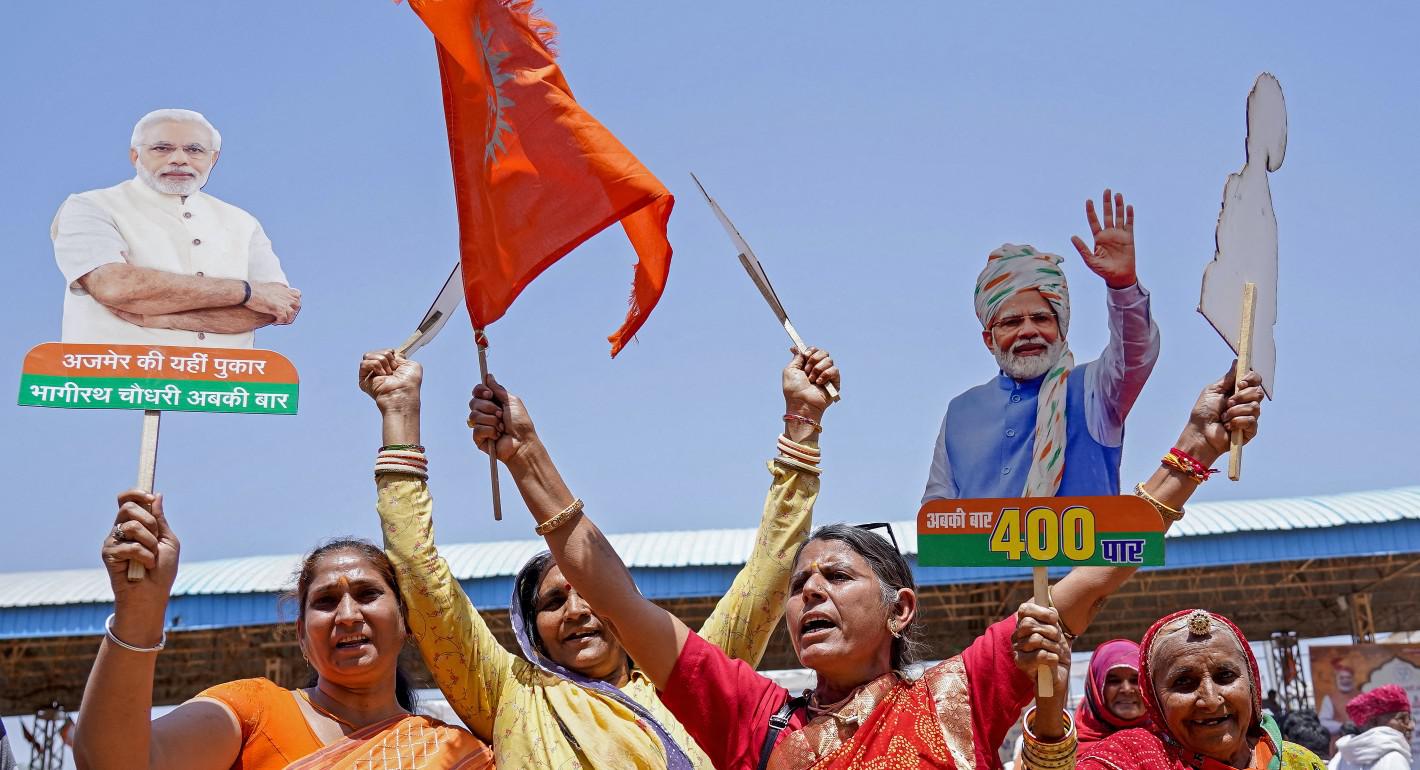
In the lead-up to the general elections, India’s rising status on the world stage is a big win for Modi in the eyes of many Indian voters.
At the same time, and in line with its stated desire to be recognized as a great power, India under Modi has remained actively engaged in the United Nations and other international organizations.38 Rather than rejecting global governance, the Modi government has sought to shape it in ways that reinforce India’s status and autonomy.
The Indian case thus reveals that populism does not automatically translate into anti-globalist foreign policy behavior. When populism interacts with national self-perceptions as a rising or established great power—and with personal ambitions of a strong leader—it can even encourage selective forms of international engagement. While many leaders seek to capitalize on foreign policy successes, populists are particularly well positioned to convert international status into personal political capital because they explicitly collapse the distinction between leader and people. In countries that seek recognition as great powers on the world stage, populist leaders can frame costly contributions to global public goods as proof of the greatness of the people they claim to represent, as well as evidence of their own capacity to command international recognition.39 In this way, international engagement becomes a resource for domestic mobilization. By presenting himself as both the authentic voice of the people and as a globally respected statesman, Modi links external recognition to national pride. Global visibility is reframed as collective recognition of India, and the resulting sense of pride feeds back into political support for the leader who claims to have delivered it.
Beyond leader-centric diplomacy and opportunistic alignments with authoritarian and revisionist powers, right-wing populism in India has also generated a dense web of transnational connections involving political parties, civil society organizations, and shared narratives. These linkages offer additional insight into the international dynamics of contemporary populism.
At the party level, there is ample evidence that the BJP has cultivated ties with right-wing parties abroad. One striking example occurred in late 2019, only two months after the revocation of the autonomy of Jammu and Kashmir, when a group of twenty-seven members of the European Parliament—most of whom were affiliated with populist radical-right parties—were invited on a tour of the heavily militarized region. At the time, the region was completely isolated from the rest of the world and not even accessible to the leaders of India’s opposition.
There is ample evidence that the BJP has cultivated ties with right-wing parties abroad.
The delegation included representatives from France’s Rassemblement National, Poland’s Law and Justice Party, the UK’s Brexit Party, Italy’s Lega, Germany’s Alternative für Deutschland, Belgium’s Vlaams Belang, Spain’s Vox, and others. Although the visit was officially described as private, the delegation reportedly met with Modi, Doval, and Jaishankar.40 The tour was organized by a Delhi-based think tank, the Institute for Non-Aligned Studies, which was later identified as part of a broader Indian disinformation network.41 The episode illustrates the BJP’s willingness to engage selectively with ideologically aligned actors abroad, even at the risk of diplomatic controversy.
Beyond political parties, there are emerging connections at the level of transnational movement infrastructures, including think tanks and civil society organizations. For decades, organizations like the Overseas Friends of BJP or the Hindu Swayamsevak Sangh—an overseas counterpart to the RSS—have established chapters in numerous countries, especially those with large Indian diaspora communities.
Over time, these transnational engagements have evolved in two notable ways. On the one hand, recent research has traced the emergence of “neo-Hindutva” actors in the diaspora. These “new players in the Hindutva ecosphere” are more reluctant to openly associate with traditional Hindutva networks and Hindu majoritarianism, while nonetheless advancing elements of Hindu majoritarian ideology.42 On the other hand, the Hindu right has increasingly integrated itself into broader transnational right-wing and radical right networks. Representatives have participated in events such as the National Conservatism Conference (NatCon) in Washington, DC, in 2024, as well as the 2024 Budapest Summit organized by the Hungarian, Viktor Orbán–aligned Mathias Corvinus Collegium.43
At the level of rhetoric, Modi has at times borrowed directly from the language of other right-wing populists, most notably Trump. Slogans such as “Make India Great Again” and “India First” echo U.S. populist themes.44 But copying Trump’s rhetoric has not translated into full alignment on foreign policy substance. This is not surprising: Despite personal affinities and rhetorical similarities, cooperation among right-wing populists is complicated by the very nature of ethnonationalist thick ideologies that put each country’s respective people “first”—and thus, inevitably, put populists at odds with one another.
This is best exemplified by the strained relationship between Modi and Turkish president Recep Tayyip Erdoğan. Despite similarities in leadership style and populist appeal, their respective thick ideologies of Hindu nationalism in India and Muslim nationalism in Türkiye fundamentally clash.45 Likewise, the second Trump administration’s immigration policies, which have adversely affected segments of the Indian diaspora in the United States, have exposed the limits of transnational populist solidarity.
Relatedly, when representatives of the RSS have tried to position India as a leader in the emerging transnational global right, it has drawn some criticism at home. For example, when Ram Madhav, a member of the National Executive of the RSS and former secretary general of the BJP, argued at the 2024 NatCon that India could help “build a global cultural nationalist movement,” his remarks triggered backlash within India’s right wing. 46 Critics warned of the risks associated with aligning too closely with Western far-right and Christian nationalist groups. The case of India thus exemplifies populists’ leader-centric, opportunistic foreign policy realignments; the creation of transnational right-wing populist networks; and the spread of populist rhetoric—but also some of the inherent limitations to cooperation among right-wing populist governments.
Modi has also expanded the country’s long-standing strategy of diversifying its international partnerships, but the populist influence in that area is more limited. Since 1947, a core tenet of Indian foreign policy has been the pursuit of an independent course that avoids binding the country to any single partner or formal alliance. After the non-aligned period of the Cold War, India moved toward a strategy of “multialignment,” under which it has sought to cultivate close ties with a wide range of international partners.47
Modi has largely continued this trend, walking the tightrope between competing partners: deepening relations with the United States, other Quad members, and European partners such as France, while maintaining close ties with Russia, a major supplier of defense equipment; engaging simultaneously with Israel, Iran, Saudi Arabia, and the United Arab Emirates in the Middle East; and expanding outreach to countries across the Global South.48 This diversification reflects both continuity in Indian foreign policy and the flexibility afforded by India’s growing international weight.
Several of these international partnerships have been driven personally by Modi and have been particularly visible in relations with fellow right-wing populist or authoritarian leaders. Frequent reciprocal visits with Russian President Vladimir Putin—most recently Putin’s visit to India in December 2025—are a case in point.49 During the first Trump administration, Modi and Trump also appeared jointly at mass events for the Indian diaspora, openly showcasing their personal affinity and mutual electoral appeal.50 Modi’s 2017 visit to Israel, the first ever by an Indian prime minister, and a more recent one in February 2026, similarly underscored his personal closeness with Israeli Prime Minister Benjamin Netanyahu.51 While bilateral ties had already been deepened under INC-led governments, Modi has made the relationship more public and elevated Israel to an important strategic partner. He has also displayed personal sympathy and affinity for other right-wing leaders, including Italian Prime Minister Giorgia Meloni.52
Ultimately, Modi’s personal diplomacy with fellow right-wing populist leaders reveals the limits and risks inherent in leader-centric foreign policy.
At the same time, it would be misleading to describe these engagements as evidence of a coherent “populist axis.” They are better understood as part of a broader, pragmatic strategy of partnership diversification. Ultimately, Modi’s personal diplomacy with fellow right-wing populist leaders also reveals the limits and risks inherent in leader-centric foreign policy. Most visibly, Modi’s “bromance” with Trump proved short-lived.53 During Trump’s second administration, the United States has distanced itself from Modi, imposing punitive tariffs in response to India’s continued imports of Russian oil and pressuring India to scale them back, with potentially adverse consequences for the Indian economy.54 Even after striking a limited trade pact in February 2026, India’s tariff burden is much higher than it was prior to Trump’s second administration, and the United States has threatened renewed trade penalties should India persist in purchasing Russian energy.55

This piece examines India’s response to U.S. sanctions and tariffs, specifically assessing the immediate market consequences, such as alterations in import costs, and the broader strategic implications for India’s energy security and foreign policy orientation.
The populist government under Modi has changed the substance of India’s foreign policy, but the most significant impact of populism has been on the “how” rather than on the “what” of foreign policy. Populism has reshaped the processes through which foreign policy is formulated and communicated, centering decisionmaking on a leader claiming to embody the will of the people. This way of governing prioritizes personalization, centralization, and the marginalization of established elites and institutions.
Foreign policy has also become a tool for domestic political mobilization, albeit in a more selective manner. Mobilization has been strongest in areas where foreign policy dovetails with the BJP’s thick ideology of Hindu nationalism—most notably in relations with Pakistan. Here, the fusion of populism and ethnonationalism has translated into a policy of escalation in response to terrorist threats emanating from across the border. By contrast, Modi has been far more cautious in cases where mobilization could have produced politically or strategically costly pressures. His government’s deliberate decision not to amplify tensions with China illustrates how populist leaders can strategically limit mobilization to preserve room for maneuver.
Populism has led the Modi government to pursue preexisting goals more aggressively than in the past, but it has not uniformly undermined India’s international engagement. On the contrary, under Modi, India has remained largely committed to multilateralism and has even expanded its role in selected areas of global governance. Demonstrating India’s credentials as a responsible great power—and conveying this recognition to a domestic public—has been a central motivation behind the government’s willingness to contribute as a “good international citizen.” In this sense, international engagement has served both external and internal political purposes.
Right-wing populists’ commonalities are often undermined by the idiosyncrasies of personalized politics and the ebbs and flows of personal sympathies and leader turnover.
The Indian case also shows that the global populist right may be increasingly interconnected, but that it will take time until such connections become consequential. Right-wing populists’ commonalities are often undermined by the idiosyncrasies of personalized politics and the ebbs and flows of personal sympathies and leader turnover. Personalization ultimately can weaken incipient alliances via its inherent unpredictability. Further, while we may observe the emergence of ever-stronger right-wing populist connections in Europe and in large parts of the Global North (at times also including Global South leaders such as Argentinian president Javier Milei), India’s trajectory reveals that the emergence of a truly global right-wing populist “international” is challenged by the very features of ethno-nationalist populist thick ideologies, which inevitably focus on a narrowly defined people. Connections across the Global North–Global South divide pose particular challenges given the anti-immigrant and openly racist positions of many right-wing populists in the Global North.
Even in the absence of a coherent right-wing populist “international,” the cumulative effects of populism on world politics are likely to be significant. The Indian case illustrates three broader trends associated with populist foreign policy: rising transactionalism, heightened unpredictability, and increasingly fluid international partnerships. These dynamics do not amount to a shared policy agenda, but they are reshaping how states interact on the global stage. Understanding these shifts—and their long-term implications—will be an important task for future research on populism and international relations.

Sandra Destradi
Chair, International Relations, University of Freiburg, Germany, and DAAD long-term guest professor, Reichman University, Israel
Sandra Destradi is a professor in the Department of Political Science and Chair for International Relations at the University of Freiburg, Germany. She is currently serving as a long-term guest professor at Reichman University, Israel, funded by the German Academic Exchange Service (DAAD). Her research interests include the impact of populism and authoritarianism on foreign policy, emerging powers and global governance and (trans)regional security dynamics in the Global South and beyond.
Carnegie does not take institutional positions on public policy issues; the views represented herein are those of the author(s) and do not necessarily reflect the views of Carnegie, its staff, or its trustees.

Despite public disputes over trade and immigration, the strategic partnership’s foundations remain sturdy.

Sameer Lalwani

A deep dive into the policy ecosystems behind battery development in China, South Korea, Japan, the European Union (including some of its member states), the United States, Canada, and India.



Milo McBride, Herbert Crowther, Darcie Draudt-Véjares, …

With the growth in points of friction between the great powers, organizations like the SCO will continue to play a role in the strategic adaptation of the smaller powers caught between them.

Temur Umarov

Xi, Putin, and other regional leaders are back-slapping in Bishkek, but the SCO has yet to answer the most serious questions about continental Asia's economic future.

Evan A. Feigenbaum

In any defense establishment, change is an ongoing process. However, despite the best of intentions, existing bureaucracies, bound by habit and years of socialization, have their limits in implementing transformative change.

Anit Mukherjee