

Commentary
It should address the shortcomings of previous crisis communication efforts and adapt to the demands of frontier AI.
Lucy Luo
{
  "authors": [
    "Duyeon Kim",
    "Mark Hibbs"
  ],
  "type": "questionAnswer",
  "centerAffiliationAll": "dc",
  "centers": [
    "Carnegie Endowment for International Peace"
  ],
  "collections": [
    "U.S. Nuclear Policy",
    "Korean Peninsula"
  ],
  "englishNewsletterAll": "ctw",
  "nonEnglishNewsletterAll": "",
  "primaryCenter": "Carnegie Endowment for International Peace",
  "programAffiliation": "NPP",
  "programs": [
    "Nuclear Policy"
  ],
  "projects": [],
  "regions": [
    "North America",
    "United States",
    "East Asia",
    "South Korea"
  ],
  "topics": [
    "Nuclear Policy",
    "Nuclear Energy"
  ]
}
Source: Getty
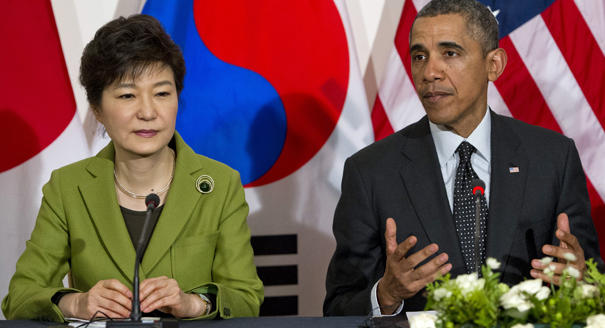
The new civil nuclear cooperation agreement between the United States and South Korea will provide a legal basis to allow the interdependent nuclear industry partnership between the two countries to continue and expand.
The United States and South Korea have nearly finished writing a successor agreement to their 1974 civil nuclear cooperation accord. During the negotiation, debate in South Korea has been centered on whether U.S. policymakers are too focused on preventing the spread of sensitive nuclear technologies to the detriment of South Korea’s energy security and the interests of its growing nuclear industry.
In this Q&A, Duyeon Kim and Mark Hibbs walk through the fundamentals of the revamped agreement and assess some of its expected features. Kim and Hibbs say the new text will be a reciprocal agreement that better reflects the interdependence of the South Korean and U.S. nuclear industries, while providing the legal basis to address specific goals set out by South Korean President Park Geun-hye. However, the agreement will not specifically permit South Korea to conduct advanced nuclear processing, a point that continues to be central to the debate about the negotiations in Seoul.The current U.S.–South Korea agreement, which entered into force in 1974, expires in March 2016, having been extended for two years beyond its initial expiration date. U.S. law requires it to be updated to meet the provisions of the 1978 Nuclear Non-Proliferation Act, which added specific nonproliferation elements to terms for foreign nuclear cooperation. All such bilateral nuclear cooperation agreements concluded before 1978 require renegotiation. A few post-1978 accords—for example, that between the United States and Japan—roll over automatically and do not need to be renegotiated unless this is desired by one or both parties.
During the 1970s, the United States led the world in the field of nuclear energy, and South Korea had little infrastructure and expertise. The original agreement was therefore a one-way street paved with only South Korean obligations in exchange for assistance from the United States.
The current negotiations aim to update the agreement to reflect present-day realities and make the new agreement reciprocal in terms of the obligations placed on the two parties. South Korea generates about one-quarter of its electricity with reactors. It also exports nuclear power plant equipment that the United States can no longer make and provides critical parts used in some reactors in the United States, including those under construction. As such, the South Korean and U.S. nuclear industries have become deeply interdependent.
The main sticking point in the drawn-out negotiations has been how to reach an understanding on South Korea’s desire to develop uranium enrichment and reprocessing (or pyroprocessing) capabilities. Seoul seeks these capabilities to address concerns about energy security and the management of spent nuclear reactor fuel.
For the United States, however, the main focus of nuclear cooperation agreements is not the fuel cycle. South Korea’s aspirations also conflict with long-standing U.S. policy to discourage the spread of enrichment and reprocessing activities and technology to countries where they have not yet been deployed because these techniques can be used to produce weapons-usable nuclear materials.
No. Since the Gerald Ford administration in the 1970s, nonproliferation has consistently been a key objective of U.S. nuclear policy, regardless of who has been in the White House. The current policy and legal provisions that limit the spread of enrichment and reprocessing, for instance, were established during the administration of Ford’s successor, Jimmy Carter.
In the 2000s, the George W. Bush administration determined that pyroprocessing was a form of reprocessing and a proliferation risk because technological modifications could readily yield weapons-grade plutonium. U.S. policy under current President Barack Obama has been consistent on this issue and is not specifically targeted at South Korea.
U.S. policy allows only a few states to engage in enrichment and reprocessing under the terms of the bilateral nuclear cooperation agreements—in particular, nuclear weapons states and countries that previously established these capabilities and maintain good nonproliferation track records.
Because the United States is committed to South Korea’s national security, Washington is not worried that Seoul would manufacture nuclear weapons if it were to enrich uranium or reprocess its spent nuclear fuel. The United States is concerned that allowing South Korea to enrich or reprocess would make it more difficult to deter other countries—including Washington’s future partners or those whose agreements are also up for renewal—from seeking such technologies.
No. The United States does not want South Korea to enrich and reprocess. But it is not asking Seoul to adopt the so-called gold standard, which would require South Korea to legally renounce these techniques in the agreement text, as was the case with the United Arab Emirates and Taiwan.
The new agreement is expected to make no provision for South Korea to enrich or reprocess, but it will not foreclose this possibility for the future.
U.S. government officials point out that Japan had been reprocessing since 1977 using a plant based on French technology, has always been in good nonproliferation standing, and does not have North Korea on its border. However, Washington agreed to grant Tokyo advance reprocessing and enrichment consent only after years of negotiations that led to a compromise in which Japan accepted expanded nonproliferation controls and onerous transparency conditions, which were reflected in their 1987 nuclear cooperation agreement.
The deal currently in the making on Iran’s nuclear program is not a bilateral nuclear cooperation agreement. Instead, the United States is one of six parties negotiating with Iran. All six countries believe that no deal with Iran will be possible without allowing Tehran to maintain a limited enrichment capacity, which it has developed since the 1990s and deployed since 2003.
No. The United States and South Korea will continue to review pyroprocessing in an ongoing ten-year fuel-cycle study. The two sides will make a decision about the future use of this technique after reaching a better understanding of its technical feasibility, its prospects for industrial-scale deployment, and its proliferation implications. The new agreement will establish a senior-level consultative body or commission to deal with this issue and President Park Geun-hye’s three goals: alleviate South Korea’s spent-fuel storage problem; ensure reliable access to enriched uranium; and facilitate the competitiveness of South Korea’s nuclear power plant exports.
At any time after the new agreement enters into force, Washington can decide whether to allow South Korea to enrich and pyroprocess if economic, technical, security, and nonproliferation criteria are met in the future.
In the United States, once both sides agree to all terms and initial the text, the agreement will then be subjected to an interagency review, including a nonproliferation assessment, and delivered to the president for approval. Then, after the two governments sign the agreement, it will be submitted to the U.S. Congress for a continuous ninety-day review. If Congress does not disapprove, the new agreement will enter into force. This process is the same for all such civil nuclear cooperation agreements.
In Seoul, the text will be reviewed by the Ministry of Government Legislation, which will ensure that it is legally sound and determine whether it should go through a formal approval process in the National Assembly. The text will also be reviewed during a cabinet meeting before going to the president for approval.
Most bilateral nuclear cooperation agreements have an approximate thirty-year term. The new U.S.–South Korea agreement is expected to have a term of roughly twenty years and may be subject to automatic five-year renewals, during which time one or both parties can decide to renegotiate or terminate the agreement.
Yes. The successor agreement will be a more balanced text that includes new U.S. nonproliferation obligations to South Korea and South Korean consent rights over U.S. activities. These provisions will reflect South Korea’s nuclear energy maturity and its future role as a supplier of commodities to the U.S. and global nuclear industries. It will also provide the foundation to address President Park’s three goals.
South Korea will be allowed to carry out the first pyroprocessing stage, called electroreduction, as research and development. The agreement will make it possible to send South Korea’s spent fuel to a third country in Europe for reprocessing, but the return of the plutonium to South Korea in the form of mixed-oxide fuel would be subject to U.S. consent. The United States may facilitate possible South Korean direct investment in an overseas uranium enrichment plant.
The new agreement will provide a legal basis to allow the interdependent nuclear industry partnership between the United States and South Korea to continue and expand. That partnership is critical to Seoul’s nuclear energy security and to the development of global nuclear equipment markets for firms in both South Korea and the United States.

Former Associate, Nuclear Policy Program, Asia Program
Kim is an expert on nuclear nonproliferation, diplomacy, and Northeast Asia.

Nonresident Senior Fellow, Nuclear Policy Program
Hibbs is a Germany-based nonresident senior fellow in Carnegie’s Nuclear Policy Program. His areas of expertise are nuclear verification and safeguards, multilateral nuclear trade policy, international nuclear cooperation, and nonproliferation arrangements.
Carnegie does not take institutional positions on public policy issues; the views represented herein are those of the author(s) and do not necessarily reflect the views of Carnegie, its staff, or its trustees.
It should address the shortcomings of previous crisis communication efforts and adapt to the demands of frontier AI.

Lucy Luo
Washington’s decision to support some UN functions while letting others wither is pulling the organization apart at the seams.

Stewart Patrick, Theodore Zaritsky

While there are notable demographic, economic, and geographic divides over AI, there is also substantial alignment between Republicans and Democrats.



Ian Klaus, Mark Baldassare, Rachel George, …

AI capabilities are moving fast. Most institutions—including governments—can’t keep up.


Anton Leicht, Scott Singer

The Bureau of Industry and Security needs to adjust its focus and practices to maintain its position as the U.S. government’s primary champion of international technological competition.

Geoffrey Irving