

Q&A
- +1
Sheena Chestnut Greitens, Oriana Skylar Mastro, Yukon Huang, …
{
  "authors": [
    "Yukon Huang"
  ],
  "type": "legacyinthemedia",
  "centerAffiliationAll": "dc",
  "centers": [
    "Carnegie Endowment for International Peace"
  ],
  "collections": [],
  "englishNewsletterAll": "asia",
  "nonEnglishNewsletterAll": "",
  "primaryCenter": "Carnegie Endowment for International Peace",
  "programAffiliation": "AP",
  "programs": [
    "Asia"
  ],
  "projects": [],
  "regions": [
    "East Asia",
    "China"
  ],
  "topics": [
    "Economy"
  ]
}
Source: Getty
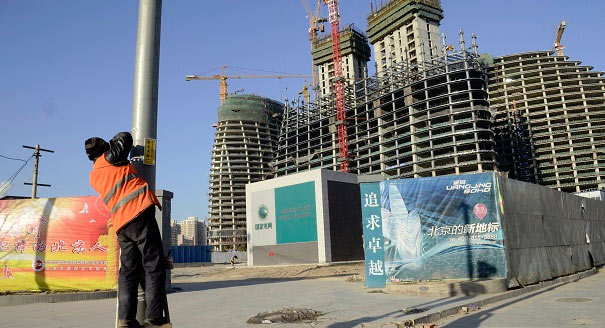
In the past three decades, China has changed from what would be described as a centrally-planned economy to what could be called a state-led capitalist system that is more private-oriented and subject to market forces.
Source: U.S.-China Policy Foundation
In an interview with China Forum, Carnegie’s Yukon Huang discussed how China’s economy has shifted in the past decades. He described how China has changed from what would be described as a centrally-planned economy to what could be called a state-led capitalist system that is more private-oriented and subject to market forces. This was not an easy process; China’s changing economy means lowering economic growth rates and property adjustment. Huang said that going forward, it remained to be seen whether the expected 5-6 percent growth in the next 5-10 years is sustainable and what is the quality of that growth.
Huang also discussed anticorruption efforts in China and their potential impact on China’s economic growth. He said that in the short-term, these efforts will likely hinder growth. Corruption in China has actually been a positive for economic growth in the past, Huang explained, but it has other negative consequences. In the long-term, if China continues to become more market-oriented, corruption becomes less necessary. Therefore, Xi’s campaign against corruption could potentially be good for long-term growth.
This interview was originally broadcast by the U.S.-China Policy Foundation.

Senior Fellow, Asia Program
Huang is a senior fellow in the Carnegie Asia Program where his research focuses on China’s economy and its regional and global impact.
Recent Work


Sheena Chestnut Greitens, Oriana Skylar Mastro, Yukon Huang, …

Yukon Huang, Isaac B. Kardon, Matt Sheehan

The real test may come after the leaders leave the room.
Sheena Chestnut Greitens, Oriana Skylar Mastro, Yukon Huang, …

The nuclear relationship between China and the United States is increasingly shaped by widening perception gaps rather than deliberate strategic design.

Tong Zhao

A summer of escalation in the Black Sea has hurt Ukraine economically and is exacerbating world food security. A truce is needed—as is a broader reframing of Europe’s Ukraine strategy.

Thomas de Waal
Why governance of rapidly evolving technology will be distributed and complex.


Stewart Patrick, Scott Singer
It should address the shortcomings of previous crisis communication efforts and adapt to the demands of frontier AI.
Lucy Luo