

Paper
Christopher S. Chivvis, Rohan Mukherjee, Milan Vaishnav
{
  "authors": [
    "Milan Vaishnav"
  ],
  "type": "legacyinthemedia",
  "centerAffiliationAll": "dc",
  "centers": [
    "Carnegie Endowment for International Peace"
  ],
  "collections": [],
  "englishNewsletterAll": "ctw",
  "nonEnglishNewsletterAll": "",
  "primaryCenter": "Carnegie Endowment for International Peace",
  "programAffiliation": "SAP",
  "programs": [
    "South Asia"
  ],
  "projects": [],
  "regions": [
    "South Asia",
    "India"
  ],
  "topics": [
    "Political Reform",
    "Economy"
  ]
}
Source: Getty
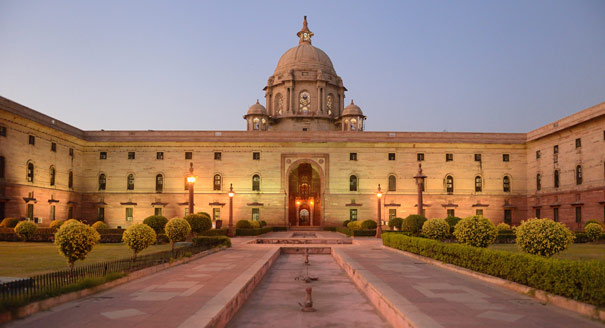
A year after the momentous general election of 2014, some significant changes in Indian political landscape can be seen emerging.
Source: Policy Wonks
One year after the momentous general election of 2014, it seems appropriate to take stock of where Indian politics is going and how, if at all, its trajectory has changed. While there are arguably numerous ways in which the verdict has shaped—and continues to shape—our understanding of India’s political scene, there are five “rules” that emerged from the 2014 election and its aftermath that seem particularly interesting and worthy of further study. I review each in turn.
The 2014 general election—coupled with the state elections held just before and immediately after—has arguably granted the Bharatiya Janata Party (BJP) the prized status of acting as the new central “pole” in Indian politics. The BJP national vote share in 2014 hit an all-time high of 31.3 percent, 5.7 percentage points greater than its previous best performance of 25.6 percent in 1998. In terms of seats, its tally of 282 was 100 better than its peak cache of 182 in 1998-1999. At present, BJP chief ministers rule eight states (Chhattisgarh, Goa, Gujarat, Haryana, Jharkhand, Madhya Pradesh, Maharashtra, and Rajasthan) while the party sits in the government in four more (Andhra Pradesh, Jammu and Kashmir, Nagaland, and Punjab). This is the most expansive political footprint the BJP has boasted since its founding.
The upswing in the BJP’s fortunes comes at a time when the Congress’ footprint is quickly shrinking. In 2014, the Congress’ all-India vote share plunged to 19.5 percent, a nine-percentage point drop from 2009, which translated into a measly 44 seats. Congress chief ministers are in place in just nine states, the lowest figure since 2000. In terms of Members of the Legislative Assemblies (MLAs), the BJP finally overtook the Congress in 2014. Whereas 30 percent of India’s MLAs hailed from the Congress as recently as 2012, that number has fallen to just 22 percent today. In contrast, the BJP’s share has risen to 25 percent in 2015.
Clearly, in India’s federal set-up, the BJP is still far from dominant. Fourteen states are run by parties other than the Congress or BJP, including many of India’s most populous states (Uttar Pradesh, Bihar, and West Bengal, for instance). Half of the all-India vote goes to regional parties, and just more than half (53 percent) of India’s MLAs come from parties other than the Congress and the BJP.
However, politics is increasingly being defined, even within most states, around one’s support for — or opposition to — the BJP. The ability of the opposition to present a united front is being tested at the moment, and much will depend on how the Congress chooses to play its dwindling cards. If it can effectively patch frayed ties with powerful regional parties in states where the latter are dominant, it could help create a formidable anti-BJP coalition.
Despite talk of fragmentation and the creation of new regional political outfits, most states have witnessed a growing convergence around two opposing parties or alliances. These alliances are often fluid but their anchors remain fairly constant. After a period of considerable political tumult, India’s politics has been reverting to a more stable equilibrium of late. These regional “party systems” come in several distinct varieties: 1) Congress versus the BJP (in states such as Gujarat, Rajasthan, and Madhya Pradesh); 2) Congress versus the dominant regional party (in many states in the northeast); and 3) competing coalitions (for instance, in Kerala and Tamil Nadu). There are also some states that feature the Congress, the BJP, and a key regional player (such as Karnataka and Odisha). And, finally, there are some states—Uttar Pradesh comes to mind—that remain quite fragmented.
It is an open question whether the BJP’s recent gains will fundamentally challenge this trend toward convergence. In states with bipolar Congress-BJP competition, the Congress’ decline is the BJP’s gain, as there are few alternatives lurking to fill in the void created by Congress. In states of the northeast where the Congress has primarily battled with assorted regional parties, the BJP is looking to make inroads. For instance, Assam is a state where the BJP is quite optimistic about its fortunes, given that it won half of the state’s parliamentary seats and nearly 37 percent of the vote in May 2014. In states with two competing coalitions, the BJP remains a small player in states like Kerala and Tamil Nadu, although it cleaned up in Maharashtra. Bihar is one state quickly moving towards two-front competition defined in relation to the BJP, a pattern which will likely be further reinforced in the run-up to state elections of September-October. Finally, in states where both national parties compete with a regional party, regional party systems seem to be in a state of flux. In Karnataka, the Janata Dal (Secular) is on the decline; in Punjab, the Aam Aadmi Party (AAP) has gained a foothold while cracks have emerged in the BJP-Akali Dal ruling alliance; and in Odisha, the BJP has emerged as a significant player.
One of the encouraging trends from the 2014 general election, and amplified by recent state elections, is increasing voter participation. In the euphoria over the general election verdict and the fact that a greater share of Indians (66.4 percent) voted than ever before, one fact lost in the din was that the 16th general election also saw the male-female voter turnout gap shrink to its smallest margin in history. In 2014, male voter turnout was just 1.8 percentage points higher than female turnout. The relatively small size of the gap is even starker when one considers than the same margin stood at almost 8.5 percentage points just a decade ago. In sixteen states, female turnout outpaced that of males, including in some unexpected states such as Bihar, Odisha, and Punjab.
This is more than just a one-off event, to be sure. In the sixteen state elections held between 2013 and the present (not counting Jammu and Kashmir, where data was unavailable), women came out to the polls at a higher rate than their male counterparts. In three others, the male-female gap was 1.1 percentage points or less.
We still know far too little on how the changing composition of voters is impacting electoral outcomes, but recent research by economists Mudit Kapoor and Shamika Ravi suggests the impacts could be significant. The researchers use the unusual case of back-to-back elections in Bihar in 2005 to calculate the pivotal impact of female turnout. The state’s February 2005 elections produced a hung assembly in which no party or parties were able to form a governing majority. Elections were held again in October, and this time, the JD(U)-BJP alliance won a clear mandate. What made the difference, according to the researchers? A surge in female turnout in the October election, which tipped the balance in the opposition’s favor.
The empirical evidence suggests that economic voting, whereby voters hold incumbents accountable for the overall health of the economy, is becoming more prevalent in India. Research by Poonam Gupta and Arvind Panagariya from the 2009 general election, for instance, found that incumbents from fast-growing states did much better in the election than those hailing from moderate or low-growth states. A forthcoming study that I co-authored with Reedy Swanson finds a similar pattern from state election results. Based on data from more than 120 state elections between 1980 and 2012, there appears to be no association at first glance between a government’s economic performance and its electoral outcomes.
When one disaggregates this data, however, a positive and significant relationship is discernible for the post-2000 period. In this most recent period, a one percentage point increase in a state’s growth rate—holding everything else constant—is associated with a 7.6 percent increase in the likelihood of an incumbent government being voted back in. While we await detailed analyses of the 2014 verdict, it is clear from the available survey evidence that voters were highly motivated by economic considerations in giving the BJP its formidable mandate. When asked which issues most shaped how they voted in the election, price rise, corruption, and lack of economic opportunity dominated responses.
From the standpoint of democratic accountability, these results have natural appeal. But one cannot simply infer from this trend that economics has completely replaced identity-based politics. Related survey evidence, including responses from a survey carried out before the Lok Sabha election by the Lok Foundation, found that social biases are still very much entrenched. Indian politics is in a stage where both identity politics and the politics of performance are important electorally. While it is difficult to conclude that one has clearly overtaken the other, the least we can say is that those seeking to manipulate identity politics for their own benefit have been forced to tie these traditional appeals to an aspirational agenda.
Bihar chief minister Nitish Kumar’s experience is perhaps a good example of this. In many respects, Kumar has skillfully manipulated social divisions as deftly as his predecessor, Lalu Prasad Yadav, had for fifteen years prior to Kumar coming to power in 2005. For instance, Kumar’s Janata Dal (United) relied on local caste calculations, just as its predecessors did, in selecting its slate of candidates. Kumar’s government instituted reservations for backward Muslims and created a new category of “Mahadalits” to channel benefits to Dalit castes other than the Paswan community, the traditional votary of rival Ram Vilas Paswan’s Lok Jan Shakti Party (LJP).
But what made Kumar particularly successful was grafting this caste logic onto a developmental one. As two veteran observers noted in the wake of Kumar’s resounding reelection in 2010, “Kumar's campaign speeches rode on the theme of development with the subtext of caste and religious identities. For his rival, Lalu Prasad, caste was the only text and the subtext as well.” Kumar’s success was not necessarily a victory of development concerns over caste considerations, but a unique welding of the two.
Perhaps this explains why Kumar’s fortunes have suffered in recent months as he has reverted back to the old school logic of identity-based politics. Prior to the 2014 general election, Kumar broke ranks with his coalition ally, the BJP, over its decision to project Narendra Modi as its prime ministerial candidate. The decision placed Kumar on the defensive as many communities, especially among the upper castes, defected from JD(U) and backed the BJP in the general election. Kumar was forced to join forces with his old rival, Lalu Prasad Yadav, and double-down on caste politics to ensure his new coalition had the numbers to fend off the BJP. The ploy failed in the general election, and all eyes are on the upcoming state election to see whether he can rebound. But the drift away from a developmental vision arguably hurt Kumar electorally and could prove to be a continued liability unless he can recapture that ground.
Finally, Indian voters have more choices than ever before when deciding whom to vote for. The 2014 election broke all records in terms of number of parties in the fray (464) and saw continued growth in the number of candidates (8,251) compared to recent elections (although down from a peak of almost 14,000 in 1996, before the increase in candidate deposits was instituted to stem the rise of “frivolous” candidates). But as some observers have previously noted, the increasing number of choices has not necessarily translated into a qualitative expansion of the types of choices. Take three examples.
Data collected by Kanchan Chandra shows that, despite the rhetoric of 2014 signifying a verdict against “political dynasties,” politicians hailing from political families remain deeply entrenched. Whereas 20 and 29 percent of MPs elected in 2004 and 2009, respectively, were hereditary politicians, their share stood at 21 percent in 2014—a modest decline. Furthermore, there is evidence of clustering of dynastic MPs among the lower age cohorts, suggesting that this trend in Indian politics may not be going away any time soon.
When it comes to candidates facing criminal cases before the courts, a record number won election in 2014; over the past decade, their share has grown from 24 to 34 percent. When one restricts the sample to MPs facing cases of a serious nature (i.e. cases that could merit actual jail time), this share has jumped from 12 percent to 21 percent. While cases cannot be equated with convictions, neither can they be dismissed as mere First Information Reports (FIRs). These cases are instances in which charges have been framed and/or where judges have taken cognizance of the criminal case(s) in question.
Finally, politics remains largely a male-dominated enterprise. Of the candidates contesting elections in 2014, just eight percent were women (a marginal increase over 2009). As a share of eventual winners, women comprised eleven percent, again a tiny increase from the previous general election. From a historical perspective, these numbers represent a slow but steady increase in female representation. In 1957, just 3 percent of candidates and 4.5 percent of winners were women. While this is progress, it is completely out of whack with the female share of the electorate and the population more generally.
All three examples suggest a common culprit: the utter lack of intra-party democracy plaguing India’s political parties.
The five “rules” enumerated above (there are undoubtedly many more) represent important attributes characterizing the current state of Indian politics in the aftermath of the most recent general election. Policy Wonks is the perfect venture to explore fresh perspectives on these and other developments related to public policy and political economy. I, for one, look forward to the conversation.

Director and Senior Fellow, South Asia Program
Milan Vaishnav is a senior fellow and director of the South Asia Program and the host of the Grand Tamasha podcast at the Carnegie Endowment for International Peace. His primary research focus is the political economy of India, and he examines issues such as corruption and governance, state capacity, federalism, and electoral behavior. He also conducts research on the Indian diaspora.
Recent Work

Christopher S. Chivvis, Rohan Mukherjee, Milan Vaishnav



Sophia Besch, Eric Ciaramella, Steve Feldstein, …
Carnegie does not take institutional positions on public policy issues; the views represented herein are those of the author(s) and do not necessarily reflect the views of Carnegie, its staff, or its trustees.

Russian strikes are weakening the economy sustaining Ukraine’s war effort. Closing the growing funding gap will require more European support and politically contentious reforms in Kyiv.

Balázs Jarábik

Ex-president Gurbanguly Berdimuhamedov remains interested in politics, but his son Serdar, Turkmenistan’s current president, is becoming increasingly independent and willing to break with his father’s legacy. If their covert rivalry goes too far, both risk losing power.

Galiya Ibragimova

A notable degree of participative democracy has firmly arrived in Europe. But to have more far-reaching impact, democratic deliberation needs to move into a radically new phase.

Richard Youngs
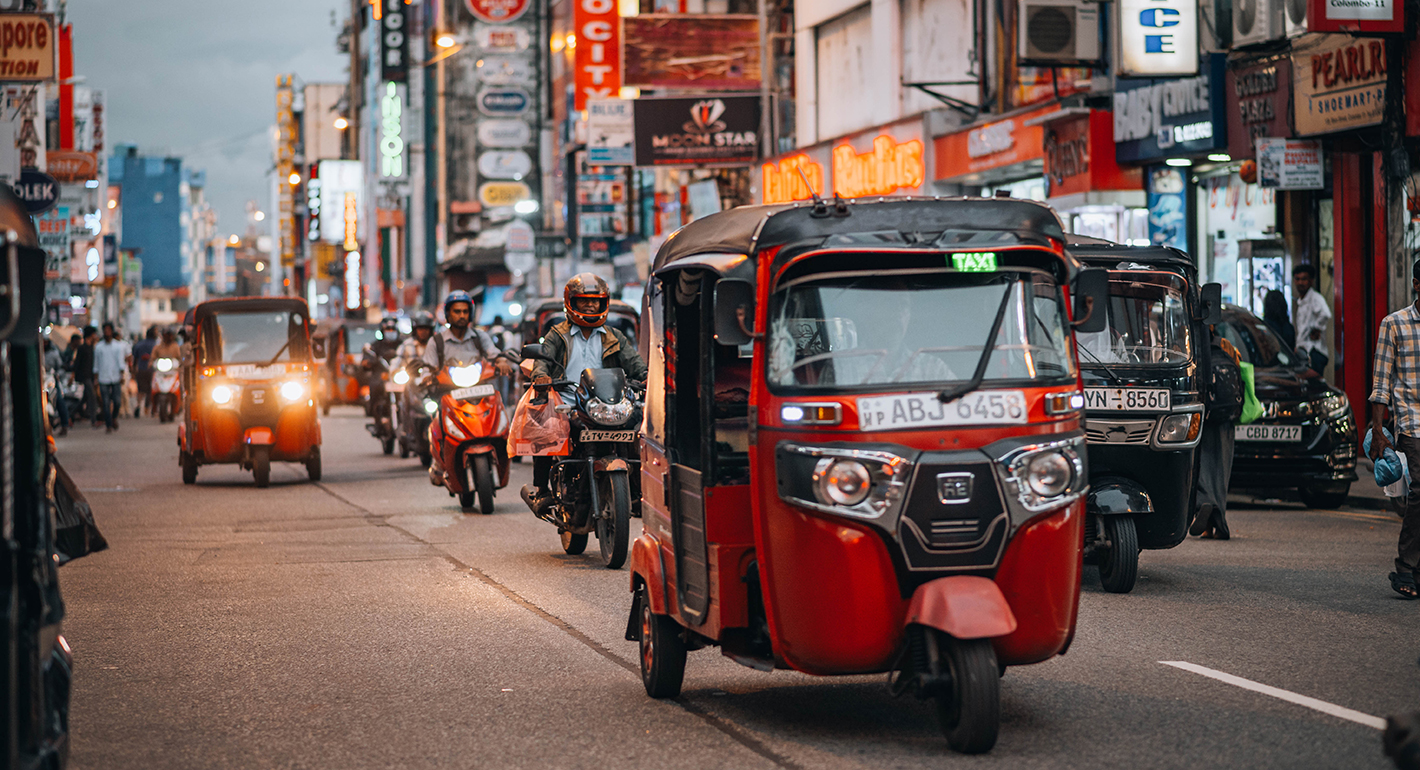
Economic recovery has brought Sri Lanka a modicum of stability, but domestic strains and great-power rivalry could test how long it lasts.
Avinash Paliwal

Policy proposals on sovereign debt must both match the scale of the challenge and be implementable within existing political constraints.

David McNair