

Paper
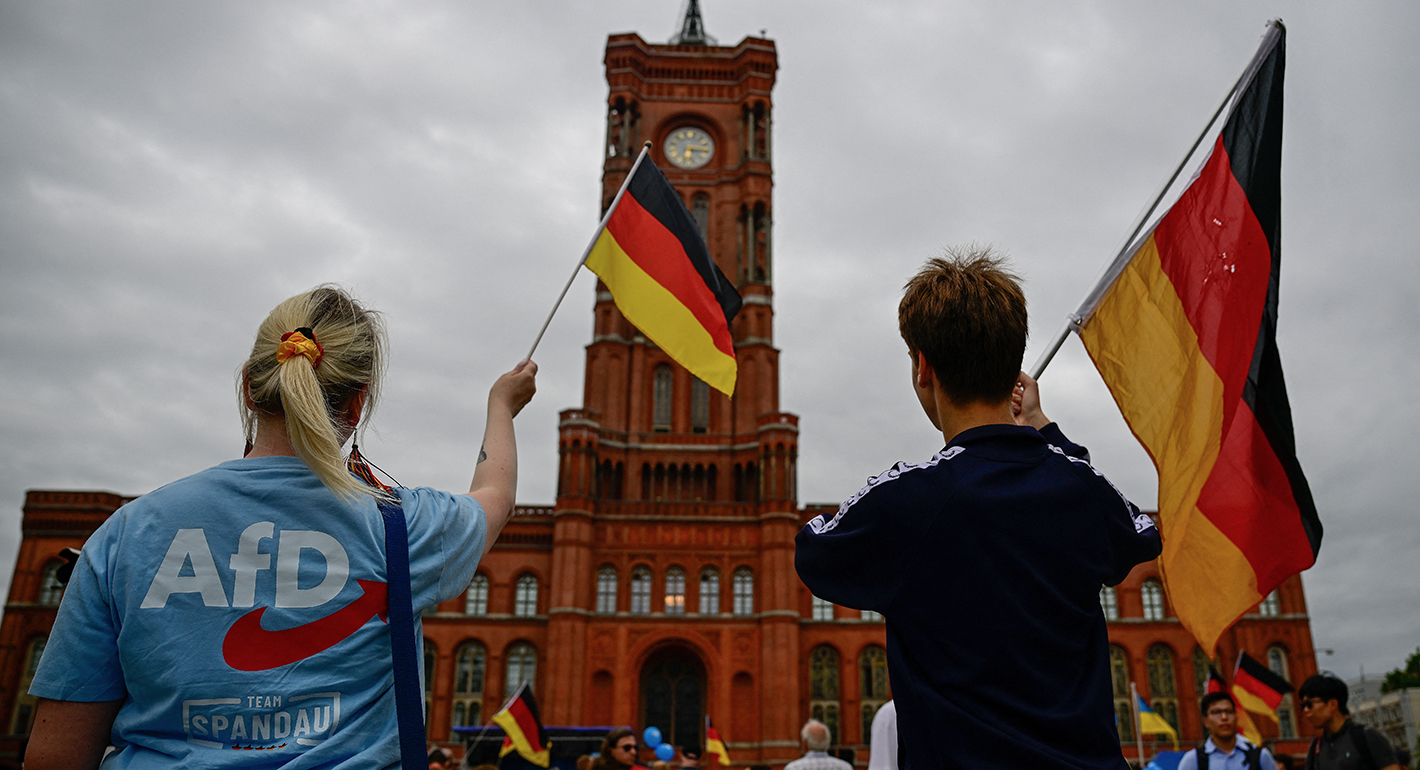
Unresolved tensions within the AfD may ultimately constrain the its potential as a leader among European and global populist forces.
Jeremy Cliffe
Source: Getty
There is a transnational far-right populist movement that links middle powers in a global movement that extends well beyond Trump.
This paper is part of “The Populist Turn in Middle Power Diplomacy,” a Carnegie Endowment series on the international impacts of right-wing populism. Focusing on middle powers, the series explores how populist leaders reshape foreign policy, build transnational networks, and advance shared agendas across borders.
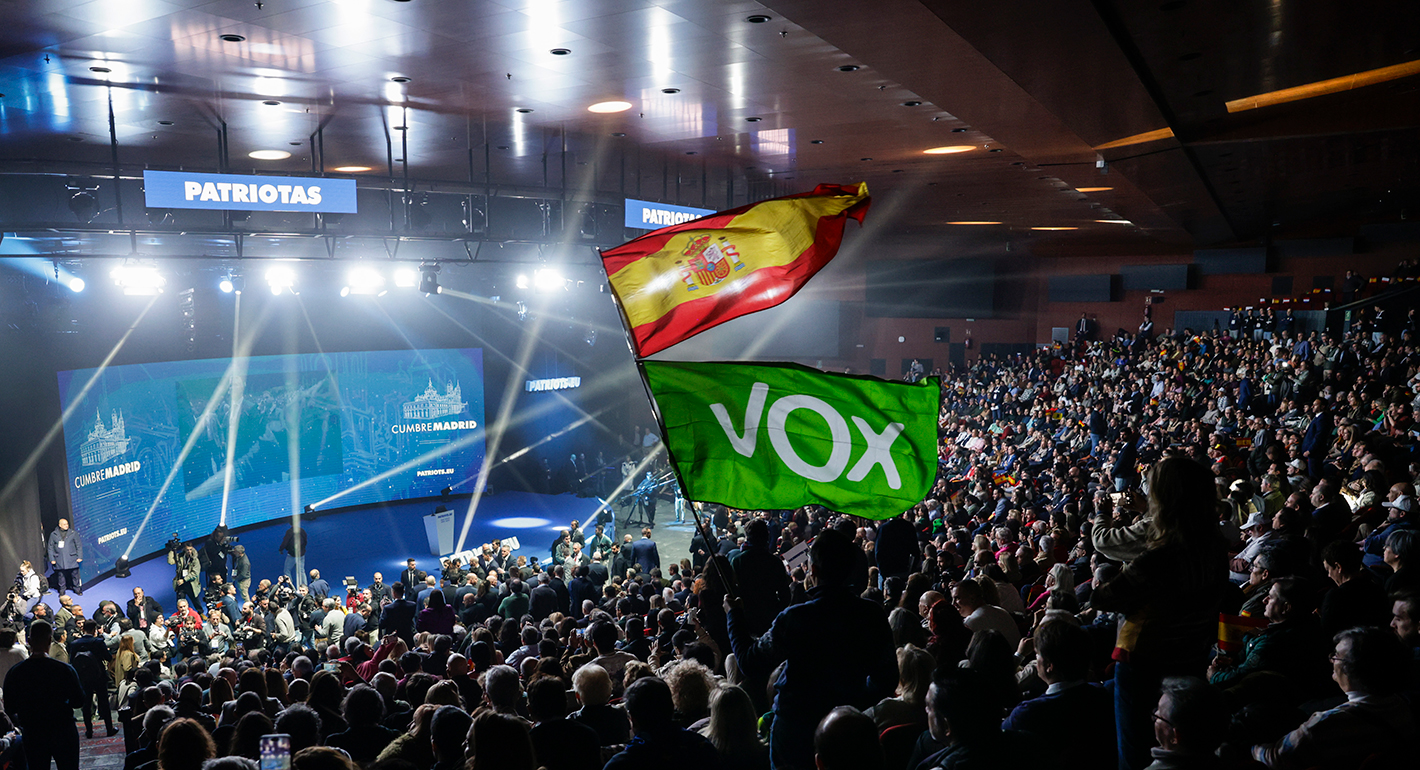
When leaders of European far-right parties gathered in Madrid in February 2025 beneath the Trumpian banner “Make Europe Great Again,”1 they included an unlikely ally given their antisemitic histories: the Likud party of Israel’s Prime Minister Benjamin Netanyahu.2 At the National Conservatism Conference in Washington, DC, a year earlier, a senior politician from India’s ruling party decried global “left-liberals” for promoting “unbridled illegal immigration in the name of ‘multiculturalism.’”3 This was a striking charge from a representative of a country that sends more migrants to Organisation for Economic Co-operation and Development nations than any other and whose nationals constitute the largest unauthorized immigrant population in the United States from outside the Western Hemisphere.4 Events like these reveal a transnational far-right populist movement that links middle powers in a global movement that extends well beyond Trump. Yet this movement remains poorly understood, despite its significant implications for efforts to construct a workable mid-twenty-first-century world order.
Liberalism has been the dominant ordering ideology of world politics since the demise of the Soviet Union’s Marxist-Leninist alternative in 1991. In the past decade, however, liberal internationalism has faced global competition from a right-wing populist alternative. Right-wing populists advance a vision of international order that contrasts directly with liberal internationalism, emphasizing the sanctity of national sovereignty, the enduring differences between nations and civilizations, and the right of states to act on their own terms rather than defer to international institutions.
U.S. President Donald Trump has been the standard-bearer of this populist vision. Some observers have noted the affinities between Trump’s populism and the views of autocrats such as Russian President Vladimir Putin and Chinese President Xi Jinping, but these analogies only go so far. In practice, the world’s populist middle powers—countries that wield substantial regional power and can influence the policies of the more consequential great powers—constitute the mainstay of the new populist international movement that has coalesced around Trump’s vision.5
From Argentina to France, and from Türkiye to the Philippines, right-wing populists have reshaped their countries’ foreign policies in ways that echo and reinforce Trump’s narrower vision of global order. In the process, they are also cultivating closer relationships with populists abroad, building epistemic networks and sometimes seeking to tip the political scales in favor of their ideological allies.
The role and character of populist foreign policy among middle powers are understudied. Over the past year, we have curated a Carnegie series on “The Populist Turn in Middle Power Diplomacy,”6 which has produced seven case studies that span the globe. Our series has brought together international scholars of populism to examine how right-wing populist movements and governments are reshaping foreign policy decisionmaking, cross-border political networks, and global bilateral and multilateral dynamics. Our collection reveals how these sometimes strange political bedfellows mimic one another’s language, borrow each other’s symbols, and cooperate transnationally.
These populists’ impact on world order is growing. Our case studies make clear, however, the limits to what they can accomplish together. The very ingredients that fuel populists’ success—nativism and personalism—also create obstacles to their transnational cooperation. Because their appeal is based on the prioritization of the in-group—“America First,” for example—it will be difficult for these leaders to build a deep and lasting right-wing populist international movement.
Understand the world with the latest from our scholars around the world.
The foreign policies of populist middle powers share several characteristics that transcend differences in region, ideology, and cultural context. Nearly all are personalistic, in keeping with the nature of populism itself: Because populism rests on the claim that the leader uniquely embodies the will of the people, the personality of the populist leader leaves—almost by definition—a distinctive mark on the nation’s foreign policy.
Because populists draw their power from their claim to speak for the “true will” of the people, their foreign policies tend to marginalize traditional elites. In foreign policy, this can have a marked impact when those elites include members of the professional diplomatic corps. In many countries, the diplomatic corps is not exclusively drawn from society’s elites, but the requirements of diplomatic practice—such as extensive stays overseas and the special technical expertise required—tend to reinforce its elite character. Diplomats are thus easy targets for populist anti-elitism, and the effect is only intensified when populists inveigh against bureaucrats in general. This marginalization of existing elites has a dual impact on foreign policy. While it can open the door to new directions in foreign policy, it can come at the cost of competence and create a more politicized and personalized foreign policy. The latter, in turn, can encourage nepotism and corruption.
Consider the case of Argentina, taken up by Federico Merke in his paper on President Javier Milei, who suspended the entry examinations for Argentina’s Foreign Service Institute—the first suspension since the country’s return to democracy in 1983.7 Milei also clashed with his foreign minister, launched an “ideological screening” of the diplomatic corps, and tasked his appointees with policing the language of official documents and steering Argentina’s votes at the United Nations. Similarly, in Hungary’s case, Zsuzsanna Végh shows how former prime minister Viktor Orbán and his foreign minister, Péter Szijjártó, replaced roughly 70 percent of the foreign ministry’s professional staff with loyalists, leaving career diplomats to implement decisions whose origins were obscured.8
But not all populists can disrupt their countries’ foreign policies with equal ease. When the populist movement depends primarily on the personality of the leader and lacks institutional and party-level roots, its foreign policy impacts can prove ephemeral. Aries A. Arugay, for instance, points out that former Philippine president Rodrigo Duterte ran Philippine foreign policy as an extension of his own personality—typified by megaphone diplomacy and off-the-cuff pronouncements that his cabinet then scrambled to reinterpret—rather than according to codified doctrine.9 Yet because his anti-Western turn was never embedded in party-based networks or the bureaucracy, it did not last: His successor, Ferdinand Marcos Jr., quickly reversed course, restoring a more conventional posture. In contrast, where the populist project has become embedded in party structures—as with Orbán’s Fidesz in Hungary or Indian Prime Minister Narendra Modi’s Bharatiya Janata Party (BJP)—changes in foreign policy can be harder to reverse.
Populist anti-elitism and revisionism tend to open the door to breaks with past practice in foreign policy. One of the most significant manifestations of this tendency is an openness to Russia, China, and other authoritarian or revisionist powers. Right-wing populist leaders, like many authoritarians, tend to be skeptical of multilateral institutions premised on interdependence and mutual compromise, which they view as undue constraints on national sovereignty and freedom of maneuver in foreign policy.
These populists also tend to approach political power through a lens of hard-edged realpolitik, unconstrained by constitutional norms or broader concerns about rule-breaking. This makes them more inclined to work with illiberal or authoritarian actors that traditional political leaders might eschew. Economic pressure to deliver on their promises to the people reinforces these tendencies. Most middle powers are dependent on energy imports, trade, and external financing, giving them incentives to maintain strong relationships with Moscow and Beijing.
When in power, Orbán openly disparaged “ideology-driven foreign policy,” reframing closer ties with authoritarian powers as a pragmatic pursuit of economic interest.10 He thus turned openness to China and Russia into foreign policy doctrine through his “Eastern Opening,” which was later recast as “connectivity” and “economic neutrality.” He argued that Hungary needed to break from the confines of the Euro-Atlantic bloc by doing business with any major power. During his lengthy tenure, Hungary deepened its dependence on Russian nuclear fuel and natural gas and made China the country’s largest source of foreign direct investment. The Budapest–Belgrade railway, part of China’s Belt and Road Initiative, was financed by a $917 million Chinese loan. Hungary also received an additional €1 billion ($1.16 billion) Chinese loan for infrastructure and energy projects.
Half a world away, a similar logic played out in the Philippines.11 As an outsider with no prior commitments to the country’s long-standing alliance relationships, Duterte shelved the 2016 arbitration ruling that Manila had won against Beijing in the South China Sea, instead choosing to court China directly. The former president hailed his 2016 meeting with Xi as “springtime,” securing roughly $24 billion in pledged deals, loans, and aid while announcing an economic and military “separation” from the United States. Duterte paired this pivot with an embrace of Russia, calling Putin his “hero” and declaring that China, the Philippines, and Russia were “three of us against the world.”
Germany’s Alternative für Deutschland (AfD) takes a similar line on foreign policy, as Jeremy Cliffe recounts.12 Its preferred foreign policy is explicitly rooted in a multipolar worldview that would amount to a substantial increase in Germany’s ties to Russia, China, and the United States under Trump alike. An AfD spokesperson once colorfully captured this vision by proposing to replace the EU's “smoothie”—in which member states’ national identities are dissolved—with a “fruit salad” of distinct, sovereign nation-states.
Because the populist style of domestic politics is often confrontational and combative—not to mention performative—the populist turn in middle power diplomacy has also heightened volatility in foreign policy. Liberated from many of the traditional pressures that constrain leaders who are otherwise beholden to their foreign policy mandarins, populist leaders are free to innovate—and to err. The result is often a combination of bombast and combativeness that increases foreign policy risk.
Modi’s policy toward India’s archrival Pakistan illustrates this pattern, as documented in the essay by Sandra Destradi.13 When the Pakistan-based terrorist group Lashkar-e-Taiba carried out attacks in Mumbai in 2008, Modi’s predecessor Manmohan Singh responded with notable moderation. Modi, in contrast, has been far more willing to escalate by publicizing cross-border special forces raids in 2016, launching airstrikes inside Pakistan proper in 2019—thus breaking a long-standing precedent—and, in May 2025, launching Operation Sindoor, which triggered the most dangerous military conflict between the two nuclear-armed rivals in nearly three decades. Two factors made such escalation possible: the concentration of foreign policy decisionmaking among a small circle of trusted advisers, and Modi’s efforts to mobilize domestic sentiment against Pakistan, which left little room for restraint.
The Philippines under Duterte displayed a similar, albeit more rhetorical, volatility.14 Similarly freed from the discipline of the traditional foreign policy bureaucracy and possessing a high tolerance for risk, Duterte used an early summit of the Association of Southeast Asian Nations to deliver an impromptu tirade against the United States and repeatedly threatened to abrogate long-standing defense cooperation agreements between Washington and Manila. His combative style made international headlines, but without institutional anchors, it produced only an abrupt swing rather than a lasting shift in Philippine foreign policy.
Yet right-wing populists are not always volatile and combative. Despite China’s repeated incursions along its disputed border with India, its provocations across South Asia, and the long-standing sense of geopolitical competition between these two Asian giants, Modi has exhibited a markedly restrained posture toward Beijing. The contrast with Pakistan is telling: War with either country would be disastrous, but Modi’s Hindu nationalism complicates relations with Pakistan in ways that it does not with China.15
Just as liberal democrats coordinated their foreign policies in the decades after the Cold War—and communist parties had done before them—populists have increasingly sought to do the same, drawing inspiration from Trump’s Make America Great Again (MAGA) movement and, at times, actively courting direct ties to it. Populist coordination among countries as diverse as India, Germany, and Argentina is changing the global political landscape, even if it falls short of a genuine international movement.
One of the most striking cases is coordination between Indian and German populists.16 In late 2019, less than three months after the Modi government stripped the former state of Jammu and Kashmir—parts of which are disputed with Pakistan—of autonomy and cut the region’s communication ties with the outside world, the government hosted a delegation of European Parliament members—many from the populist radical right, including Germany’s AfD—for a guided tour of the restive region. This visit was clearly intended to build support for Modi’s controversial approach to a region of great geopolitical significance in India’s relations with both Pakistan and China. Although billed as a private visit, the trip reportedly included an audience with Modi himself, illustrating the government’s willingness to showcase its authority before ideologically kindred outsiders.
Among middle power populists, transnational connections tend to operate in four ways: through leader-centric personal networks; party-to-party and parliamentary alliances; shared narratives and political messaging; and transnational movement infrastructure. Not all four channels are operative in every country, but virtually every populist regime has invested in at least some of them.
Arguably no actor has invested more deliberately than Orbán, who has gone well beyond seeking MAGA’s imprimatur.17 Fidesz turned Budapest into a hub for the international right on a scale unmatched in Europe—hosting the first European edition of the Conservative Political Action Conference (CPAC), forging ties between the right-wing Danube Institute and the Heritage Foundation, and endowing the Mathias Corvinus Collegium, whose head maintained a direct channel to U.S. Vice President JD Vance. Orbán parroted Trump directly, choosing “Make Europe Great Again” as the slogan of Hungary’s 2024 EU Council presidency. Hungarian banks also lent some €10.6 million ($12.33 million) to French presidential candidate Marine Le Pen’s 2022 campaign and €9.2 million ($10.7 million) to Spain’s far-right Vox party.
Whether this legacy will endure after Fidesz’s April 2026 electoral defeat is an open question. State support for these organizations is likely to diminish, but the ideological networks Fidesz nurtured will not immediately disappear with Orbán’s departure.
After Orbán, Milei has been among the most enthusiastic participants in this transnational right-wing universe. He has regularly appeared at CPAC events and at Mar-a-Lago, presided over a CPAC gathering in Buenos Aires, and referred to Trump in overwhelmingly laudatory terms—by one count, averaging more than one positive public reference per day on social media.18 For the broader global populist movement (if one can call it that), Argentina functions as a sort of Southern outpost—proof that right-wing populism and market radicalism can prevail in the Global South.
France’s National Rally, on the other hand, shows that identification with MAGA can become a liability rather than an asset. In her essay on France, Catherine Fieschi argues that the National Rally’s most important alliances operate within the European Parliament rather than through ties to Trump.19 In fact, both Jordan Bardella (the party’s current leader) and Marine Le Pen (the party’s traditional leader and presumptive presidential candidate) have kept the MAGA ecosystem at arm’s length to protect their domestic brands. In 2025, Bardella abandoned a CPAC speech and flew home after Steve Bannon’s apparent Nazi salute. Le Pen has also criticized Trump’s military actions in Iran and Venezuela. Whereas Argentina advertises its MAGA ties, the French far right treats such ties as something to manage and, often, to disavow.
In the German case, the AfD’s MAGA ties serve a different function, helping to compensate for unusually weak ties within Europe: Elon Musk addressed an AfD rally in January 2025, AfD co-chair Alice Weidel spoke at a CPAC gathering in Budapest, and AfD figures have been warmly received by Trump administration officials in Washington.20 Lacking the European alliances available to other far-right parties, the AfD leans on the MAGA connection both to associate with a transnational movement and to borrow a measure of legitimacy it cannot easily acquire closer to home. German nationalism, in other words, remains more problematic in European politics than its French counterpart.
Türkiye provides an alternative model of how populist foreign policy can draw on transnational infrastructure, as Murat Somer shows.21 Turkish President Recep Tayyip Erdoğan’s Justice and Development Party (AKP) has buttressed leader-to-leader ties and party contacts by cultivating religious, ideological, and quasi-public networks. For instance, the AKP’s relationship with the Muslim Brotherhood gave Ankara influence across the Middle East, and when the 2013 military coup in Egypt pushed the Brotherhood from power, Istanbul became a hub for its foundations, media outlets, and political activity.
Despite these growing connections across parties and leaders, there are inherent limits to cooperation, rooted above all in the nationalist and nativist character of right-wing populism. The liberal democratic wave that spread around the world after the fall of the Berlin Wall was driven by universalist ideas, such as democracy and open markets, that encouraged international interdependence to succeed. By contrast, the nativist character of contemporary right-wing populism limits the extent to which its practitioners can make mutual policy concessions to craft a new political order. Shared grievances can generate temporary friendships, but much of this cooperation remains defensive and lacks a substantive vision. France is a prominent example where ingrained distrust of institutions and skepticism toward foreign powers limit the National Rally’s ability to develop a coherent long-term foreign policy.
There are inherent limits to cooperation, rooted above all in the nationalist and nativist character of right-wing populism.
India offers an illustration of how the ethnonationalist core of right-wing populism constrains international cooperation. Modi has borrowed freely from the populist lexicon—using slogans like “Make India Great Again” and “India First” that echo Trump—yet the shared style has not produced shared substance. His relationship with Erdoğan shows how dueling nationalisms can hinder collective action. Despite their parallel leadership styles, Modi’s Hindu nationalism and Erdoğan’s Islamist nationalism are at odds: Erdoğan has frequently used international forums to frame Kashmir, the Muslim-majority territory disputed by India and Pakistan, as an issue of pan-Islamic solidarity and juxtaposed it with the case of Palestine.22
Even the apparent personal warmth between Modi and Trump proved fragile, unraveling at least in part when Trump publicly took credit for the May 2025 India-Pakistan ceasefire, piquing Modi’s ire.23 Both leaders subsequently dug in, with Trump repeating his claims to have negotiated the ceasefire, deepening ties with Pakistan, and later punishing India with high tariffs for buying Russian oil.24 India eventually relented and scaled back its Russian imports, but the episode and its aftermath showed how personalistic foreign policy can lead to egoistic spats with real costs for both Delhi and Washington in the longer term.
Germany’s AfD also illustrates how nationalism can place a ceiling on populist cooperation.25 In the European Parliament, the party has been expelled from the main far-right groupings and now belongs to a small, fringe camp of its own, despite its electoral support in Germany. The reason is not hard to discern: Other European populist parties remain acutely sensitive to the history of German power. Italy’s populist Lega casts itself as the heir to the northern Italian wartime resistance against German occupation; Poland’s Law and Justice party has run openly anti-German campaigns; and many southern European parties still resent Berlin’s role in the eurozone crisis. This greatly complicates efforts to construct a shared right-wing narrative in Europe. The AfD’s internal divisions—between an Atlanticist orientation led by Alice Weidel and a Eurasian one led by Tino Chrupalla—compound this isolation.
Another potential limit on the populist tendencies of middle powers arises from their inherent reliance on multilateralism. As Canadian Prime Minister Mark Carney argued in a widely noted declaration of middle power agency in January 2026, middle powers are too small to go it alone against the world’s superpowers, and they can still defend their interests through multilateral cooperation: “If you are not at the table, you are on the menu.”26 This dependence on cooperation limits the sovereigntist approach that middle power populists prefer.
India again is a case in point. Modi has selectively deepened India’s engagement with multilateral institutions—launching the International Solar Alliance, adopting a constructive stance at the 2015 Paris climate negotiations, and turning India’s G20 presidency into a centerpiece of national pride.27 India’s support for BRICS expansion can be seen as a way of holding the West’s feet to the fire. India recognizes the shortcomings of BRICS, but believes the grouping serves as a useful lever to prompt Western powers to reform multilateral bodies like the UN Security Council and the World Bank. Rather than rejecting the multilateral order, Modi has instead sought to reshape it in ways that bolster India’s status and reinforce its autonomy.
Türkiye’s Erdoğan has also largely refrained from rejecting the basic legal and political principles of the international order, choosing instead to target what he views as Western dominance in the management of multilateral institutions and the uneven manner in which their rules are applied.28 Hungary’s Fidesz too called for transformation rather than abandonment of the EU, and it selectively contested institutions rather than exiting them en masse.29 Even the most confrontational populists thus work to revise and repurpose the multilateral order from within rather than dismantle it outright.
It has become commonplace to lament the demise of the so-called liberal international order. The global order is clearly changing from above and below: through shifts in great power politics and from governments and citizens who believe the existing order has failed to deliver on its promises. At this moment of uncertainty, the role of middle power populists merits more attention. Worldwide, they have been quick to identify and exploit discontent to extract concessions, build alliances, and reshape institutions in directions they deem favorable to their own political interests. In this respect, they have proved agile, perhaps more so than the defenders of the traditional order. The concerns they address are real, even if the effects of their policies often do as much to undermine their national interests as to further them.
While populists can often agree on what they oppose, they have been less successful in developing routine habits of cooperation and authoring a shared, future-oriented policy agenda. The network they have built looks less like an alliance than an opportunistic coalition of norm spoilers, and their cooperation is often transactional and issue-specific. Each movement ultimately answers to a distinct national constituency and prioritizes its own sovereignty. Populist leaders are typically products of particular grievances at home, and their foreign policies often reflect those grievances rather than offer constructive solutions to shared problems.
Populist leaders are typically products of particular grievances at home, and their foreign policies often reflect those grievances rather than offer constructive solutions to shared problems.
As a result, middle power populist cooperation neither threatens to overturn the international order nor proposes a radical new vision of it around which states can coalesce. Instead, it creates obstacles for states and political leaders that seek to rescue or repair the liberal order by bridging existing divides between Global North and South, East and West, rich and poor states, and great powers and the rest. The result is contestation and disorder within a system that still somehow muddles along.
In the end, the greatest obstacle to populists’ cooperation may lie in the nature of populism itself. Fidesz’s shock defeat in 2026 serves as an important reminder that populist governments are not immune to the laws of political gravity and may struggle to sustain their insurgent appeal as time passes and they themselves become the establishment.
The authors are grateful to Alana Brase, Haley Clasen, Helena Jordheim, and Andy Robaina for editorial assistance. They would also like to thank the contributors to “The Populist Turn in Middle Power Diplomacy” project for their insights and patient collaboration.
Since the mid-2010s, populism has reemerged as a major focus of research in international relations and political science. Yet relatively little scholarship has examined how populist movements, and the connections they maintain across borders, are tangibly reshaping foreign policy and international politics.
Are populist leaders advancing new ideological framings of foreign policy? Are they forging transnational linkages with like-minded movements abroad? And are these connections producing greater alignment around shared policy agendas?
This Carnegie series explores the populist turn in middle power diplomacy. Focusing on states with regional influence and global reach, it brings together leading scholars to examine how the rise of right-wing populism is reshaping foreign policy decisionmaking, cross-border political networks, and relations among states.

Senior Fellow and Director, American Statecraft Program
Christopher S. Chivvis is the director of the American Statecraft Program at the Carnegie Endowment for International Peace.
Nonresident Scholar, South Asia Program
Rohan Mukherjee is assistant professor of International Relations at the London School of Economics and Political Science and deputy director of LSE IDEAS, the foreign policy think tank of the LSE. He is also a nonresident scholar at the Carnegie Endowment for International Peace and at the National Bureau of Asian Research.

Director and Senior Fellow, South Asia Program
Milan Vaishnav is a senior fellow and director of the South Asia Program and the host of the Grand Tamasha podcast at the Carnegie Endowment for International Peace. His primary research focus is the political economy of India, and he examines issues such as corruption and governance, state capacity, federalism, and electoral behavior. He also conducts research on the Indian diaspora.
Carnegie does not take institutional positions on public policy issues; the views represented herein are those of the author(s) and do not necessarily reflect the views of Carnegie, its staff, or its trustees.
Unresolved tensions within the AfD may ultimately constrain the its potential as a leader among European and global populist forces.
Jeremy Cliffe
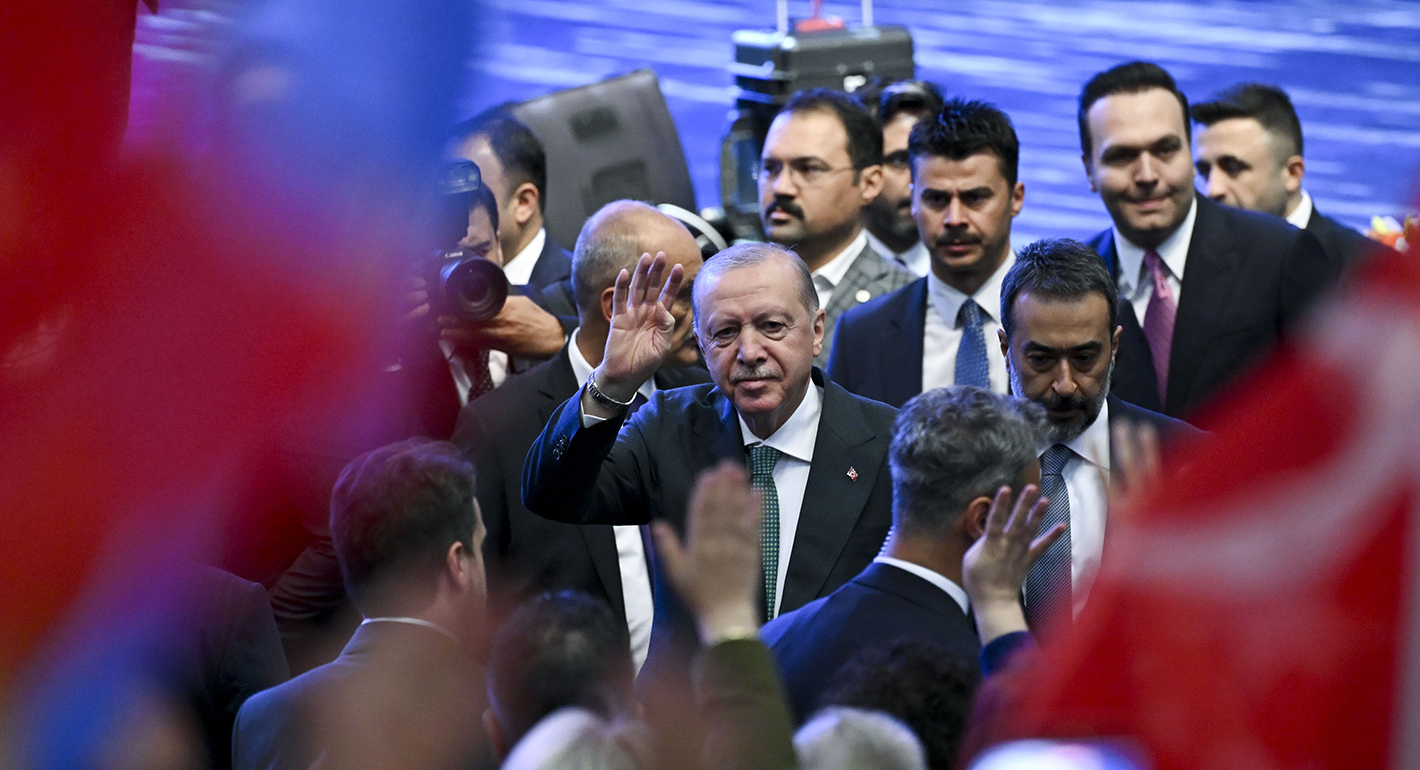
Turkish right-wing populists have been trying to advance the country’s middle-power goals based on perceptions of what the public wants, but they have been doing so in ways that reinforce their project of autocratic political consolidation.

Murat Somer
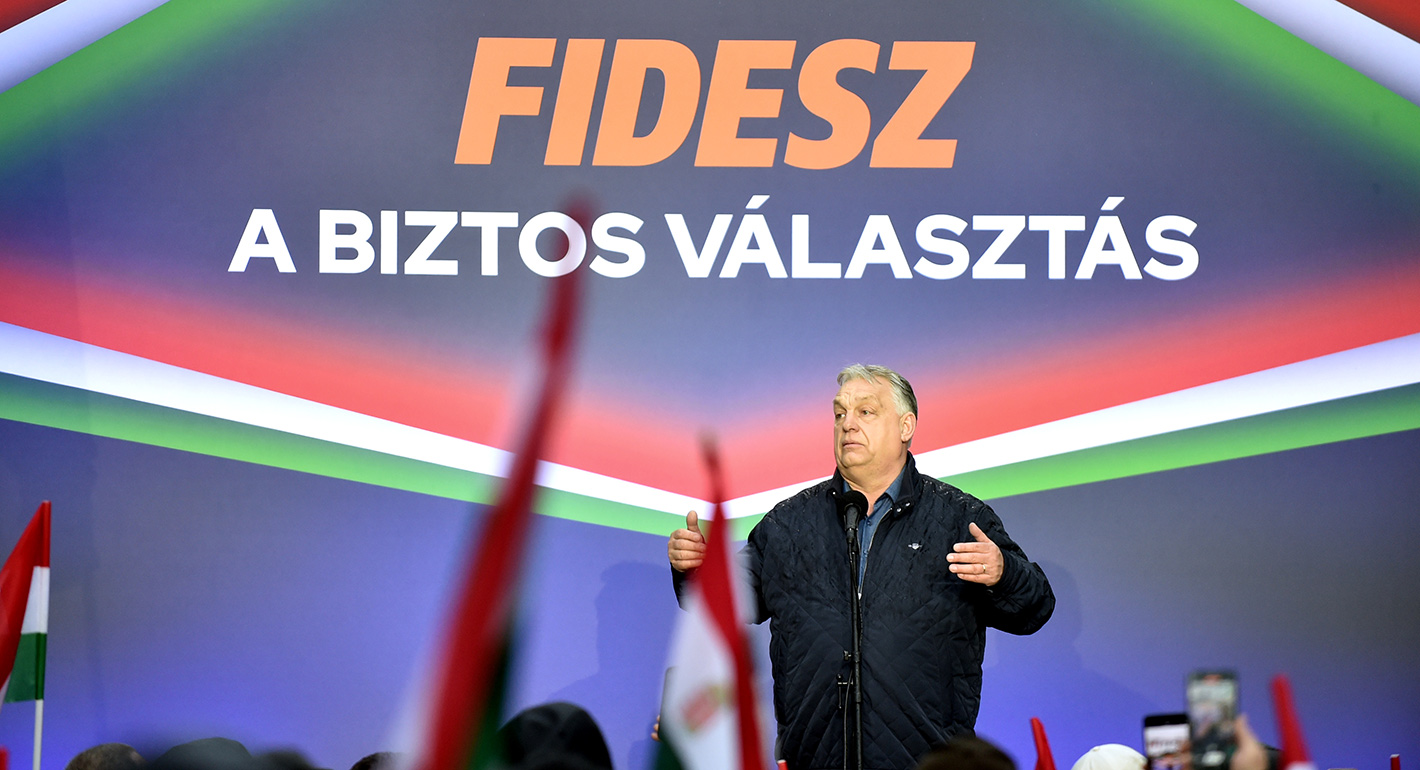
Hungary under Viktor Orbán deployed right-wing populism as a foreign policy strategy, embedding the country in a web of illiberal transnational networks whose legacy will endure even after his April 2026 electoral defeat.
Zsuzsanna Végh
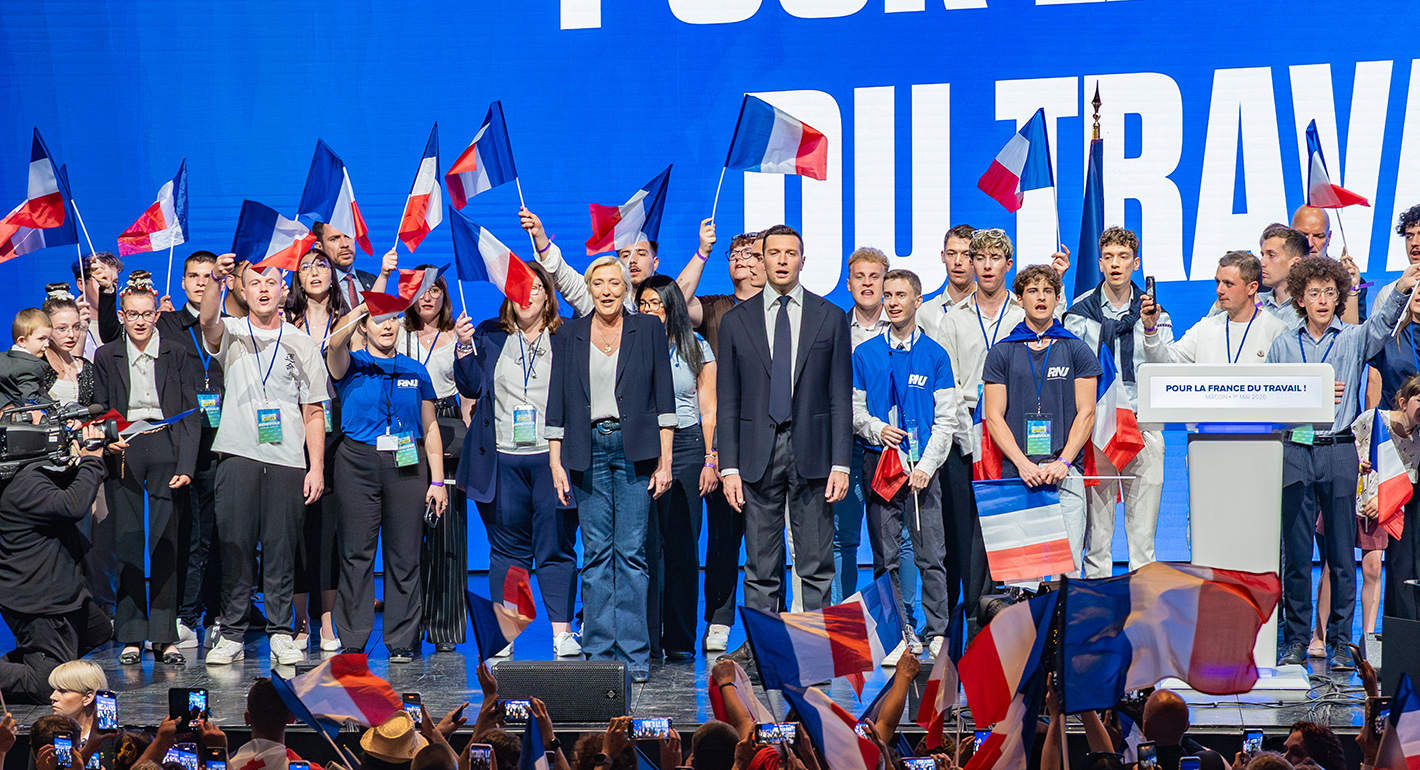
The National Rally’s electoral strength, coupled with its internal fragility at a crucial political juncture, contributes to foreign policy vagueness.

Catherine Fieschi
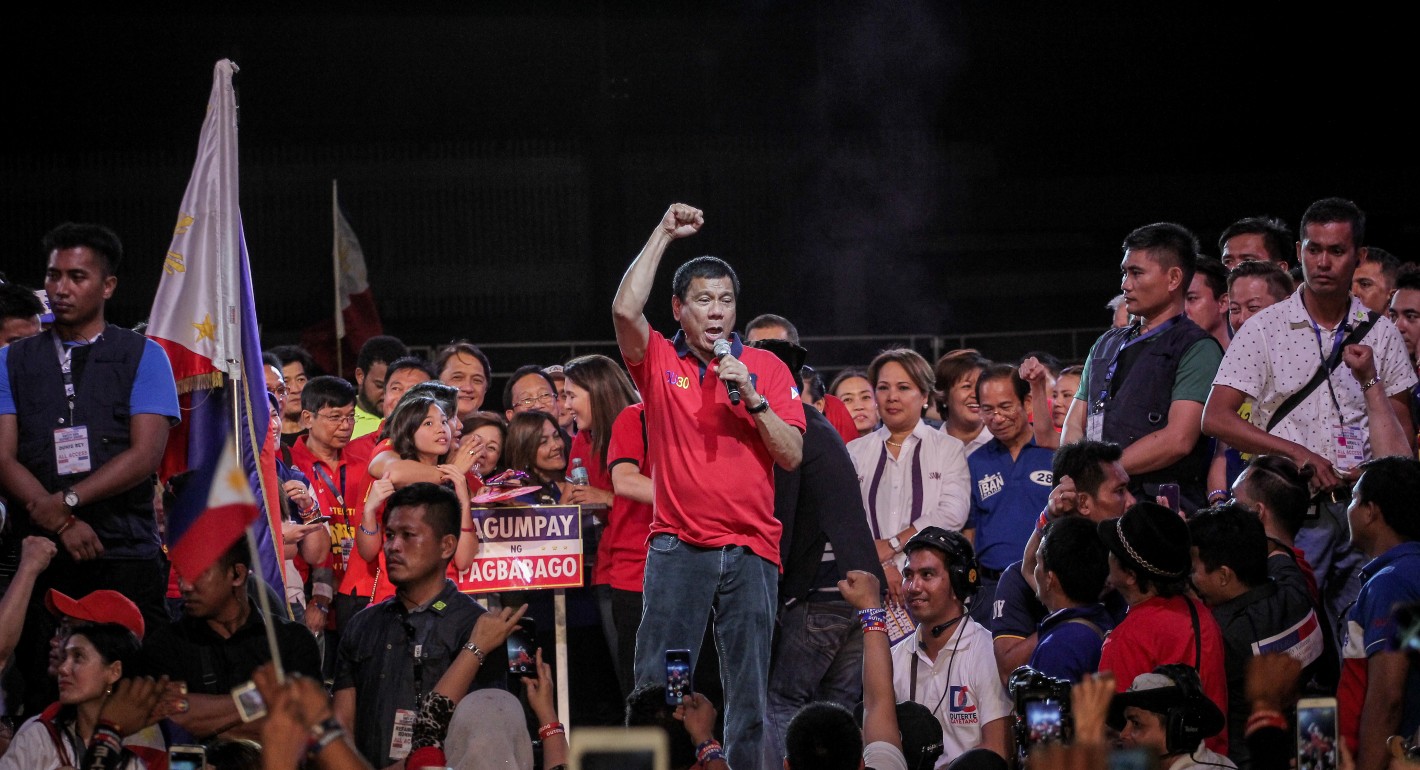
In the Philippines, Duterte-era discourse emphasizing sovereignty, anti-Western skepticism, and strongman diplomacy mirrors tenets of populist foreign policy around the world.
Aries A. Arugay