

Article
Ariel (Eli) Levite, Toby Dalton
{
  "authors": [
    "Toby Dalton"
  ],
  "type": "other",
  "centerAffiliationAll": "dc",
  "centers": [
    "Carnegie Endowment for International Peace"
  ],
  "collections": [
    "Korean Peninsula"
  ],
  "englishNewsletterAll": "ctw",
  "nonEnglishNewsletterAll": "",
  "primaryCenter": "Carnegie Endowment for International Peace",
  "programAffiliation": "NPP",
  "programs": [
    "Nuclear Policy"
  ],
  "projects": [],
  "regions": [
    "East Asia",
    "South Korea"
  ],
  "topics": [
    "Nuclear Policy",
    "Nuclear Energy"
  ]
}
Source: Getty
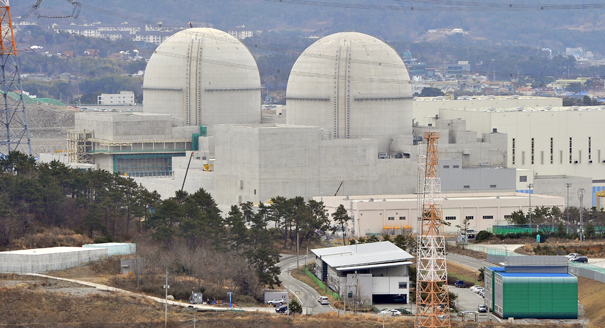
South Korea stands in a unique position among the global nuclear elite: it is the top user of nuclear power that is not also a nuclear weapon state.
Source: Council on Foreign Relations
South Korea stands in a unique position among the global nuclear elite: it is the top user of nuclear power that is not also a nuclear weapon state. The only states producing more nuclear power than the ROK (China, France, Russia, and the United States) all have nuclear weapons. Thus South Korea’s rise to this position gives it a special standing and legitimacy in its commitment to nonproliferation. In many senses it serves as a poster child for the efficacy of the nuclear regimes that regulate nuclear energy and trade while seeking to prevent nuclear weapons proliferation. That these regimes were largely built by the weapon states to protect their own interests—and, some would argue, to perpetuate their technological dominance at the expense of developing countries— makes the ROK’s emergence all the more interesting as an example of how a middle power can gain a position of prominence in the international system. This special standing in turn has yielded opportunities for South Korea to shape the regimes that govern its nuclear activities.
This position is still relatively new for the ROK, having coalesced in the 2009–2012 time frame. Before 2009, South Korea had been a participant in the nuclear regimes, but it rarely (if ever) sought leadership in nuclear diplomacy. Two events, which coincided with the Lee Myungbak administration’s Global Korea initiative, changed the ROK’s nuclear diplomacy calculus. First, on May 25, 2009, North Korea (the Democratic People’s Republic of Korea, or DPRK) conducted a second nuclear explosive test. South Korea’s actions after the test demonstrate sharp movement away from its history of DPRK-centric nuclear diplomacy toward aggressive activities in international nuclear regimes. On May 26, the ROK joined the Proliferation Security Initiative—a counterproliferation mechanism whose members seek to interdict illicit trafficking of nuclear goods—and shortly thereafter elevated its involvement with another group, the Global Initiative to Combat Nuclear Terrorism. Second, in late December 2009, South Korea concluded a $20 billion agreement to construct four nuclear power plants in the United Arab Emirates. This deal marked the ROK’s emergence as a nuclear exporter and its aspirations for nuclear industry to become a major export sector alongside automobiles, electronics, and steel.These two events catalyzed a broadening of Seoul’s vision of its nuclear policy, planting the seeds of South Korea’s interest to play more of a leadership role in international efforts to strengthen nuclear safety and security. Events after 2009 allowed these seeds to grow. North Korea’s further provocations in 2010 (the sinking of the Cheonan and shelling of Yeonpyeong), the Fukushima nuclear accident in March 2011, and the initiation of U.S.-ROK negotiations on a renewal of their bilateral nuclear cooperation agreement elevated nuclear issues to the top of South Korea’s national security and diplomacy priorities. Seoul’s emerging leadership in nuclear regimes served multiple interests. Those interests seemingly coalesced in the Lee administration’s initiative to host the 2012 Nuclear Security Summit (NSS) in Seoul, which serves as this chapter’s focus for examining South Korea’s role as a middle power in international nuclear safety and security governance.

Senior Fellow and Co-director, Nuclear Policy Program
Toby Dalton is a senior fellow and co-director of the Nuclear Policy Program at the Carnegie Endowment. An expert on nonproliferation and nuclear energy, his work addresses regional security challenges and the evolution of the global nuclear order.
Recent Work

Ariel (Eli) Levite, Toby Dalton

Toby Dalton, Jamie Kwong, Ryan A. Musto, …
Carnegie does not take institutional positions on public policy issues; the views represented herein are those of the author(s) and do not necessarily reflect the views of Carnegie, its staff, or its trustees.
In an interview, Marc Lynch discusses his new book decrying the post-1990 U.S.-dominated order in the Middle East.

Michael Young
Tehran may conclude that its ability to disrupt the global economy via the Strait of Hormuz provides enough deterrence to begin quietly rebuilding its nuclear program.

Jane Darby Menton, Mohammad Ayatollahi Tabaar
Tokyo would have to surmount a lot of obstacles—not least Western sanctions—if it wanted to return Russian oil imports to even modest pre-2022 volumes.

Vladislav Pashchenko
The 1986 incident showed that a nuclear accident anytime is a nuclear accident for all time.
Corey Hinderstein

The debate over AI and work too often centers on displacement. Facing aging populations and shrinking workforces, East Asian policymakers view AI not as a threat, but as a cross-sectoral workforce strategy.

Darcie Draudt-Véjares, Sophie Zhuang