

Other
- +18
James M. Acton, Saskia Brechenmacher, Cecily Brewer, …
{
  "authors": [
    "Marc Pierini"
  ],
  "type": "legacyinthemedia",
  "centerAffiliationAll": "dc",
  "centers": [
    "Carnegie Endowment for International Peace",
    "Carnegie Europe",
    "Malcolm H. Kerr Carnegie Middle East Center"
  ],
  "collections": [],
  "englishNewsletterAll": "",
  "nonEnglishNewsletterAll": "",
  "primaryCenter": "Carnegie Europe",
  "programAffiliation": "EP",
  "programs": [
    "Europe"
  ],
  "projects": [],
  "regions": [
    "Europe",
    "Western Europe",
    "Iran"
  ],
  "topics": [
    "Security"
  ]
}
Source: Getty
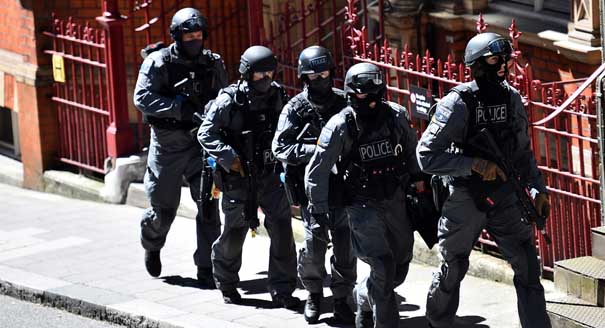
The European Union must use its resources intelligently to fight terrorism without destroying the union’s core principles.
Source: Euractiv
Much has been said on the challenges facing the European Union in the field of international terrorism, especially since the emergence of the self-proclaimed Islamic State—or Daesh—in June 2014. There is a degree of confusion over what’s new, what’s controllable, and how quickly results will be attained.
Today’s terrorism uses a number of novel methods. In its response, the EU needs a multifaceted, flexible and long-term strategy to counter these trends. A key part of that strategy should be seamless international cooperation.
Clearly, freedom of movement within the EU, and especially the rules governing the passport-free Schengen Area, which have been revised and continue to be scrutinised, can be a handicap in tracking and catching terrorists. Existing regulations on arrest warrants and passport management are also under tight scrutiny.
This is a new challenge. So is the risk of social destabilisation stemming from the stigmatisation of entire segments of the European population, especially Muslims. Freedom of movement and social cohesion are therefore at risk.
The second novel element is that Daesh is making widespread and skilful use of modern technologies—the Internet, social media, and video production—to instil shock and intimidation in the West, as well as fascination and appeal among would-be jihadists in Western Europe, Arab countries, and Turkey.
Freedom of expression in Western countries initially allowed Daesh to be very effective, not least by opening scores of new Twitter accounts each time authorities blocked one. Some horrendous videos, such as the one showing the execution of a Jordanian air force officer, were also used as fatwas for further terrorist acts.
The third novel element is the association of terrorist movements or activists with ordinary criminal networks, for example for the purpose of weapons procurement. On multiple occasions, it has been discovered that criminal networks are now procuring assault rifles for terrorists for much less money than in the past.
Similarly the 2015 Frontex risk assessment underlines that human traffickers could be used to channel terrorist operatives into Europe. Indeed, Daesh in Libya has already threatened to send waves of migrants to the EU. Some of the suspects behind the attacks of March and June 2015 in Tunisia are believed to have been trained in Libya, and most probably travelled back and forth with the help of traffickers.
Terrorism cannot be fought from one capital city alone. Depending on the subject, it requires national and EU-level action (generally both) and new forms of cooperation with third countries such as Morocco, Saudi Arabia, Tunisia, and Turkey. The latter two are the most sensitive cases.
Tunisia has a long, porous border with Libya—a breeding ground for terrorist attacks—and had released a number of radical extremists from jail in 2011–2013. The country’s security sector is still awaiting deep reform, which should focus on much higher efficiency together with good governance in order to avoid a return to the excesses of the pre-2011 police state. Technical cooperation with key EU countries is also necessary.
Although it has shrunk recently, Turkey has a long border with Daesh-controlled territory, where jihadists, ammunitions, and smuggled oil used to flow almost freely—though less so nowadays. Given decisions taken by Ankara in the past few days, operations of the anti-ISIS coalition will take a leap forward with the US Air Force using bases in south-eastern Turkey for close air support to fighters on the ground. Similarly, Turkey has arrested a large number of Daesh operatives and recruiters on its own soil and curtailed their propaganda.
In countering international terrorism, the EU counter-terrorism coordinator and EU governments started in 2013 to address the vast array of issues at stake. From the anti–ISIS coalition’s military operations to new rules for passports and travel, from control of the Internet and social media to the prevention of radicalisation, from police tracking of would-be jihadists to surveillance of irregular migration with a counter-terrorism angle, this is now a very active and fast-changing worksite.
In fighting terrorism, EU institutions and governments should publicly stress that there is no quick fix, especially as EU terrorists now number in the thousands, and terrorist sympathisers probably in the tens of thousands. Stopping terrorists from travelling, from perpetrating attacks, and from recruiting more disciples is by definition a medium- and long-term cross-border endeavour.
The implications are far-reaching. Internationally, the cooperation agenda with a number of countries has expanded to include counter-terrorism as a new and crucial priority.
Internally, the EU needs to control terrorism as well as protect its core principles: the rule of law, fundamental freedoms and social cohesion. The Union must defend its earlier achievements, such as the Schengen system, which has brought immense benefits to European citizens and the European economy but which is now under pressure.
The EU also has to get its political act together. A host of policies and procedures are in the process of being revised and will continue to necessitate permanent adjustments, either at the EU level or through seamless cooperation among EU governments.
Counter-terrorism is an EU-wide issue of major political significance, but it comes at a time when many political parties and some governments want less EU rather than more. There is a choice of opportunity here: technical capacities lie with individual member states, but an intelligent combination of policies and means at the EU level is what will make the policy an effective one.

Senior Fellow, Carnegie Europe
Pierini is a senior fellow at Carnegie Europe, where his research focuses on developments in the Middle East and Turkey from a European perspective.
Recent Work

James M. Acton, Saskia Brechenmacher, Cecily Brewer, …
Marc Pierini
Carnegie does not take institutional positions on public policy issues; the views represented herein are those of the author(s) and do not necessarily reflect the views of Carnegie, its staff, or its trustees.
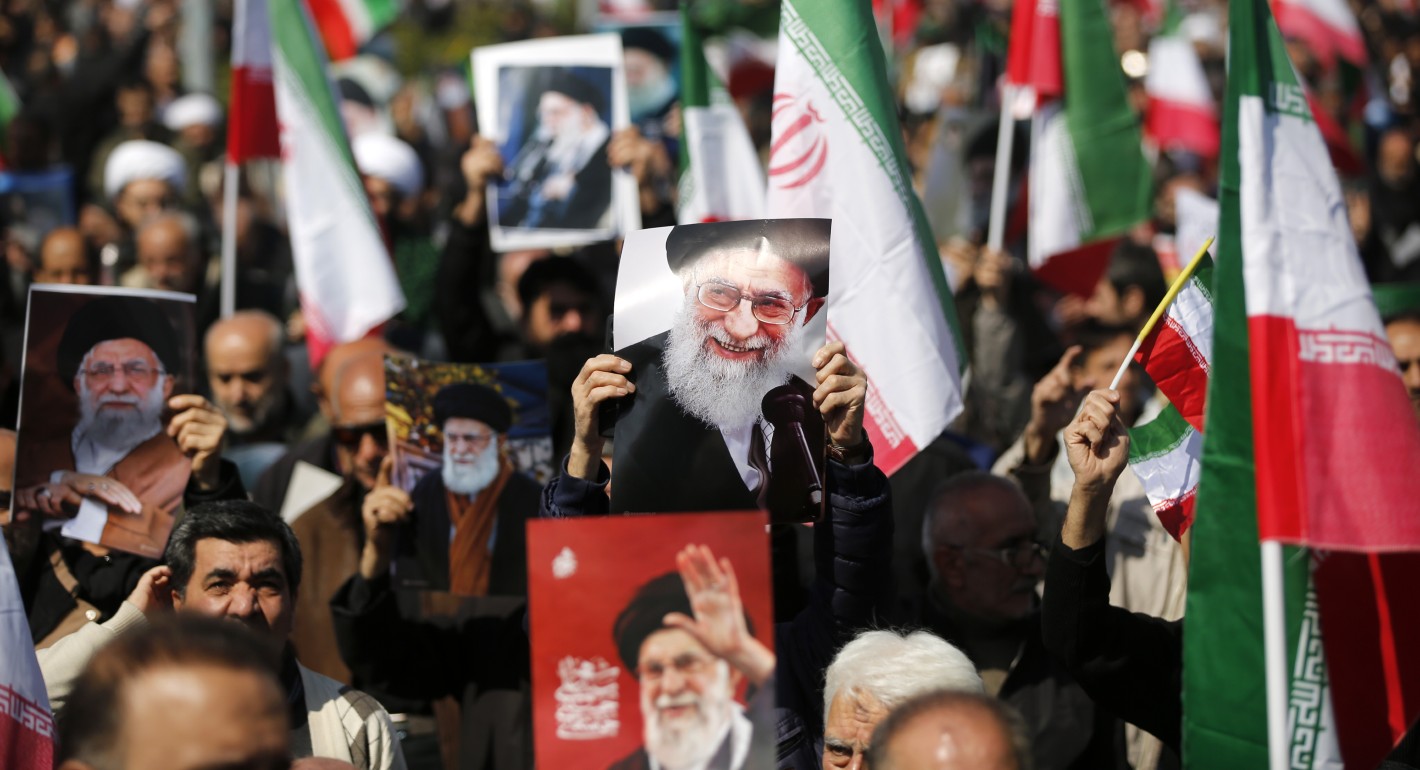
If the succession process can be carried out as Khamenei intended, it will likely bring a hardliner into power.

Eric Lob
But to achieve either, it needs to retain Washington’s ear.

Alper Coşkun
At heart, to impose unconditional surrender on Hezbollah and uproot the party among its coreligionists.

Yezid Sayigh
If the regime in Tehran survives, it could be obliged to hand Moscow significant political influence in exchange for supplies of weapons and humanitarian aid.

Nikita Smagin

Just look at Iraq in 1991.

Marwan Muasher